
How to Increase Testosterone Levels in Men
Latest Update: March 30, 2026
Imagine waking up every morning feeling sharp, strong, and motivated, only to realize that somewhere along the way, that energy quietly slipped away.
If that sounds familiar, you are not alone.
Millions of men in 2026 are searching for real answers on How to Increase Testosterone Levels in Men, and the good news is that science, lifestyle changes, and smart supplementation are giving us more tools than ever before.
Key Takeaways 🔑
- Lifestyle is foundational — sleep, strength training, and diet are the most powerful natural testosterone boosters available.
- Natural supplements like ashwagandha and fenugreek are considered first-line options for mild cases.
- Testosterone Replacement Therapy (TRT) is evolving rapidly, with new FDA-approved options and updated safety guidelines in 2026.
- Target ranges matter — the American Urological Association (AUA) targets 450–600 ng/dL; symptoms should always guide treatment decisions.
- Always get tested first — knowing your baseline is the smartest first step before trying any intervention.

What Is Testosterone and Why Does It Matter?
Testosterone is the primary male sex hormone. It drives muscle growth, bone density, libido, mood, and mental clarity. After age 30, most men experience a natural decline of about 1–2% per year.
When levels drop too low, the effects are hard to ignore:
- 😴 Constant fatigue
- 📉 Loss of muscle mass
- 🧠 Brain fog and low motivation
- ❤️ Reduced sex drive
- 😔 Depression or irritability
A friend of mine, a 44-year-old former athlete, described it as “slowly becoming a dimmer version of myself.”
After getting his levels tested and making targeted changes, he felt like himself again within months. That kind of transformation is possible for most men.
How to Increase Testosterone Levels in Men Naturally
The best starting point is always lifestyle. Before jumping to prescriptions or supplements, these evidence-backed strategies can make a dramatic difference.
🏋️ 1. Strength Training and Exercise
Resistance training, especially compound movements like squats, deadlifts, and kettlebell swings, is one of the most powerful natural testosterone stimulators. Heavy lifting triggers hormonal responses that directly boost testosterone production.
If you are new to strength training or want to add variety, kettlebell workouts for athletes are an excellent option.
They combine resistance and cardiovascular work in one efficient session. You might also explore adjustable kettlebell workouts for muscle building to progressively challenge your body.
💡 Pull Quote: “Men who lift heavy compound movements consistently show measurably higher testosterone levels than sedentary peers — the gym is one of the best pharmacies you have access to.”
Best exercise types for testosterone:
| Exercise Type | Testosterone Impact |
|---|---|
| Heavy compound lifts | ⭐⭐⭐⭐⭐ Very High |
| HIIT workouts | ⭐⭐⭐⭐ High |
| Moderate cardio | ⭐⭐⭐ Moderate |
| Yoga / flexibility | ⭐⭐ Low-Moderate |
HIIT training is particularly effective — short, intense bursts of effort spike testosterone while also burning fat, which further supports hormonal health.
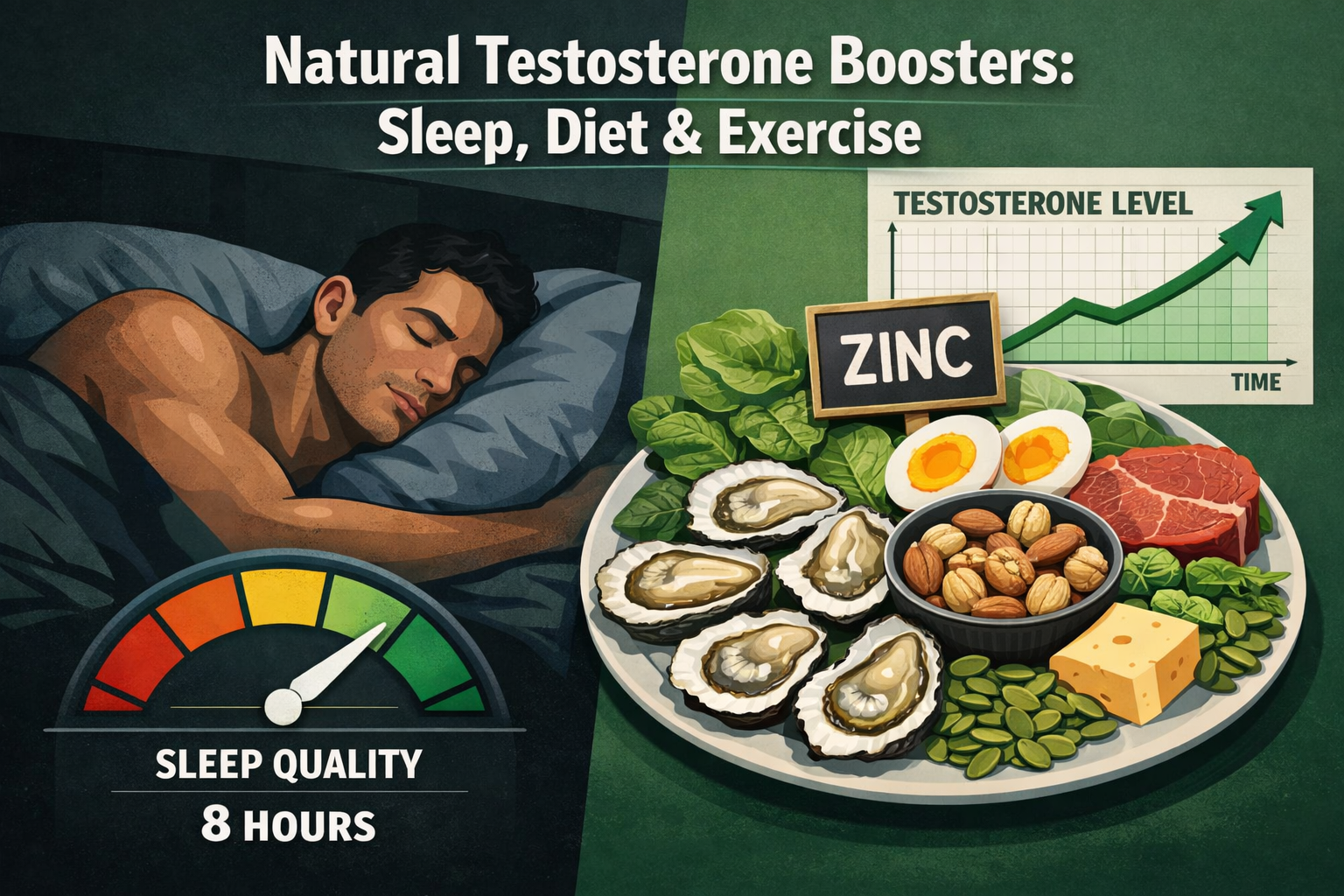
😴 2. Prioritize Deep, Quality Sleep
Testosterone is primarily produced during deep sleep. Studies consistently show that men who sleep fewer than 6 hours per night have significantly lower testosterone levels than those who get 7–9 hours.
Sleep optimization tips:
- Keep a consistent sleep schedule, even on weekends
- Keep your bedroom cool and dark
- Avoid screens 1 hour before bed
- Limit alcohol — it disrupts REM sleep and suppresses testosterone
🥩 3. Optimize Your Diet
What you eat directly affects your hormone levels. Key nutrients for testosterone production include:
- Zinc — found in oysters, red meat, pumpkin seeds
- Vitamin D — sunlight exposure or supplementation
- Healthy fats — avocado, olive oil, eggs, nuts
- Magnesium — dark leafy greens, almonds, black beans
Avoid ultra-processed foods, excessive sugar, and alcohol. These drive up cortisol (the stress hormone), which actively suppresses testosterone.
🧘 4. Manage Stress and Cortisol
Chronic stress is a testosterone killer. When cortisol stays elevated, your body prioritizes survival over reproduction — meaning testosterone production drops. Meditation, time in nature, and even regular social connection all help keep cortisol in check.
💊 5. Natural Supplements
Experts increasingly view natural supplements as a solid first-line approach for men with mildly low testosterone [9]. The most research-backed options include:
- Ashwagandha — reduces cortisol and has shown meaningful testosterone increases in clinical trials
- Fenugreek — supports free testosterone levels
- Vitamin D3 + K2 — critical for hormonal function
- Zinc and Magnesium (ZMA) — foundational mineral support
For a deeper dive into natural approaches, check out this guide on how to fight low testosterone naturally.
How to Increase Testosterone Levels in Men With Medical Support
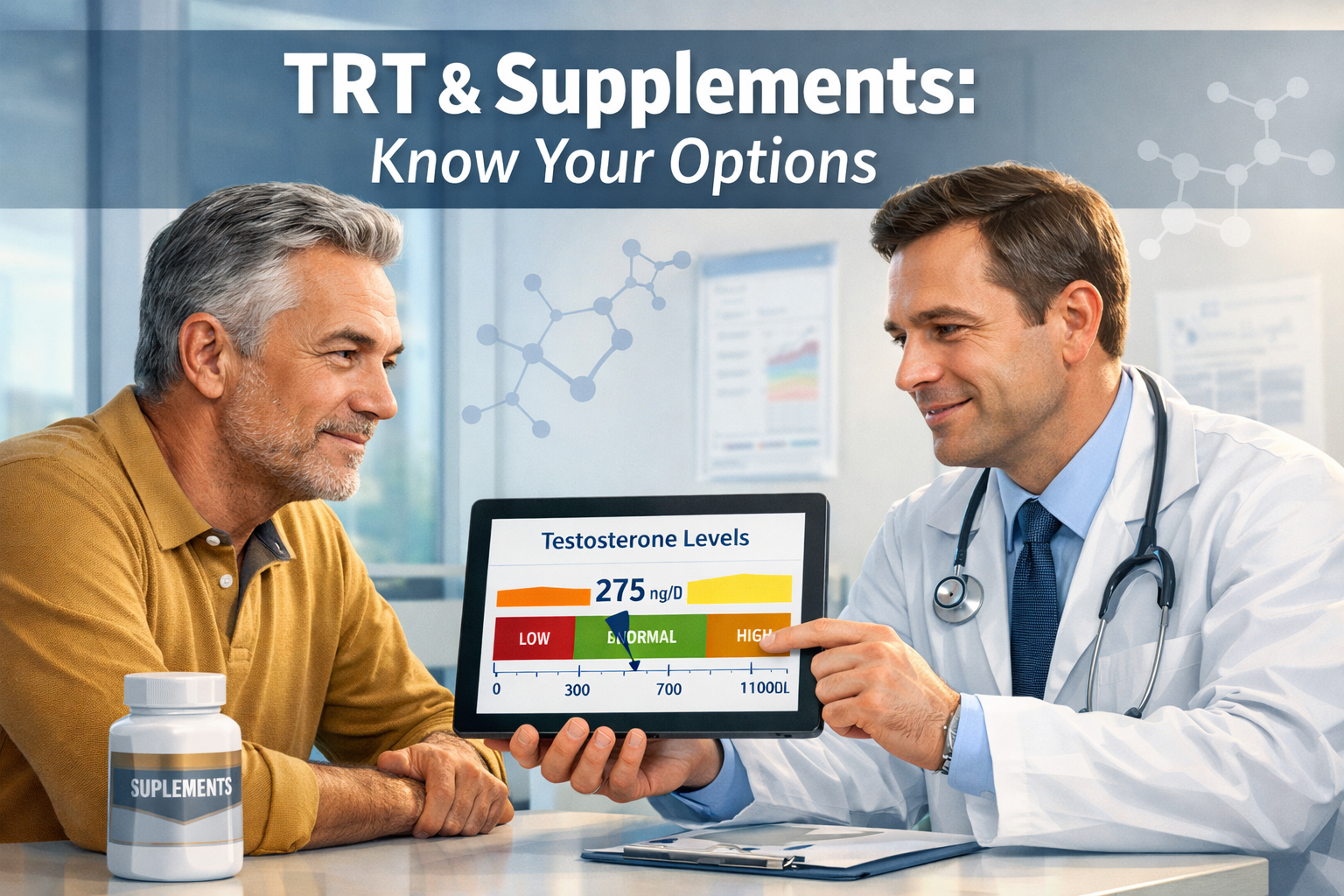
Sometimes lifestyle changes alone are not enough. If your levels are clinically low — confirmed by blood tests — medical intervention may be appropriate.
🩺 Understanding TRT in 2026
Testosterone Replacement Therapy (TRT) has evolved significantly.
In 2026, KYZATREX®, an FDA-approved oral testosterone, has shown it can restore levels in up to 96% of men, doubling free testosterone without the liver risks associated with older oral testosterone medications.
The FDA also updated class-wide labeling in February 2025, adding results from the landmark TRAVERSE cardiovascular safety trial, removing previous cardiovascular boxed warnings, and adding blood pressure monitoring requirements.
A December 2025 FDA expert panel went further, urging expanded TRT indications to include age-related low testosterone, a shift that could affect millions of men.
However, organizations like the Endocrine Society and Public Citizen have raised caution, noting that the TRAVERSE trial showed median levels of only 350 ng/dL, below the AUA’s target of 450–600 ng/dL.
What the AUA currently recommends:
- Test testosterone levels before starting TRT [9]
- Target 450–600 ng/dL based on symptoms AND lab values
- Monitor regularly and adjust dosing accordingly
- Prioritize symptom matching over chasing numbers alone
⚠️ Important: A March 2026 study linked low testosterone to higher prostate cancer progression risk, reinforcing why monitoring — not just supplementing — is essential. Always work with a qualified healthcare provider.
🔬 Are Testosterone Boosters Safe?
This is one of the most common questions men ask. The answer depends on the type of booster and your individual health profile. For a thorough breakdown, read our guide on whether testosterone boosters are safe.
Natural supplements are generally well-tolerated. TRT carries more considerations — including effects on fertility, red blood cell count, and blood pressure, which is why medical supervision is non-negotiable.
🚀 Top-Rated Testosterone Support Supplement
If you are looking for a well-formulated, research-backed testosterone support supplement, check out this highly-rated option on Amazon.
It combines key ingredients like ashwagandha, zinc, and vitamin D3, the exact nutrients science points to for natural testosterone support.
You can also read our detailed review of Testosil, a leading testosterone booster, for an in-depth look at what to expect.
Building a Complete Testosterone-Boosting Lifestyle
Here is a simple weekly framework to put everything together:
| Day | Action |
|---|---|
| Mon / Wed / Fri | Heavy strength training (compound lifts) |
| Tue / Thu | HIIT or active recovery |
| Daily | 7–9 hours sleep, stress management |
| Daily | Testosterone-supporting nutrition + supplements |
| Monthly | Track energy, mood, libido — adjust as needed |
Men over 50 may want to explore our guide on how to build muscle over 50, which covers age-specific strategies that complement testosterone optimization.
Conclusion: Your Action Plan Starts Today
Understanding how to increase testosterone levels in men does not have to be overwhelming. The path forward is clear:
- ✅ Get your levels tested — know your baseline before doing anything else
- ✅ Start with lifestyle — sleep, strength training, diet, and stress management are your foundation
- ✅ Add targeted supplements — ashwagandha, zinc, vitamin D3, and fenugreek are excellent starting points
- ✅ Consider medical options if needed — TRT has a strong and evolving safety profile in 2026, but always work with a doctor
- ✅ Track your progress — symptoms, energy, and lab values together tell the full story
The science in 2026 is clearer than ever: low testosterone is not something you just have to accept.
With the right approach, natural strategies first, medical support when needed, most men can reclaim their vitality.
👉 Ready to take the first step? Explore this top-rated testosterone support supplement on Amazon – and start your journey today.