Build Muscle Over 50
By 65 to 69 years old, about 5% of adults are affected by serious age related muscle loss, and that number can climb to 36% by age 85 to 89, which is exactly why building muscle over 50 matters right now, not later.
Key Takeaways
| Question | Answer |
|---|---|
| Can you build muscle over 50? | Yes, you can build muscle over 50 with progressive resistance training and smart recovery. Our guide on gaining muscle with bodyweight only shows how effective simple progressions can be. |
| Do you need a gym membership? | No, you can gain muscle over 50 at home using bodyweight moves and kettlebells, as we explain in our build muscle exercises at home guide. |
| Are kettlebells good for people over 50? | Kettlebells let you train strength, power, and conditioning in a compact space. If you are starting out, learn the basics from our tutorial on how to train with kettlebells. |
| What is a simple lower body exercise to start with? | The kettlebell goblet squat is one of the safest and most joint friendly ways to learn to squat, and we break it down step by step here: goblet squat with kettlebell. |
| How often should you train to build muscle after 50? | Most people over 50 do well with 2 to 3 full body strength sessions per week, which lines up with the routines we share in our adjustable kettlebell muscle building workouts. |
| What if you only have light weights or no weights? | You can still build muscle over 50 by manipulating tempo, reps, and exercise difficulty, as covered in our article on top dumbbell exercises for full body gains. |
1. Why Building Muscle Over 50 Matters More Than Ever
When people ask us if you can build muscle over 50, our answer is yes, but the bigger question is what happens if you do not. Reduced muscle mass and strength make everyday tasks harder and raise your injury risk in simple movements like stepping off a curb or lifting a suitcase.
If gaining muscle over 50 feels like extra credit, we suggest flipping that mindset. Treat muscle as essential physical savings that you will draw from for decades in the form of stronger legs, better balance, and higher working capacity in daily life.
How Muscle Loss Actually Shows Up After 50
In our work with clients over 50, the first sign of muscle loss is usually not a number on a test. It is slow, subtle changes like having to use your hands to stand from a low chair or feeling drained after a long day on your feet.
The good news is that resistance training can increase muscle size and fiber area in older adults, provided you use enough effort and progression. That is exactly what we target with structured kettlebell and bodyweight programs.
The Role Of Strength In Independence
Every time we program a squat, hinge, press, or row, we are thinking about what that movement represents in real life. Squats mirror sitting and standing, hinges mirror picking things up, presses mirror putting items overhead, and rows mirror pulling doors, hoses, or heavy drawers.
When you build muscle over 50 in these patterns, you are not just chasing numbers in the gym. You are building the capacity to stay independent longer, with more confidence in your body.


2. Can You Build Muscle Over 50 Without A Gym?
We work with many clients who prefer to train at home, and they often start by asking how to build muscle over 50 without a full weight room. Our answer is that you can make serious progress with bodyweight, a couple of kettlebells, and basic progressions.
Research on bodyweight training shows that when you train close to challenging effort, muscle growth can be similar to traditional loaded training. That is why we focus so much on exercise selection and progression, not just equipment.
Bodyweight First, Then Add Load
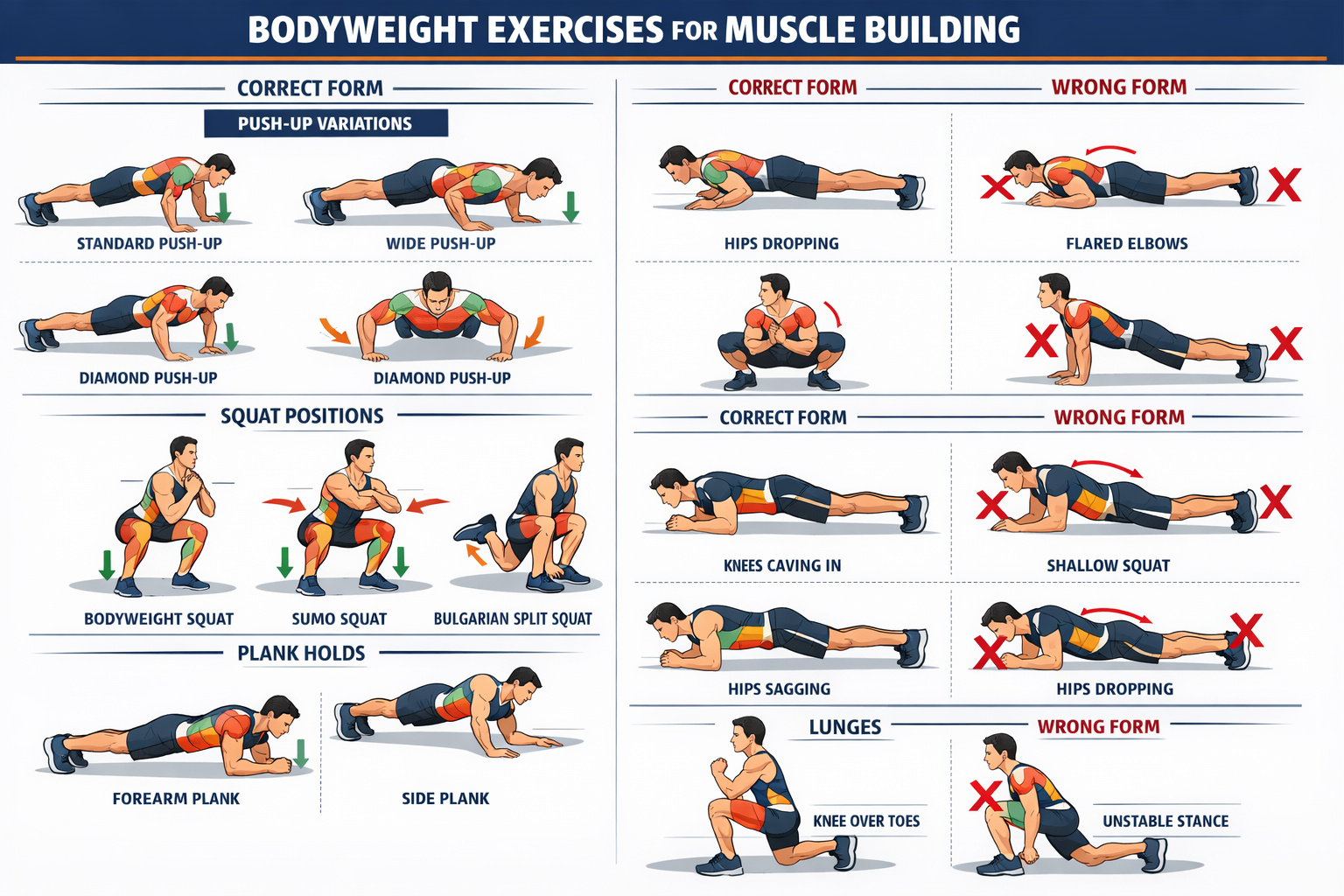
To keep your joints happy and your technique solid, we often start with bodyweight versions of key patterns. Think box or chair squats, wall or counter push ups, supported split squats, and simple hip hinges.
Once you own those movements, we layer in load with kettlebell or dumbbells. Our home guide on building muscle explains the Foundation Five moves that give you the best return on effort using minimal gear.
Sample A Home Training Structure For Over 50
Most people over 50 do best with 2 to 3 strength sessions per week, each 30 to 45 minutes long. That schedule allows recovery while still sending your muscles a strong, regular training signal.
A simple weekly layout might look like this:
- Day 1: Full body kettlebell and bodyweight
- Day 2: Rest or light walking
- Day 3: Full body strength again, slightly different variations
- Day 4: Rest or mobility practice
- Day 5: Optional third full body or technique day
3. The Science Of Gaining Muscle Over 50
When we program strength work for clients over 50, we think in simple, practical terms. You gain muscle by repeatedly asking your body to produce force against resistance, then resting and feeding it so it can adapt.
In older adults, resistance training has been shown to increase muscle size and muscle fiber area, which means your training can still create visible and functional changes past 50. The key is enough intensity, consistent volume, and steady progression.
Key Training Principles For 50+ Lifters
- Progressive overload: You gradually increase difficulty through more reps, more sets, slower tempo, or heavier weight.
- Effort: Most working sets should finish with 1 to 3 reps left in the tank so the muscle gets a real growth signal without grinding every set.
- Frequency: Training each major muscle group at least twice per week supports muscle gain.
Resistance programs lasting 8 to 12 weeks and performed 2 to 3 days per week often improve lower body strength, grip strength, and balance in older adults. For us as coaches, that is a strong argument for full body routines rather than scattered, random workouts.
Intensity And Load Guidelines Over 50
Studies using heavier resistance around retirement age often target about 70 to 85% of one rep max for main lifts. For practical purposes, that usually feels like a challenging weight you could lift for roughly 6 to 10 reps before form breaks.
We do not always test maxes directly with our over 50 clients. Instead, we use a simple rule: your work sets should feel hard but controlled by the last two reps, with no grinding or loss of technique.
This infographic highlights the five key benefits of building muscle after 50. Learn how increased strength, metabolism, bone health, balance, and independence can improve daily life.


4. Kettlebells: Our Favorite Tool To Build Muscle Over 50
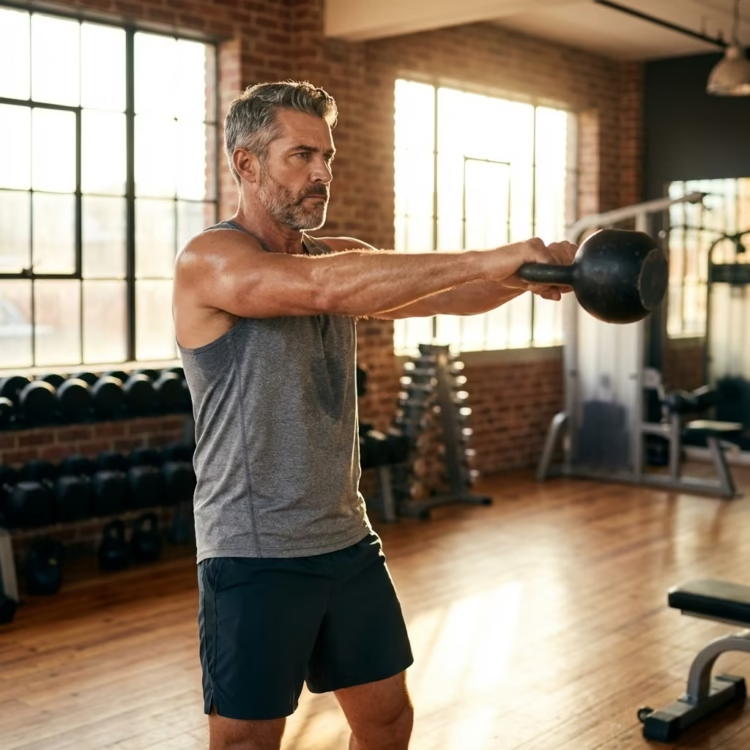
We like kettlebells for people over 50 because they combine strength, power, and conditioning in a joint friendly way. The offset centre of mass teaches your body to brace, stabilize, and move as a unit in every rep.
Kettlebells are also compact, which makes them ideal if you are training at home. A small set can replace multiple machines and still give you everything you need to focus on gaining muscle over 50.
Why Kettlebell Squats Work So Well For 50+ Lifters
Research and practical experience both support kettlebell squats as an effective lower body option. They hit your quads, glutes, and core while encouraging an upright torso and better posture.
The goblet squat variation, where you hold the kettlebell in front of your chest, is especially useful for teaching safe squatting mechanics. You can progress it by adding weight, adding reps, or slowing the tempo over several weeks.
Core And Grip Benefits For Everyday Life
When you swing, rack, or hold a kettlebell, your grip and forearms are working hard the entire time. Clients over 50 often notice stronger grip in daily tasks like opening jars or carrying groceries within a few months.
At the same time, your core has to stabilize your spine against the pull of the bell. That builds the kind of midline strength that supports your back in lifting, walking, and even prolonged standing.
5. Choosing The Right Kettlebell To Gain Muscle Over 50
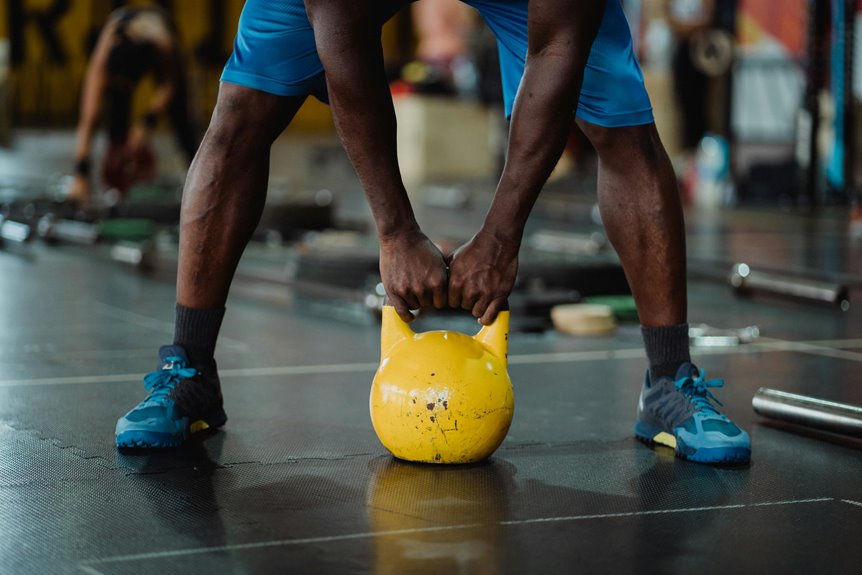
When clients ask how to build muscle over 50 with kettlebells, they often get stuck at the buying stage. The right kettlebell should feel stable, have a comfortable handle, and fit your current strength level with room to grow.
We typically recommend starting weights in the moderate range, not ultralight, so the bell is heavy enough to stimulate muscle but light enough to control. From there, adjustable options become very attractive for home gyms.
Titan Adjustable Kettlebell: Space Saving Strength Tool
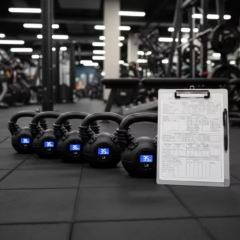
The Titan Adjustable Kettlebell (12/32 kg competition style, about $199.97) packs a wide weight range into a single shell. That means you can use lighter settings for shoulder work and heavier settings for swings and squats without buying an entire rack of bells.
We like this style for over 50 lifters because you can progress weight in small jumps rather than giant leaps. The competition style shape usually offers consistent handle size and feel across settings, which helps technique.
50 lb Kettlebell Options For Stronger Lifters
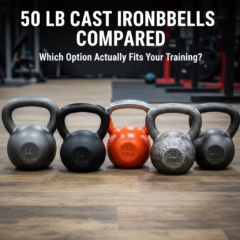
If you already have a strength base, a 50 lb class kettlebell can be a solid investment for swings, deadlifts, and squats. Guides that compare fixed versus adjustable 50 lb kettlebells highlight trade offs like coating, grip feel, and stability.
Adjustable designs such as the Yes4All 5/50 lb adjustable kettlebell give you flexibility as you continue gaining muscle over 50 without filling your floor with iron. The key is that the bell feels secure and balanced at heavier weights.

6. Fundamental Kettlebell Moves For Building Muscle Over 50
When someone over 50 starts with us, we begin with a short, focused menu of movements. You do not need a long list of exercises, you need consistent practice with a few key patterns.
For gaining muscle over 50, these exercises cover most of what you need for total body strength and muscle growth.
The Foundation Kettlebell Strength List
- Goblet squat: Primary builder for quads and glutes with core engagement.
- Hip hinge / deadlift: Targets hamstrings and glutes while teaching safe lifting from the floor.
- One arm row: Develops upper back, lats, and grip, great for posture.
- Floor press or standing press: Strengthens chest, shoulders, and triceps.
- Carry variations: Suitcase or farmer carries for grip and trunk strength.
We build sessions by pairing lower and upper body moves, then finishing with carries or simple swings if technique allows. This structure delivers full body muscle work without needing long, complex routines.
Sample Full Body Session For Over 50
Here is a concise example we might use with a client who is comfortable with basic technique:
- Goblet squat, 3 sets of 8 to 10 reps
- One arm kettlebell row, 3 sets of 8 to 12 reps per side
- Hip hinge or deadlift, 3 sets of 8 to 10 reps
- Floor press, 3 sets of 8 to 12 reps
- Suitcase carry, 3 trips of 20 to 30 steps per side
Rest 60 to 90 seconds between sets, longer if you need it to keep each set crisp and controlled. As you adapt, we adjust volume, weight, or tempo to keep your muscles challenged.

7. How To Progress Safely When You Are Over 50
Progression is where many 50+ lifters either rush and get discouraged or stall and lose momentum. Our approach is to change one variable at a time and monitor how your joints, energy, and performance respond.
If you are wondering how to build muscle over 50 without overdoing it, think of progress in planned, measured steps rather than constant max effort.
Simple Progression Methods That Work
- Increase reps in your target range before increasing load.
- Slow down the lowering phase to increase time under tension.
- Add a set once your current sets feel controlled and repeatable.
- Reduce rest slightly if you want more conditioning effect while keeping technique clean.
We also like four week blocks where you hold the same exercise menu but slightly increase the workload weekly. That gives your body time to adapt while still moving forward session by session.
Listening To Feedback From Your Body
Over 50, your recovery feedback is as important as your performance numbers. Soreness that fades in a day or two is normal, but lingering pain, sharp joint discomfort, or declining energy are signals to reduce volume or intensity.
In practice, we often keep 1 to 3 reps in reserve in each set for older clients. That strategy still supports gaining muscle over 50 while respecting recovery capacity.

8. Using Bodyweight Smartly When Equipment Is Limited
Bodyweight training is not just a fallback for people without weights. For many over 50 lifters, it is a critical base that supports joint health, movement quality, and safe progression when adding load later.
Research comparing bodyweight and loaded training indicates that when effort and progression are similar, muscle thickness gains can be comparable. That is encouraging if you are starting from scratch at home.
Bodyweight Progressions For Over 50 Lifters
Here are practical ways we progress bodyweight moves to keep building muscle over 50:
- Push ups: wall, then counter, then knee, then full floor, then feet elevated.
- Squats: box or chair squats, then air squats, then split squats or step ups.
- Rows: towel rows on a sturdy door, then inverted rows under a table or bar.
We also use tempo changes such as 3 to 5 second lowering or brief pauses at the bottom position. These techniques increase the challenge without requiring heavy external load.
Blending Bodyweight And Kettlebells
Our preferred approach for gaining muscle over 50 is to blend bodyweight and kettlebells in the same week. For example, one day might be more kettlebell focused, while another day uses mostly bodyweight with a few loaded moves.
This mix gives your joints a break from constant heavy loading while still providing enough stress for muscle growth. It also keeps your training mentally fresh and more sustainable long term.
9. Practical Nutrition Guidelines To Support Muscle Over 50
We coach training first, but we also remind clients that muscles need building blocks and energy. Protein intake and total daily calories both play important roles in supporting muscle maintenance and growth.
For older adults, research often points to daily protein intakes around 0.8 to 1.0 grams per kilogram of body weight, with higher targets, roughly 1.0 to 1.3 g/kg/day, suggested when combining protein with consistent resistance training.
Protein Timing Around Training
Studies suggest that a dose of about 20 to 25 grams of protein around each resistance training session can help stimulate muscle protein synthesis in older adults. You can hit that with food or your preferred supplement if you use one.
In practice, we encourage clients to build meals around a solid protein source such as eggs, Greek yogurt, poultry, fish, legumes, or other options that fit their preferences and needs. Spreading protein across the day tends to be easier and more sustainable than one giant serving.
Hydration And Overall Eating Habits
Hydration often gets overlooked, but it affects energy, training performance, and how you feel during and after sessions. Aim for consistent fluid intake throughout the day, and adjust based on your activity and climate.
We also see better long term results when clients focus on mostly whole foods, plenty of fruits and vegetables, and a consistent meal schedule. That base supports training without the need for extreme or complicated diets.
10. Recovery, Mobility, And Longevity For Lifters Over 50
Building muscle over 50 is not just about what you lift, it is also about how you recover between sessions. We pay close attention to sleep quality, stress, and general activity levels with our clients in this age group.
On non lifting days, we like to see gentle movement such as walking, light mobility routines, or easy cycling. That keeps blood flowing, joints lubricated, and recovery moving in the right direction.
Mobility And Warm Up Strategies
A simple warm up might include 5 to 10 minutes of easy cardio, then a few rounds of dynamic movements like leg swings, arm circles, and hip openers. We then add light sets of the first exercise to bridge into working sets.
Over time, consistent strength work often improves functional range of motion on its own, especially through loaded patterns like goblet squats and hip hinges. We adjust mobility work based on what we see in your movement and how you feel.
Long Term Mindset For Gaining Muscle Over 50
The best program for someone over 50 is not the hardest or flashiest, it is the one they can perform consistently for months and years.
We aim for sustainable training that fits around work, family, and life, rather than short bursts followed by long layoffs.
If you stay patient, respect recovery, and keep a progressive plan in place, muscle and strength gains are very realistic in your 50s and well beyond. You are playing a long game with significant quality of life benefits.
Conclusion
When people ask us can you build muscle over 50, we point to the research and our day to day coaching experience and give the same response. Yes, you can, and the benefits touch nearly every part of how you move and live.
With sensible kettlebell and bodyweight training, attention to protein and recovery, and a patient progression plan, gaining muscle over 50 is not just possible, it is practical.
Start with the basics, stay consistent, and treat every session as a small investment in your future strength and independence.