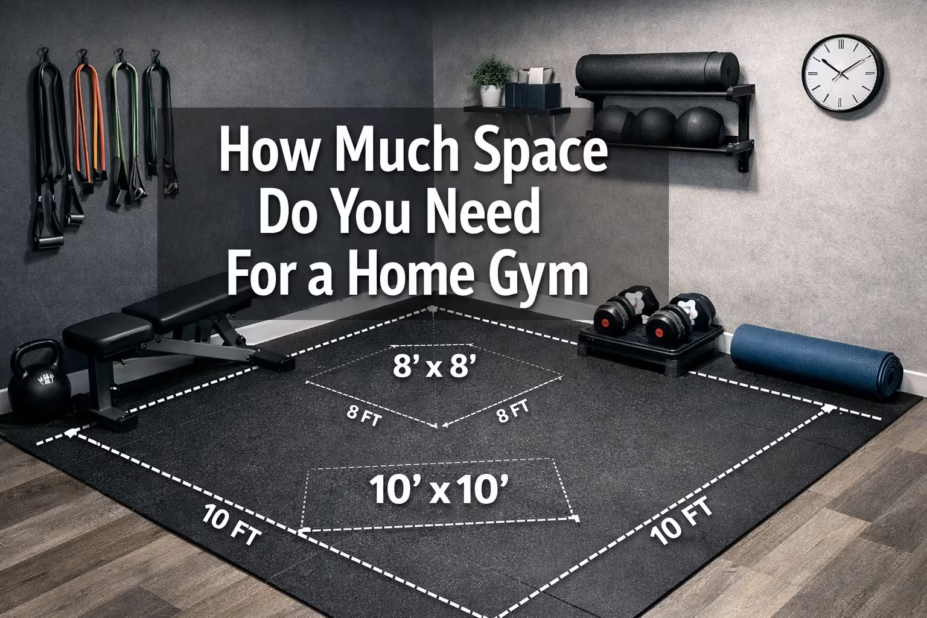
How Much Space Do You Need For a Home Gym
If you have ever looked around a spare bedroom, garage corner, or apartment living room and wondered How Much Space Do You Need For a Home Gym, the good news is this: probably less than you think.
I’ve seen people build effective setups in tiny rooms simply by choosing the right equipment, using vertical storage, and planning for movement instead of clutter.
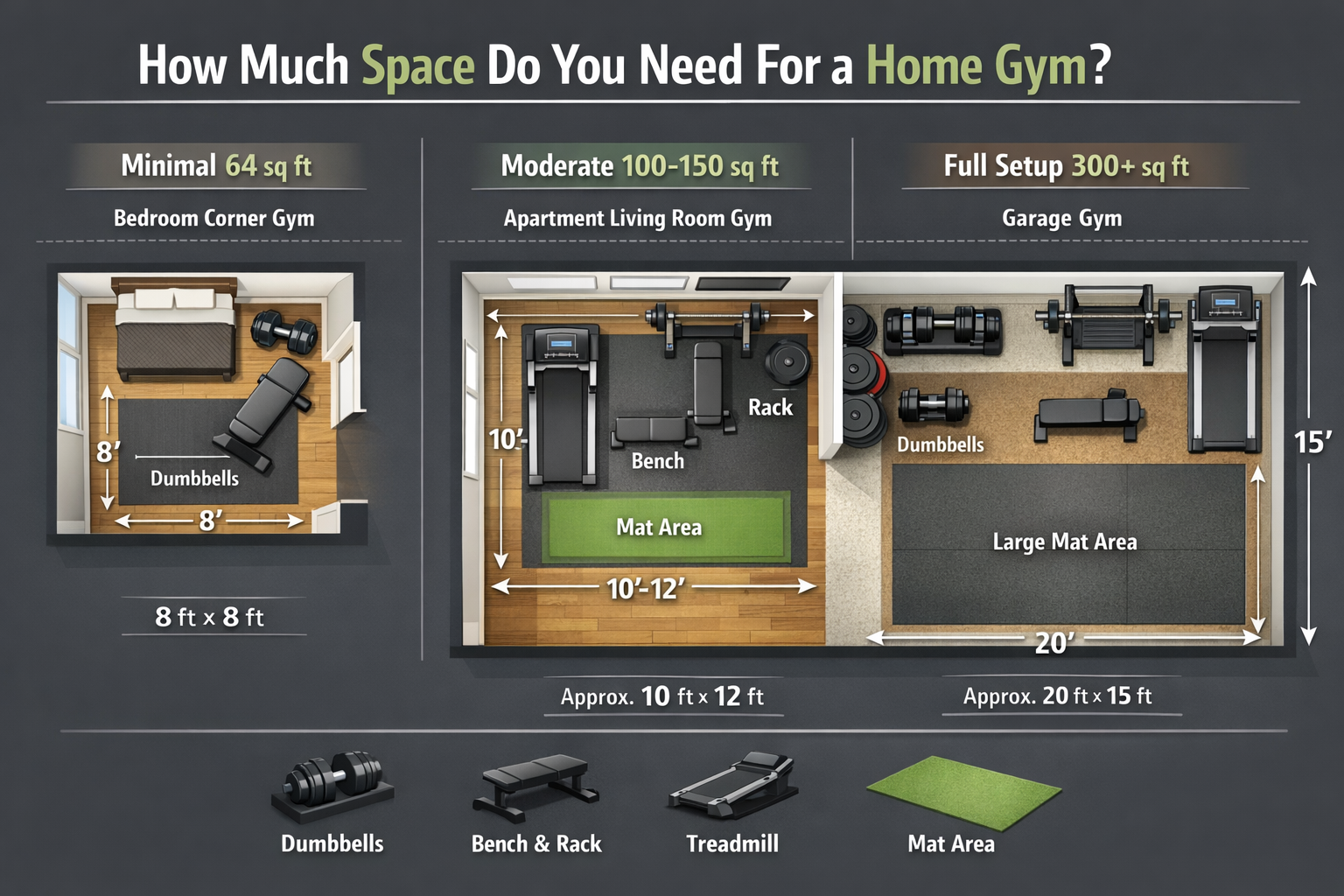
Quick Answer: Home Gym Space Requirements by Setup Type
| Gym Type | Recommended Size | Best For | Typical Equipment |
|---|---|---|---|
| Minimal setup | 8×8 ft (64 sq ft) | Bodyweight, bands, adjustable dumbbells, kettlebells | Mat, bands, adjustable weights, foldable bench |
| Moderate setup | 10×10 ft (100 sq ft) | Strength training, functional workouts | Bench, dumbbells, kettlebells, compact rack |
| Compact full gym | 150–300 sq ft | Strength + cardio + mobility | Rack, bench, cardio machine, storage, mat zone |
| Optimal multi-zone gym | 300–500 sq ft | Households, varied training goals | Strength area, cardio area, mobility/recovery zone |
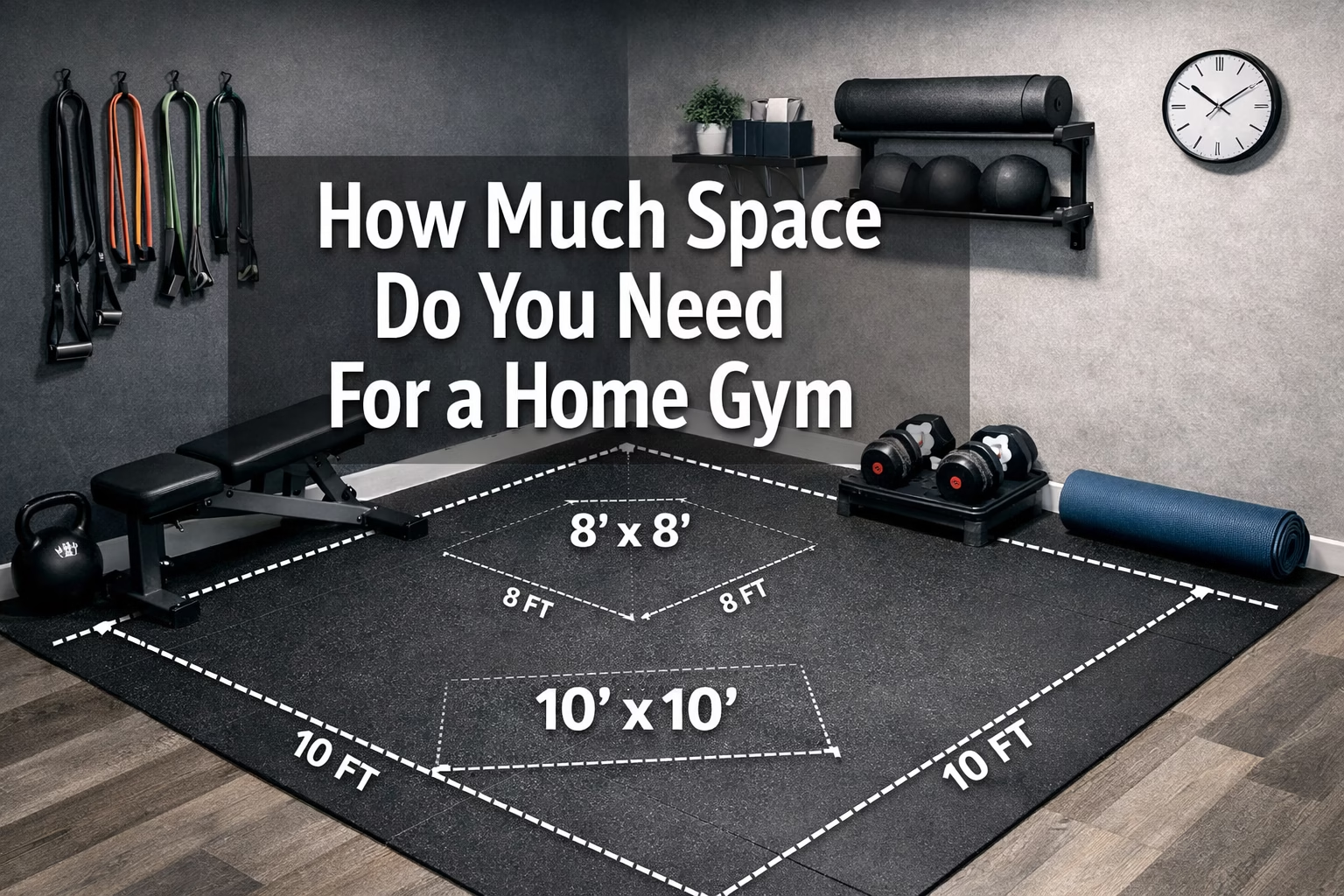
An 8×8-foot space is the practical minimum for basic strength work, while 10×10 feet is a strong target if you want more freedom for barbell lifts and functional movement [1][2].
Key Takeaways
- 64 sq ft is enough for a minimal home gym setup if you train smart.
- 100 sq ft feels much better for lifting, mobility, and safer movement.
- Layout matters more than size—clean movement paths and storage are critical [2].
- Adjustable and foldable gear is the best choice for a small home gym setup.
- Apartment, bedroom, and garage gyms each need different design and noise strategies.
How Much Space Do You Need For a Home Gym at Minimum?
For most people, the real answer depends on training goals.
Minimum square footage for home gym
- 64 sq ft (8×8 ft): enough for a minimal home gym setup with dumbbells, bands, and a bench [1]
- 100 sq ft (10×10 ft): ideal movement box for barbell work, kettlebells, and overhead training [2]
- 150–300 sq ft: supports a complete compact home gym design with cardio and mobility zones [2]
A useful rule I tell readers: plan for your body in motion, not just the machine footprint. A bench may fit in 2×4 feet, but you also need room to get on it, load weights, and move safely.
“The best home gym is not the one with the most gear. It’s the one with the cleanest movement space.”
Equipment Selection for Small Spaces
The best home gym equipment for small spaces gives you more exercises per square foot.
Best space-saving gym equipment
- Adjustable dumbbells
Replace a full rack of weights. See our guide on whether adjustable dumbbells are worth it. - Adjustable kettlebells
Great for swings, squats, presses, and carries. Compare options in our best adjustable kettlebell for home gym guide. - Foldable bench
Gives you pressing and support work without eating floor space. Browse a weight bench for home gym if bench training matters to you. - Resistance bands
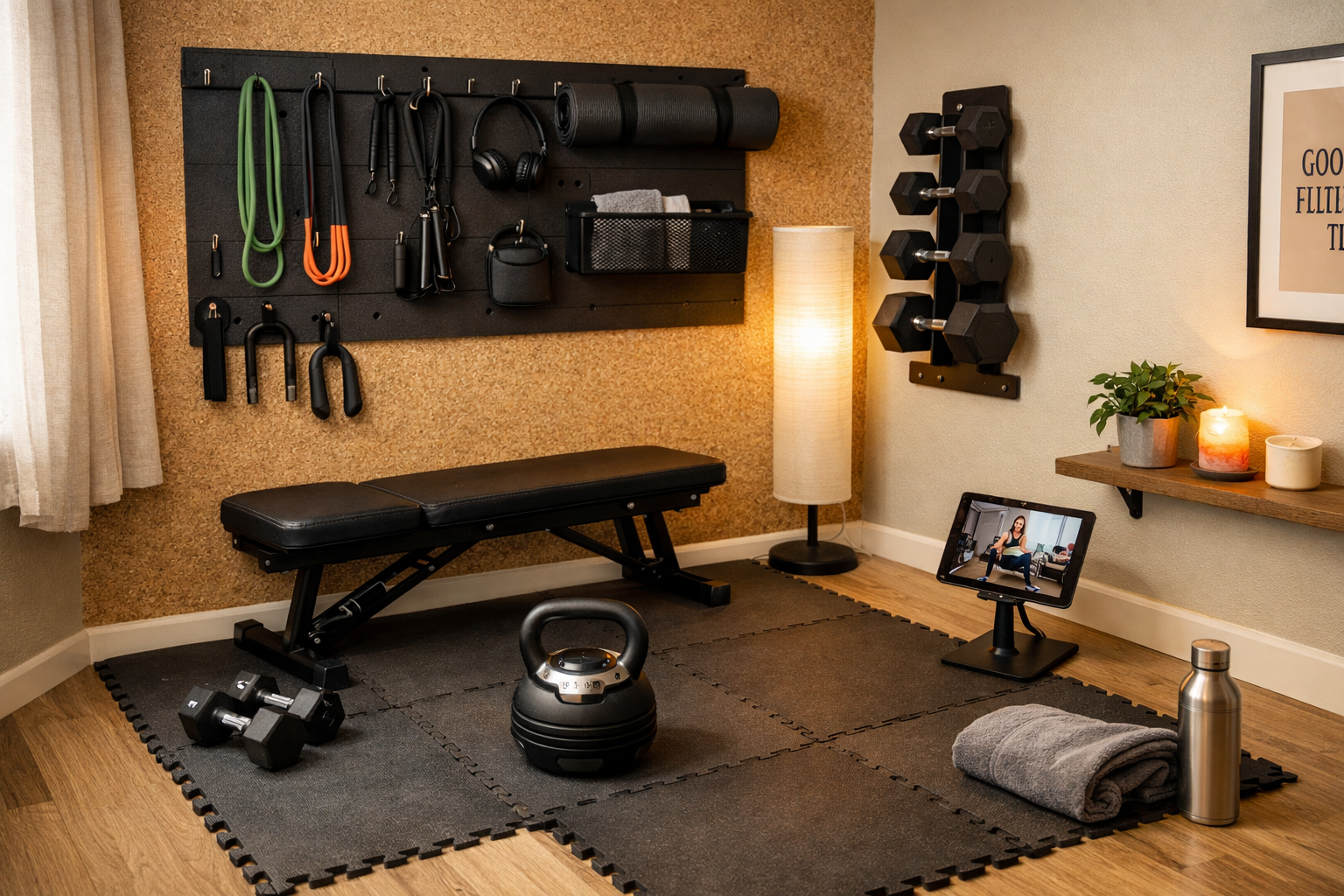
Cheap, portable, and renter-friendly. They’re excellent for a home gym in small apartment settings. - Wall-mounted or vertical storage
Vertical dumbbell racks can take up less than 2 sq ft, far less than long horizontal storage [3].
If you want a full overview, our best home gym equipment guide is a helpful next step.
How Much Space Do You Need For a Home Gym Based on Training Style?
Your training style shapes your home gym space requirements.
Strength training
If you use a power rack, remember many racks are around 90 inches tall [2]. You also need room for the bar, plate loading, and safe walkways. This is where 10×10 feet becomes much more comfortable.
Functional training
For circuits, kettlebells, and bodyweight flows, a clear 6×6 ft minimum can work, though 10×10 ft is far better for comfort and safety [2].
Cardio-focused training
A treadmill or bike can fit in a small room, but it changes your compact home gym design. You need front and side clearance, airflow, and often better sound control.
Hybrid training
A bench, adjustable dumbbells, bands, and a mat can support muscle gain, fat loss, and conditioning. If that’s your goal, check our complete home gym solution and top dumbbell exercises for full-body gains.
Apartments, Garages, and Bedrooms: What Works Best?
Apartment home gym in small apartment
Apartments need a rental-friendly gym setup:
- Interlocking rubber tiles
- Foldable bench
- Resistance bands
- Adjustable weights
- Noise-dampening mats
- Wall-safe storage hooks
For upstairs units, avoid dropping weights and use noise reduction strategies like rubber flooring, crash pads, and slower eccentrics. This protects your floor and your neighbor relationships.
Garage gym
Garages often beat basements because they usually have better ceiling height and ventilation [2]. One-car or shared garages can still work well. There are even examples of a 22×22 ft garage fitting cars plus a serious strength setup with smart planning [1]. For more ideas, see best all-in-one home gym machine.
Bedroom gym
A spare bedroom is often ideal for a minimalist gym design. Aim for:
- A mat zone
- Under-bed or closet storage
- One wall for mirrors or bands
- A neutral, uncluttered look for motivation
I’ve found bedroom gyms often improve consistency because they feel private and easy to access.
Layout and Design Tips for Better Home Workout Efficiency
Home gym layout tips
- Zone by movement: strength, cardio, mobility
- Store vertically: free up floor area
- Keep one clear lane: for lunges, carries, and setup
- Check ceiling height: 8 ft is workable; 9–10 ft is better for overhead work and a more open feel [2]
- Use mirrors carefully: they can make a compact exercise space feel larger
A home gym room planner mindset helps. Sketch the room, mark doors, and draw equipment footprints before buying anything.
The Psychology of Small-Space Gym Design
This is where many articles fall short. A small gym is not just about square footage. It’s about how the space makes you feel.
A clean, organized gym lowers friction. That means you train more often. A calm setup with good lighting, no clutter, and easy access can support motivation and even mental health. In my experience, a compact gym that feels “ready” beats a larger room full of unused equipment.
Technology can help too:
- Tablet workouts
- Smart speakers
- Compact fitness apps
- VR fitness options for variety and engagement
If home wellness is part of your goal, our wellbeing guide adds useful context.
Budget-Friendly Home Gym Solutions
You do not need a luxury build.
Affordable home gym solutions by budget
| Budget | What You Can Build |
|---|---|
| Under $500 | Bands, mat, used adjustable dumbbells, jump rope |
| $500–$1,500 | Strong small home gym setup with bench, weights, storage |
| $1,500–$5,000 | Quality compact gym with rack or cardio piece |
| $5,000+ | Professionally designed compact or multi-zone gym [2] |
Professional home gym buildouts can range from $5,000 to $15,000 for compact spaces and much more for premium projects [2]. But many readers are better off starting lean and expanding over time.
Think in terms of cost per workout. A $600 adjustable dumbbell set used 150 times in a year becomes very cost-effective.
Safety Considerations You Should Not Skip
Safety is part of your home fitness optimization.
- Leave room to load and unload weights
- Do not block doors or vents
- Use non-slip flooring
- Anchor storage if needed
- Check ceiling clearance before overhead presses
- Keep cables, bands, and plates organized
- If in a basement, manage moisture and dehumidification [2]
If you are using kettlebells in tight spaces, our best kettlebells for home gym guide can help you choose smarter.
FAQ: How Much Space Do You Need For a Home Gym?
Can I build a home gym in 50 square feet?
Yes, but it will be very limited. A minimal home gym setup is more practical at 64 sq ft [1].
Is 10×10 enough for a home gym?
Yes. For many people, 10×10 feet is the sweet spot for strength and functional training [2].
What is the best equipment for small spaces?
Adjustable dumbbells, kettlebells, bands, a foldable bench, and vertical storage are usually the best choices.
Can I make a renter-friendly home gym?
Absolutely. Use portable workout gear, rubber mats, freestanding storage, and avoid drilling where possible.
What room is best for a home gym?
A garage often offers the best ceiling height and airflow, while a bedroom may be best for convenience and consistency [2].
Conclusion
So, How Much Space Do You Need For a Home Gym? For most people, 64 sq ft is enough to start, 100 sq ft is better, and 150–300 sq ft gives you a truly versatile setup.
The smartest path is to match your room to your training goals, choose modular gear, and protect your movement space.
Start simple. Measure your room. Pick one training style. Then build around it.
If you want to start building your home gym today, explore space-saving equipment, map your layout, and expand only when your routine proves you need more.
References
[1] How To Start Your Home Gym In 2026 – https://graymatterlifting.com/how-to-start-your-home-gym-in-2026/
[2] Luxury Home Gym Design Guide – https://www.iron-house.co/luxury-home-gym-design-guide
[3] The Best Home Gym Equipment For 2026 – https://synergycustomfitness.com/blogs/synergy-custom-blog/the-best-home-gym-equipment-for-2026
[4] The Ultimate Garage Gym Setup For 2026 – https://thefitnessoutlet.com/blogs/fitness-outlet-blog/the-ultimate-garage-gym-setup-for-2026