
Kettlebell Exercises For Abs
Endless crunches on a gym mat are one of the most common, and least effective, approaches to building a strong midsection.
According to a review published in the Journal of Strength and Conditioning Research, compound, load-bearing movements activate up to 40% more total core musculature than traditional spinal flexion exercises like crunches and sit-ups.
For anyone serious about developing a resilient, defined core, Kettlebell Exercises For Abs represent one of the most efficient training methods available today.
This guide breaks down the science behind functional core training, exposes the exercises wasting your time, and delivers a complete, evidence-based system for building a midsection that performs as powerfully as it looks.
Why the Core Is Misunderstood in Most Training Programs
The fitness industry has long promoted a flawed model of abdominal training — one that treats the abs primarily as spinal flexors. This thinking gave rise to decades of crunches, sit-ups, and machine-based isolation work. The problem? That model ignores how the core actually functions during real-world movement.
The three primary jobs of the core are:
- Anti-extension — Preventing the lower back from arching excessively under load
- Anti-rotation — Resisting unwanted twisting of the trunk and spine
- Lateral stability — Maintaining alignment when force is applied from the side
When training targets these three functions, the result is not just improved aesthetics — it is a structural foundation that protects the spine, enhances athletic performance, and transfers directly to everyday movement.
A 2025 study from the National Strength and Conditioning Association confirmed that athletes who trained core stability over core flexion showed a 31% reduction in lower-back injury rates over a 12-month period.
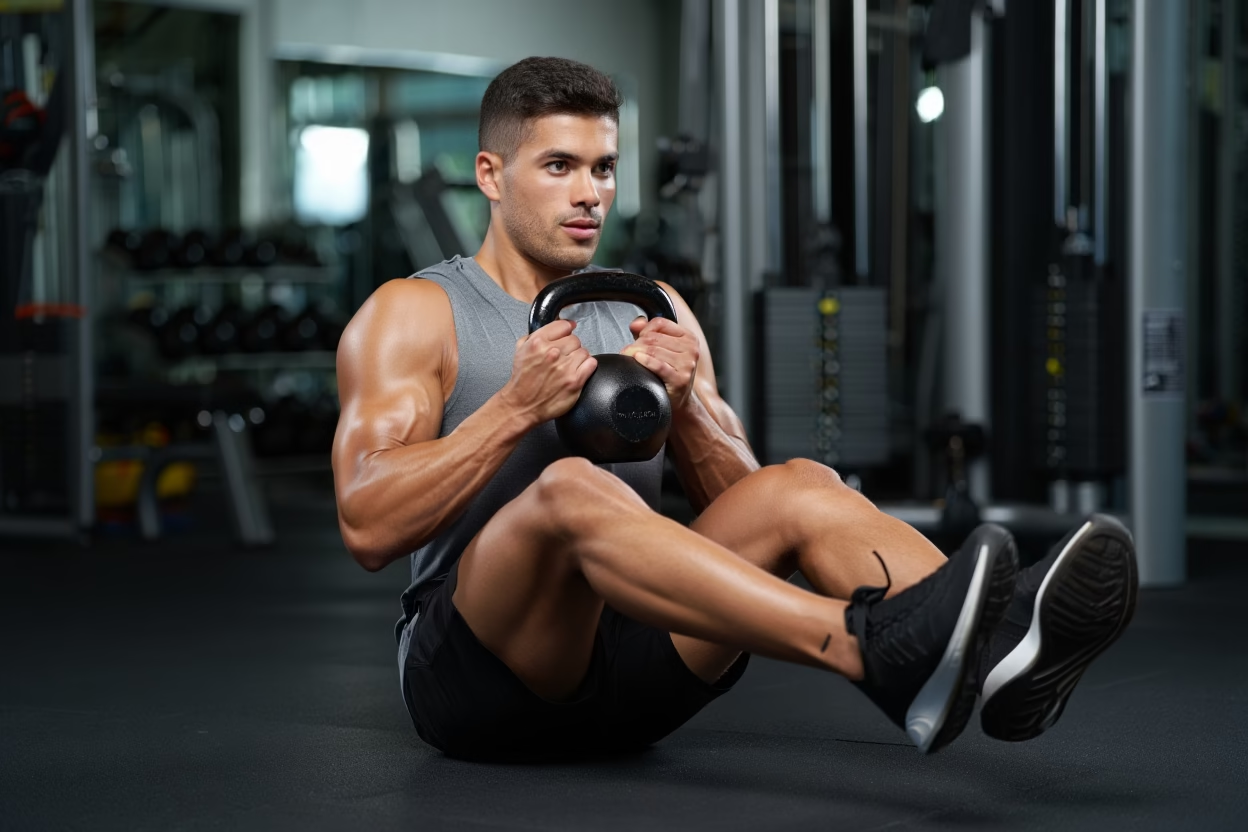
The 3 Ab Exercises to Remove From Your Routine
Before building a better program, it is worth identifying what is holding most people back.
1. Traditional Crunches
Crunches train spinal flexion in a horizontal position — a movement pattern that has almost no carryover to standing, lifting, or athletic activity. They also place repetitive compressive stress on the lumbar discs, which biomechanics researcher Dr. Stuart McGill has linked to accelerated disc degeneration over time.
2. Unsupported Leg Raises
When performed without proper technique, leg raises become a hip flexor exercise rather than an abdominal one. The psoas and iliacus — the primary hip flexors — attach directly to the lumbar vertebrae. Under fatigue, they create significant anterior pull on the lower spine, increasing injury risk for those with existing back issues.
3. Ab Isolation Machines
Most commercial ab machines lock the body into a fixed plane of motion that rarely matches natural biomechanics. More critically, they eliminate the stabilization demand entirely — removing the very stimulus the core is designed to respond to.
The Top 3 Kettlebell Exercises for Abs
These three movements form the cornerstone of any serious kettlebell core program. Each one forces the midsection to work as an integrated stabilizer rather than an isolated muscle group.
1. Kettlebell Front Squat
Holding one or two kettlebells in the rack position shifts the center of gravity forward, creating a powerful anti-extension challenge. The abdominals must fire continuously throughout the entire range of motion to prevent spinal rounding and maintain an upright torso. This makes the front squat one of the most effective kettlebell exercises for abs available — and it simultaneously develops the legs and upper back.
Key coaching cues:
- Keep elbows high and chest tall throughout the descent
- Brace the core before initiating the squat
- Drive through the heels and maintain a neutral spine at the bottom
2. Kettlebell Renegade Row
Few exercises challenge anti-rotation as effectively as the renegade row. Starting in a high plank position with hands gripping two kettlebells, the movement involves rowing one arm at a time while the opposite side resists the rotational force. The hips must stay square to the floor — any deviation signals a core stability breakdown.
Key coaching cues:
- Use a hip-width stance for a more stable base
- Move slowly and deliberately to maximize time under tension
- Avoid letting the hips rock or rotate as the arm pulls
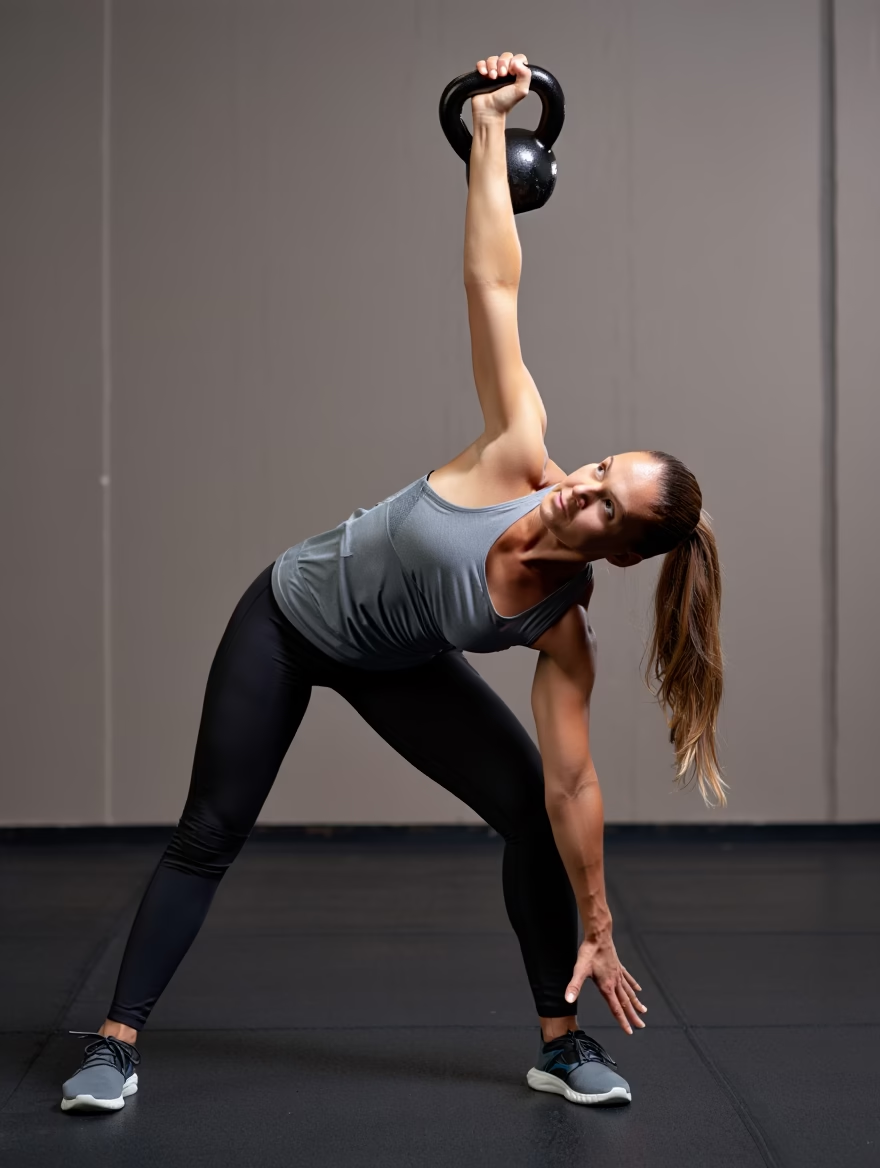
3. Kettlebell Turkish Get-Up
The Turkish Get-Up (TGU) is widely regarded as one of the most complete movement assessments in strength training. Moving from a supine position to standing while holding a kettlebell overhead, the TGU demands coordinated stability across every plane of motion. The core acts as the central link between the upper and lower body throughout each transition phase.
Key coaching cues:
- Begin with a light weight to master the movement pattern
- Keep eyes on the kettlebell throughout the entire sequence
- Move through each phase with deliberate control — this is not a speed exercise
7 Elite-Level Exercises for a Functional Midsection
A well-designed program extends beyond three movements. The following exercises complement kettlebell training and collectively address every dimension of core function.
1. Kettlebell Swing (Single or Double)
The swing teaches the core to create a rigid, stable pillar at the top of each rep — preventing the weight from pulling the spine into hyperextension. Single-arm swings add a significant anti-rotation component, making them one of the most efficient kettlebell exercises for abs in terms of time investment.
2. Push-Up Variations
A properly executed push-up is a dynamic plank. Elevating one foot or one hand introduces lateral instability that forces the obliques to engage. Archer push-ups — where one arm extends laterally as the body lowers — are particularly effective for advanced anti-rotation training.
3. Mountain Climbers (Standard and Cross-Body)
Performed slowly and with control, mountain climbers stimulate all three core functions simultaneously. Cross-body variations, where the knee drives toward the opposite elbow, specifically target the internal and external obliques through controlled rotational movement.
4. Woodchopper (Kettlebell or Cable)
The diagonal chopping pattern mirrors real-world power transfer — from the ground, through the hips, and into the upper body. This exercise trains the obliques through a functional arc of motion and is particularly valuable for rotational sport athletes.
5. Gymball Rollout
As the ball rolls away from the body, the lever arm lengthens and the demand on the rectus abdominis increases dramatically. Research from the Journal of Orthopaedic & Sports Physical Therapy found rollouts produce significantly higher rectus abdominis activation than crunches, with far less compressive spinal load.
6. Half-Kneeling Kettlebell Chop
From a half-kneeling position, moving the kettlebell diagonally from hip to opposite shoulder challenges the obliques and improves hip-to-shoulder coordination. The kneeling position also eliminates lower-body compensation, isolating the core more effectively.
7. Spiderman Push-Up
As the chest lowers toward the floor, one knee drives forward to meet the same-side elbow. This creates simultaneous demands on lateral stability, anti-rotation, and hip mobility. For an advanced variation, the opposite arm moves forward as the knee comes up, creating a diagonal tension pattern that activates the entire anterior chain.
The 15-Minute Kettlebell Core Circuit
This structured circuit applies the principles above into a practical, time-efficient routine. Perform each exercise for 45 seconds, followed by 15 seconds of rest. Complete the circuit twice for a total of approximately 15 minutes.
| Exercise | Primary Function |
|---|---|
| Kettlebell Swings | Anti-extension, power |
| Plank Drags | Anti-rotation, stability |
| Half-Kneeling Kettlebell Chops | Oblique strength, coordination |
| Goblet Squats | Anti-extension, trunk stability |
| Mountain Climbers (Cross-Body) | Rotational control, endurance |
| Standing Core Rotations | Functional rotation, definition |
| Around-the-Body Pass | Dynamic stability, proprioception |
Rest 90 seconds between circuits. This format builds both muscular endurance and neuromuscular control — the two pillars of a functional core.
Form, Safety, and Programming Recommendations
Kettlebell exercises for abs are highly technical. Performing them with compromised form shifts stress from the target muscles to the joints and connective tissue — increasing injury risk rather than reducing it.
Essential safety guidelines:
- Master bodyweight versions first before adding load to any movement
- Film technique periodically to identify form breakdowns that are difficult to feel in real time
- Prioritize quality over volume — six clean reps outperform twelve sloppy ones
- Allow adequate recovery — core musculature responds to 48–72 hours of rest between high-intensity sessions
For programming, integrating kettlebell core work three times per week within a broader strength program produces measurable improvements in stability and definition within six to eight weeks for most trained individuals.

The Bottom Line
The evidence is clear: Kettlebell Exercises For Abs outperform traditional crunch-based training in both functional carryover and total muscle activation.
By training the core as a stabilizer — through anti-extension, anti-rotation, and lateral resistance — the result is a midsection that is not only visually defined but structurally sound.
Pick up a kettlebell, apply these principles consistently, and build the core that traditional ab training was never designed to deliver.