
Apron Belly Exercises
Last updated: July 24, 2026
Quick Answer: Apron Belly Exercises cannot spot-reduce fat directly from the lower abdomen, but a consistent combination of core-strengthening moves, cardiovascular work, and dietary changes can reduce overall body fat, firm the muscles underneath, and meaningfully improve how an apron belly looks and feels. For many people, a structured exercise routine produces visible before-and-after results within 8 to 12 weeks.
Key Takeaways
- An apron belly (medically called a panniculus) is an overhang of skin and fat from the lower abdomen caused by pregnancy, significant weight gain, or rapid weight loss.
- Spot reduction is not scientifically supported, so apron belly exercises must be paired with full-body fat loss strategies to work effectively.
- Core exercises including dead bugs, heel taps, reverse crunches, glute bridges, and forearm planks are among the most effective moves for strengthening the lower abdominal muscles under the apron.
- Walking 30 minutes daily is one of the most underrated tools for reducing belly fat and improving overall health.
- Diet control, specifically a moderate caloric deficit with adequate protein, is essential alongside exercise for weight loss.
- Bed exercises and floor-based moves make apron belly exercises accessible for beginners, older adults, and those with limited mobility.
- Surgery such as a panniculectomy may be the only option to remove excess skin once fat loss is achieved, but exercise significantly improves the outcome and recovery.
- Health conditions linked to apron belly include diabetes, back pain, skin irritation, and in severe cases, conditions like COPD (Chronic Obstructive Pulmonary Disease) and chronic respiratory failure.
Check the Waist Trainer For Apron Belly on Amazon <—-
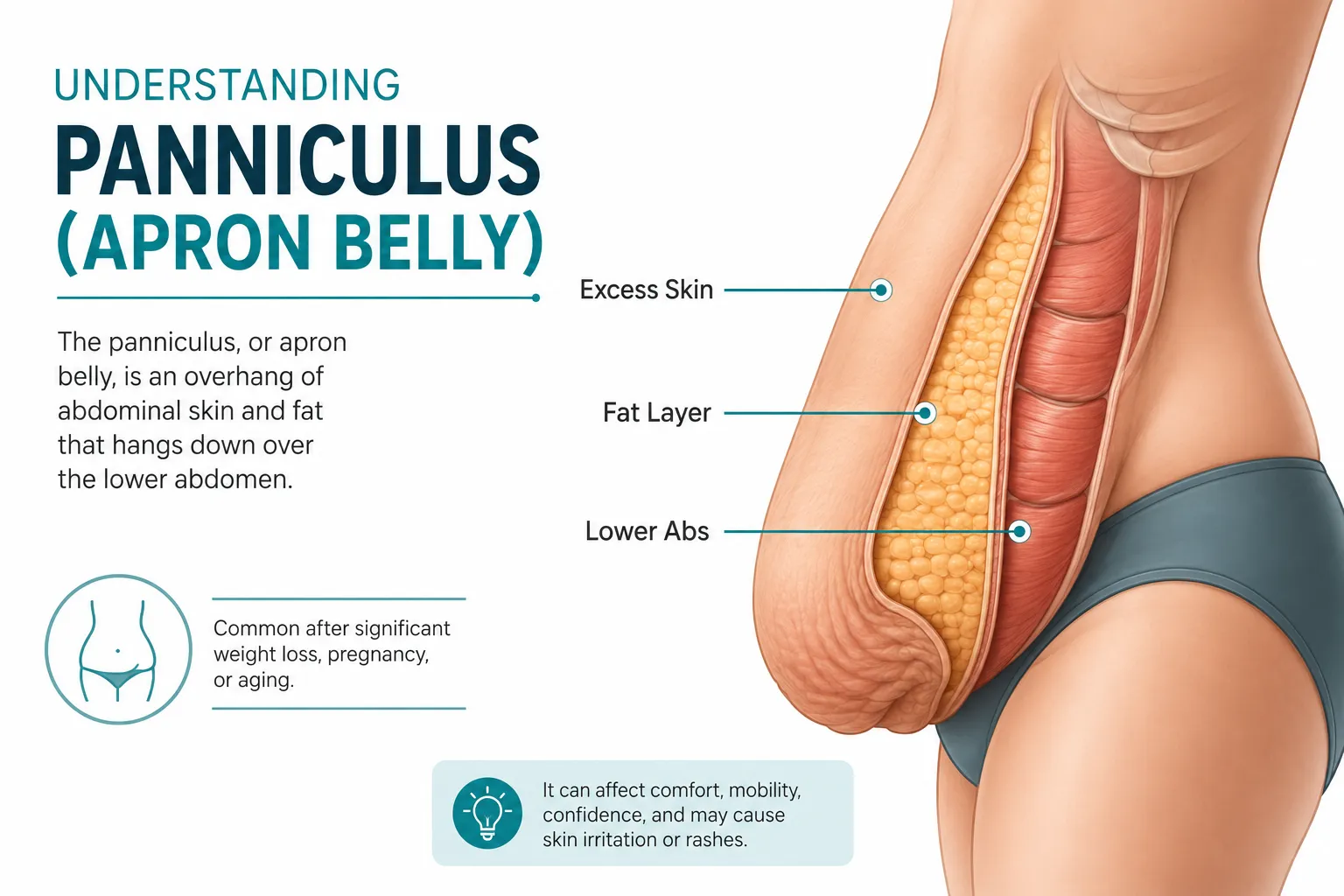
What Is Apron Belly and Why Does It Happen
An apron belly, known medically as a panniculus, is a fold of excess skin and fat that hangs from the lower abdomen, often draping over the belly button and lower body [1].
It develops when the skin and fat tissue of the lower belly stretch beyond their ability to retract, leaving a visible overhang.
Understanding the cause helps you choose the right combination of apron belly exercises and lifestyle changes.
Common causes include:
- Pregnancy, especially multiple pregnancies or C-section deliveries, which stretch the lower abdominal muscles and skin
- Significant weight gain that stretches the skin over time
- Rapid weight loss, which leaves behind excess skin after fat is reduced
- Aging, which reduces skin elasticity and collagen production
- Genetics, which influence where your body stores and loses fat
According to SurgiSculpt, an apron belly can cause physical discomfort, restricted movement, skin irritation under the fold, and increased health risks including diabetes, heart disease, and chronic back pain [2].
In more severe cases, the weight and position of a large panniculus can contribute to breathing difficulties, including conditions similar to those seen in COPD (Chronic Obstructive Pulmonary Disease) and chronic respiratory failure.
Managing your apron belly is genuinely a health care priority, not just an aesthetic one.
What Is the Difference Between Apron Belly and Regular Belly Fat
An apron belly and regular belly fat are related but distinct conditions. Regular belly fat sits in two forms: subcutaneous fat (just under the skin) and visceral fat (deep around the organs).
An apron belly is specifically the visible overhang of subcutaneous fat and skin from the lower abdomen, and it may persist even after significant weight loss because stretched skin does not always retract [6].
Key differences at a glance:
- Regular belly fat responds well to diet and exercise, including targeted core work
- An apron belly involves both fat and potentially loose, inelastic skin that exercise alone cannot remove
- Visceral fat (the dangerous kind around organs) is not visible but raises risks for diabetes, heart failure, atrial fibrillation (Afib), and other conditions
- An apron belly look is primarily a lower belly issue, while general belly fat can be distributed across the entire midsection
This distinction matters because it sets realistic expectations. Apron Belly Exercises will strengthen your core muscles, reduce the fat component, and improve posture, but if significant loose skin remains after fat loss, medical or surgical services may be needed.
Check the Waist Trainer For Apron Belly on Amazon <—-
Best Apron Belly Exercises to Reduce Lower Belly Fat
The Best Apron Belly Exercises combine deep core activation with full-body fat burning. No single exercise removes fat from one spot, but strengthening the abdominal muscles under the apron belly helps lift and support the area, while cardiovascular work drives overall fat loss [3].
Dead Bugs
Dead bugs are one of the safest and most effective exercises for activating the lower abs deep core muscles without straining the back. Lie back on a flat surface with arms pointing toward the ceiling and knees bent at 90 degrees.
Slowly lower your right arm and left leg toward the floor simultaneously, keeping your lower back pressed down. Return to start and repeat on the other side.
- Recommended sets and reps: Perform 3 sets of 8 to 10 reps per side
- Rest 30 to 45 seconds between each set
- Each set variation can include a longer hold at the bottom position (2 to 3 seconds) to increase difficulty
Dead bugs engage the transverse abdominis, the deepest layer of the abdominal muscles, which acts like a natural corset around the lower belly.
Heel Taps
Heel taps directly target the lower abdomen and are ideal for beginners. Lie back with knees bent and feet flat on the floor. Crunch slightly forward and reach each hand alternately toward the corresponding heel, tapping it gently.
- Perform 3 sets of 15 to 20 reps per side
- Rest 30 seconds between each set
- Keep the lower back pressed into the floor throughout
Reverse Crunches
Reverse crunches lift the hips rather than the shoulders, placing the work directly on the lower abs. Lie back with hands at your sides, knees bent and lifted to 90 degrees. Use your core muscles to curl your hips off the floor, bringing your knees toward your chest. Slow the movement down on the way back.
- Perform 3 sets of 10 to 12 reps
- Rest 45 seconds between each set
- Add a 2-second hold at the top for greater muscle engagement
Glute Bridges
Glute bridges work the posterior chain, including the glutes and lower back, while also engaging the deep core. Lie back with knees bent and feet flat. Press through your heels to lift your hips until your body forms a straight line from shoulders to knees. Hold for 2 seconds, then lower slowly.
- Perform 3 sets of 12 to 15 reps
- Rest 30 seconds between each set
- Each set variation can include a single-leg version for added strength challenge
For a progression of this movement, our guide on kettlebell glute bridge exercises shows how to add resistance once bodyweight feels easy.
Forearm Plank
The forearm plank is a full-core isometric exercise that strengthens the entire abdominal wall, including the muscles directly under the apron belly. Lie face down, then rise onto your forearms and toes, keeping your body in a straight line. Hold the position while breathing steadily.
- Start with 3 holds of 20 to 30 seconds
- Rest 45 seconds between each set
- Add 5 seconds per session as your core strength improves
Planks also help reduce lower back pain, which is a common complaint among people carrying extra weight in the lower belly area. For related back care, see our resource on exercises for lower neck and back pain.

Apron Belly Exercises for Beginners at Home
Beginners can start reducing apron belly fat at home with no equipment at all. The key is to begin with low-impact moves that protect the lower back and build core strength gradually [4].
These exercises firm the muscles under the apron and prepare the body for more demanding work over time.
Beginner-friendly routine (no equipment needed):
- Pelvic tilts: Lie back with knees bent. Flatten your lower back against the floor by tightening your abs, hold for 5 seconds, then release. Perform 3 sets of 10 reps.
- Heel taps: As described above, start with 2 sets of 10 per side.
- Glute bridges: 2 sets of 10 reps with a 2-second hold at the top.
- Walking: 20 to 30 minutes of brisk walking daily. Walking is one of the most consistent fat-burning tools available and requires no gym membership.
- Standing side bends: Stand with feet hip-width apart and slowly lean to each side, stretching the oblique muscles along the sides of the lower belly.
For people who find floor exercises difficult, bed exercises are a practical alternative. Bed exercises for the core follow the same principles as floor work but use a softer surface, making them more accessible for older adults or those recovering from pregnancy.
Lie back on a firm mattress and perform pelvic tilts, heel taps, and leg raises with the same form cues as the floor versions.
If you want to progress beyond bodyweight, our overview of kettlebell exercises for abs and core stability provides a natural next step.
How to Make Bed Core Work Count After 60
Bed exercises are especially valuable for adults over 60 who may have joint pain, balance concerns, or limited mobility. A firm mattress provides enough resistance for core activation while reducing strain on the hips and knees. Perform sets of heel taps, pelvic tilts, and dead bug variations while lying back on the bed each morning before getting up.
- Keep each movement slow and controlled
- Breathe out during the effort phase of each rep
- Aim for 2 to 3 sets of 8 to 12 reps per exercise
- Hold each position for a count of 2 before releasing
Consistency matters more than intensity at this stage. Even 10 minutes of bed exercises each morning, combined with daily walking, creates meaningful changes in core strength and helps reduce apron belly discomfort over time.
People managing chronic pain, Parkinson’s disease, or dementia and memory loss issues should consult their primary care provider before starting any new exercise program.
Can You Reduce or Remove an Apron Belly Without Surgery
Exercise and diet can meaningfully reduce the fat component of an apron belly, but they cannot remove excess skin [5]. Whether surgery is necessary depends on how much of the overhang is fat versus loose skin after weight loss.
Non-surgical approaches that help:
- Consistent core exercises to firm the muscles under the apron belly
- Cardiovascular exercise (walking, swimming, cycling) for overall weight loss
- Diet control with a moderate caloric deficit and high protein intake to preserve muscle while losing fat
- Non-invasive body contouring services such as CoolSculpting or laser treatments, which can reduce fat deposits but are not suitable for everyone
When surgery becomes relevant:
A panniculectomy is a surgical procedure that removes excess skin and fat from the lower abdomen. According to Healthline, this procedure may be covered by health insurance when certain medical criteria are met, such as documented skin infections or physical impairment caused by the panniculus [5]. A tummy tuck (abdominoplasty) goes further by also tightening the abdominal muscles.
Surgery is not a substitute for lifestyle changes. Surgeons typically require patients to be at or near their goal weight and to have maintained that weight for at least 6 months before operating. This means apron belly exercises and diet changes are prerequisites, not alternatives, to surgical options.
Losing Weight Through Exercise and Eating Healthy to Reduce Apron Belly
Diet and exercise work together, and neither alone is as effective as the combination. Research consistently shows that a caloric deficit drives fat loss, while exercise preserves muscle mass and improves metabolic health [3].
Dietary changes that support apron belly fat reduction:
- Reduce ultra-processed foods, refined carbohydrates, and added sugars, which drive fat storage around the lower belly
- Increase protein intake (aim for 0.7 to 1 gram per pound of body weight) to preserve muscle during weight loss
- Eat more fiber-rich vegetables and legumes to improve satiety and gut health
- Control portion sizes rather than eliminating entire food groups
Exercise habits that accelerate results:
- Combine 3 to 4 sessions of core-focused apron belly exercises per week with 150 minutes of moderate cardio weekly, which is the amount recommended by the CDC for adults
- Add strength training 2 days per week to build muscle, which raises resting metabolic rate and helps with long-term weight loss
- Use walking as your primary cardio tool if you are a beginner. A 30-minute brisk walk burns approximately 150 to 200 calories and is sustainable long-term
For more strategies on fat loss through movement, our guide on fat loss and the best way to lose weight covers the fundamentals in detail.
Check the Waist Trainer For Apron Belly on Amazon <—-
How Long Does It Take to See Results From Apron Belly Exercises
Most people begin to notice changes in core strength and posture within 4 to 6 weeks of consistent apron belly exercises. Visible fat reduction in the lower belly area typically takes 8 to 12 weeks of combined exercise and diet control, though individual results vary based on starting weight, consistency, and genetics [4].
Realistic timeline:
- Weeks 1 to 2: Improved core muscle activation, reduced lower back discomfort, better posture
- Weeks 3 to 6: Noticeable strength gains, slightly firmer lower abdomen, early changes in body composition
- Weeks 8 to 12: Measurable fat loss, improved belly look, visible before-and-after results if diet is also on track
- Beyond 12 weeks: Continued fat reduction, potential need to reassess whether remaining overhang is skin rather than fat
Apron belly before and after exercise photos shared in fitness communities often show dramatic changes at the 3 to 6 month mark, particularly when strength training is added to the routine. Keep in mind that loose skin may not change with exercise alone, and that is where medical services or surgical consultations become relevant.
Surgical and Nonsurgical Treatments for Apron Belly
When Apron Belly Exercises and diet changes are not enough to achieve the desired result, several medical and cosmetic services are available [5].
Nonsurgical options:
- CoolSculpting (cryolipolysis): Freezes and destroys fat cells under the apron belly skin without incisions. Results appear gradually over 2 to 3 months. Not suitable for people with obesity or certain cold-sensitivity conditions.
- Laser fat reduction: Uses heat energy to break down fat cells in the lower abdomen. Multiple sessions are typically required.
- Radiofrequency skin tightening: Helps improve skin elasticity in the area under the apron, though results are modest for significant loose skin.
Surgical options:
- Panniculectomy: Removes the panniculus (the hanging skin and fat) from the lower abdomen. Focuses on removing the overhang rather than tightening the entire abdominal wall.
- Abdominoplasty (tummy tuck): A more comprehensive procedure that removes excess skin, tightens the abdominal muscles, and reshapes the lower belly. Often sought after significant weight loss or multiple pregnancies.
Both procedures carry standard surgical risks and require a recovery period of 4 to 6 weeks. Consulting a board-certified plastic surgeon and your primary care provider is essential before pursuing any surgical services.
Remedies to Help Ease Apron Belly Discomfort
Beyond exercise, daily skin care and lifestyle habits can significantly reduce the discomfort that comes with an apron belly [5].
Practical care tips:
- Keep the skin under the apron clean and dry to prevent fungal and bacterial infections
- Use anti-chafing creams or moisture-wicking barrier products to reduce skin irritation
- Wear supportive compression garments that lift and hold the lower belly, reducing friction and back strain
- Change positions regularly throughout the day to reduce pressure on the lower abdomen
- Elevate the lower body slightly when lying in bed to reduce discomfort during sleep
People with diabetes, high cholesterol, heart failure, sleep apnea, or anemia should be especially diligent about skin care under the apron belly, as these health conditions can slow healing and increase infection risk. Regular check-ins with primary care services help catch problems early.
Is Apron Belly Exercises Safe After Pregnancy
Postpartum Apron Belly Exercises are generally safe after medical clearance, but the timing and type of exercise matter significantly.
Most health care providers recommend waiting at least 6 weeks after vaginal delivery and 8 to 12 weeks after a C-section before beginning any structured core exercise program [6].
Safe postpartum starting points:
- Diaphragmatic breathing and gentle pelvic floor activation (as early as 1 to 2 weeks postpartum with guidance)
- Pelvic tilts and gentle heel slides once cleared by your primary care provider
- Walking, which can begin earlier than core exercises and supports overall weight loss after pregnancy
- Progressing to dead bugs, glute bridges, and heel taps once the pelvic floor feels stable and there is no diastasis recti (abdominal muscle separation)
Women with diastasis recti should avoid traditional crunches and sit-ups, as these exercises can worsen the separation. Dead bugs and forearm planks performed with proper core bracing are safer alternatives. Always confirm your exercise plan with a qualified health care provider before starting.
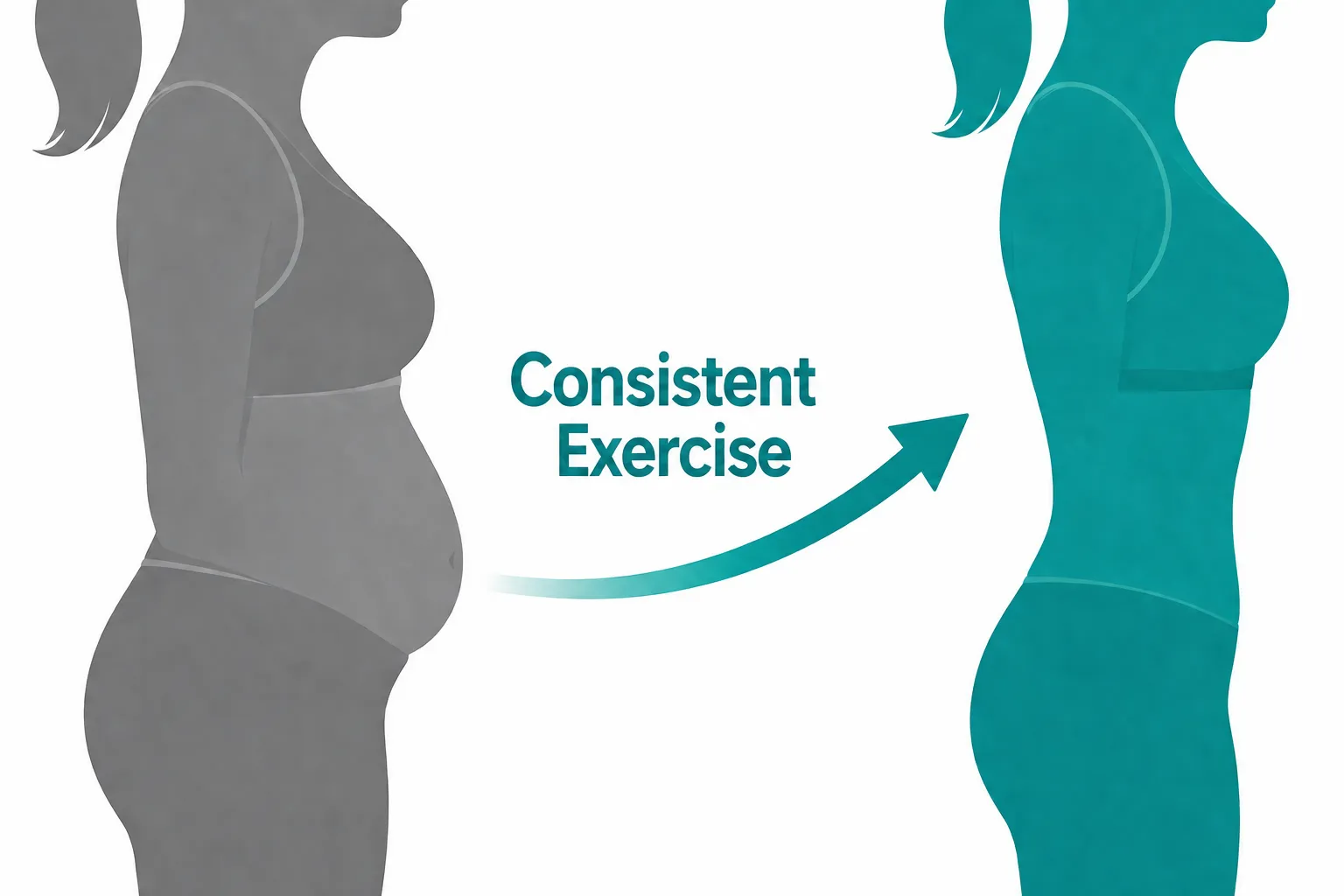
The Bottom Line on Apron Belly Exercises
Apron Belly Exercises are a genuinely effective tool for reducing lower belly fat, building core strength, and improving your overall health, but they work best as part of a broader strategy.
Exercise alone cannot remove excess skin, and diet control is essential for meaningful fat loss. The combination of consistent core work, cardiovascular exercise such as walking, and smart dietary changes produces the most reliable before-and-after results for reducing apron belly appearance.
For people whose apron belly persists despite sustained effort, nonsurgical and surgical services offer additional options. The key is to approach this as a long-term health care commitment rather than a quick fix.
Start with the beginner exercises in this guide, build consistency over 8 to 12 weeks, and reassess your progress with your primary care provider.
For a broader approach to home-based fitness, our best home gym equipment guide covers the tools that make consistent training easier and more sustainable.
Check the Waist Trainer For Apron Belly on Amazon <—-
FAQ: People Also Ask About Apron Belly Exercises
Can you get rid of a belly apron with exercise?
Exercise can significantly reduce the fat component of an apron belly, making it smaller and less prominent, but it cannot remove excess loose skin. If the overhang is primarily fat, consistent apron belly exercises combined with diet changes and cardiovascular work can produce dramatic before-and-after results. If significant loose skin remains after fat loss, a surgical procedure such as a panniculectomy may be the only way to fully remove the apron belly.
What tightens the apron belly?
Strengthening the core muscles under the apron belly through exercises like forearm planks, dead bugs, reverse crunches, and glute bridges helps tighten and support the lower abdominal area. Reducing overall body fat through diet and cardiovascular exercise also decreases the volume of the overhang. Nonsurgical skin-tightening services such as radiofrequency treatments can offer modest improvements in skin elasticity, though results are limited compared to surgery.
Can an apron belly ever be flat?
An apron belly can become significantly flatter through consistent exercise and fat loss, particularly when the overhang is primarily fat rather than loose skin. However, achieving a completely flat lower belly after major weight loss or multiple pregnancies often requires surgical intervention such as a tummy tuck or panniculectomy. Realistic expectations are important, and many people find that substantial reduction in belly look and improved health outcomes are achievable without surgery.
What’s the difference between fupa and apron belly?
A FUPA (fatty upper pubic area) refers specifically to fat accumulation in the mons pubis region, just above the pubic bone. An apron belly is a larger overhang of skin and fat from the lower abdomen that can extend over and beyond the pubic area. While both involve lower belly fat, an apron belly is generally more significant in size and may involve excess skin, whereas a FUPA is typically a localized fat deposit without the hanging skin component. Both respond to similar exercise and diet strategies.
Conclusion
Reducing an apron belly is a realistic goal with the right combination of Apron Belly Exercises, diet changes, and consistent effort.
Start with the core moves outlined here, including dead bugs, heel taps, reverse crunches, glute bridges, and forearm planks, and pair them with daily walking and controlled eating.
Expect meaningful changes in 8 to 12 weeks, and use that progress to build toward longer-term fat loss goals.
If you are postpartum, over 60, or managing a health condition such as diabetes, high cholesterol, or chronic pain, always get clearance from your primary care provider before beginning a new exercise program.
And if exercise and diet have taken you as far as they can, consult a board-certified surgeon about whether panniculectomy or other services make sense for your situation.
The most important step is the first one. Pick two or three of the beginner exercises from this guide, commit to them for four weeks, and build from there. Your core muscles, your back, and your overall health will thank you for it.
For additional strength and conditioning resources, explore our guides on kettlebell exercises for weight loss and building muscle at home to complement your apron belly workout plan.
Check the Waist Trainer For Apron Belly on Amazon <—-

References
[1] What Is An Apron Belly Causes Risks And Treatment – https://scienceinsights.org/what-is-an-apron-belly-causes-risks-and-treatment/?utm_source=openai
[2] Apron Belly – https://surgisculpt.com/apron-belly/?utm_source=openai
[3] How To Get Rid Of Apron Belly Exercises That Work – https://biologyinsights.com/how-to-get-rid-of-apron-belly-exercises-that-work/?utm_source=openai
[4] Apron Belly Workout – https://betterme.world/articles/apron-belly-workout/?utm_source=openai
[5] Apron Belly – https://www.healthline.com/health/pregnancy/apron-belly?utm_source=openai
[6] Pannus Stomach – https://www.medicalnewstoday.com/articles/pannus-stomach?utm_source=openai
[7] Watch – https://www.youtube.com/watch?v=hNaZ69cKCms&utm_source=openai