The Bone Density Math
Latest Update: August 07, 2026
Somewhere in the world, a bone breaks because of osteoporosis every 3 seconds, and that single fact is exactly why we sat down to work out The Bone Density Math: how many swings per week seniors need to actually protect their skeleton, not just tone their arms.
This isn’t a guessing game. It’s a science-based calculation involving load, frequency, and intensity, and we’re going to walk you through every variable.
Key Takeaways
| Question | Short Answer |
|---|---|
| How many swings per week do seniors need for bone density? | Research points to at least 2 strength sessions per week above 70% of your one-rep max, with kettlebell swings serving as an ideal loading tool inside that framework. |
| Is 50 jumps a day enough for bone health? | A landmark study found 50 flat-footed jumps, three days a week, significantly slowed hip bone loss in elderly women, and swing training can complement that same impact pattern. |
| Do kettlebell swings count as bone-loading exercise? | Yes. The ballistic hip hinge and the deceleration phase of the swing create the kind of mechanical stress bones need to remodel and strengthen. |
| What happens if seniors do nothing? | Bone mass naturally drops by roughly 0.5% per year after age 40, and women can lose up to 20% of bone density within 5 to 7 years after menopause. |
| Should seniors start with soft kettlebells? | Many seniors start with soft kettlebell exercises to build confidence with the hinge pattern before progressing to cast iron. |
| Does hip mobility matter for swing volume? | Yes, poor hip mobility and alignment limits how safely a senior can accumulate weekly swing volume. |
| Is this “worth it” in 2026? | Absolutely. With low bone mass affecting 43.1% of U.S. adults over 50, the bone density math on swing volume is one of the most practical, low-cost interventions available today. |
The Bone Density Math: How Many Swings Per Week Seniors Actually Need
Let’s get straight to the number. Research published through The Sport Journal shows that strength training must occur more than 2 times per week to meaningfully improve bone density in middle-aged and older women.
That’s the floor, not the ceiling. Below two sessions, the skeletal loading stimulus simply isn’t consistent enough to trigger the remodeling response bone tissue needs.
Once you accept that 2-times-per-week threshold, the follow-up question is intensity. The same research indicates training must sit above 70% of one-rep max to count toward bone-building work, which for kettlebell swings usually means a bell heavier than the “toning” weight most beginners default to.
Why Kettlebell Swings Are the Perfect Bone-Loading Tool
Picture this: you are standing in your living room holding a kettlebell, and instead of a slow controlled squat, you generate power from the hips in a single explosive pull.
That ballistic hinge is what makes kettlebell swings different from a machine leg press or a slow deadlift. The rapid deceleration at the top of the swing sends a brief, high-magnitude force signal through the hip and spine, which is precisely the kind of stimulus bone tissue responds to.
One study we reviewed found a 12.7% increase in bone mineral density at the femoral neck after just 16 weeks of structured kettlebell training for seniors. That’s not a small number, and it’s the kind of result that should reshape how seniors think about swing volume.
Kettlebells win here because the load path mimics real-world movement. A dumbbell swing or medicine ball toss can substitute in a pinch, but neither matches the offset center of mass that forces the hips, not the shoulders, to do the work.
How Many Kettlebell Swings Per Week Do Seniors Need for Real Bone Gains?
Stop guessing and start measuring. The Bone Density Math works out to roughly two to three dedicated swing sessions per week, with rest days built in between to allow bone remodeling to occur.
Within each session, most senior-focused programs land somewhere between 60 and 100 total swings, broken into sets of 10 to 15 with full recovery. That’s not a marathon.
It’s a controlled, repeatable dose that respects joint recovery while still crossing the intensity threshold bone tissue needs.
- Sessions per week: 2 to 3, never on consecutive days
- Reps per session: 60 to 100 total swings across multiple sets
- Load target: Progress toward 70%+ of comfortable one-rep capacity over months, not weeks
- Rest between sessions: At least 48 hours to allow bone and connective tissue recovery
The 50-Jump Solution and What It Means for Swing Volume
Kettlebell swings don’t work alone. Oregon State University research found that elderly women who performed 50 flat-footed jumps, three days a week, significantly slowed hip bone loss over the course of the study, and pairing that impact work with swing sessions creates a more complete bone-loading strategy.
The exact daily target seniors need to safely build bone density.
The takeaway isn’t that jumps replace swings. It’s that combining a controlled impact protocol with two or three swing sessions gives you two separate mechanical pathways hitting the same bone-remodeling target.
Choosing the Right Kettlebell for Bone-Building Work
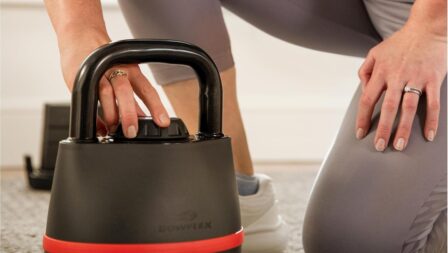
Knowing which kettlebell to trust for this kind of loading work matters more than most seniors realize, especially since plastic adjustment components are the #1 reported point of failure in adjustable kettlebells, frequently breaking down long before a cast-iron shell shows any real wear.
That single fact should reshape how you evaluate every option on your shortlist. Single-piece cast iron with no welds or seams is the gold standard, because a swing places sudden, repeated stress right through the handle and shell.
Avoid any brand that uses bolted-on handles or multi-piece shells. Under repeated swing loading, those are exactly the points that eventually give way.
For seniors just building confidence with the hinge, a rubberized soft kettlebell can be a smart entry point before progressing to competition-style cast iron. Our full review of senior soft kettlebell exercises covers exactly which sets we recommend and why.
Programming Your Weekly Swing Schedule: A Sample Framework
This is the exact framework our team uses when writing every kettlebell review with a senior audience in mind. It’s not about hitting a number for the sake of it. It’s about respecting recovery while still crossing the bone-loading threshold.
| Day | Focus | Swing Volume |
|---|---|---|
| Monday | Kettlebell swings + hip hinge drilling | 70 to 90 reps |
| Tuesday | Rest or light mobility | 0 |
| Wednesday | Impact loading (jumps) + mobility | 0 swings, 50 jumps |
| Thursday | Rest | 0 |
| Friday | Kettlebell swings + glute work | 70 to 90 reps |
| Saturday/Sunday | Optional light session or rest | 0 to 40 reps |
That schedule lands you right at two to three qualifying sessions per week, the exact frequency the bone density research calls for.
Hip Hinge Form: The Non-Negotiable Foundation of Safe Swing Volume
None of this bone density math matters if the hinge pattern breaks down. A safe swing drives from the hips with a neutral spine, not from rounding the lower back or over-bending the knees.
The 3 hip hinge cues that actually save your spine are simple but not easy: push the hips back first, keep the shins nearly vertical, and let the kettlebell float rather than yanking it with the arms. Get those three right and the swing volume in your weekly plan becomes both safe and effective.
Rounding Out the Bone Density Math With Glute and Core Support Work
Swings don’t build bone in isolation. A stronger posterior chain, built through accessory work like the kettlebell glute bridge, supports the exact hip extension pattern the swing relies on.
Weak glutes force the lower back to compensate, which limits how much load a senior can safely tolerate during swing sets. Building glute capacity separately means the swing itself can progress toward that 70% intensity mark faster and more safely.
Common Mistakes That Sabotage Bone Density Gains From Swings
The most expensive mistake we see seniors make is chasing volume without intensity. Doing 200 light swings a week with a bell that’s too easy simply does not cross the 70% 1RM threshold needed for a bone response.
- Training below intensity: A too-light kettlebell feels safe but doesn’t trigger bone remodeling.
- Skipping rest days: Bone needs 48 hours minimum to begin adapting after a loading session.
- Rounding the lower back: Poor hip hinge form shifts stress away from the hip and into the spine.
- Never progressing weight: Sticking with the same bell for a year stalls the density curve entirely.
- Ignoring hip mobility: Tight hips limit range and force compensation patterns elsewhere in the body.
Best Kettlebells for Seniors Doing Bone-Building Work
Level up your equipment choice the same way you level up your training plan. Among the options our kettlebell review process has tested, the Titan Adjustable Kettlebell (12/32 kg, roughly $149.99) stands out for its competition-style dimensions, which keep form consistent as the load increases toward that 70% intensity mark.
For seniors just starting out, a Soft Kettlebell Set with Non-Slip Gloves (around $39.99) offers a joint-friendly entry point before graduating to cast iron. Finding the Best Kettlebells for this stage of training isn’t about the lowest price tag, it’s about matching the shell construction and grip to what a senior body actually needs.
Conclusion
The Bone Density Math: how many swings per week seniors need really comes down to two to three sessions, above 70% intensity, with proper rest between them.
Skip the guesswork, respect the hinge pattern, and choose a kettlebell built from single-piece cast iron so the equipment never becomes the point of failure in your progress.
Bone loss after 40 is not optional, but how you respond to it is. Two or three well-loaded swing sessions a week, backed by real bone density research, is one of the most direct ways to fight back.
Frequently Asked Questions
How many kettlebell swings per week do seniors need for bone density?
Most research supports two to three dedicated sessions per week, totaling 60 to 100 swings per session, performed above 70% of comfortable one-rep intensity. Fewer than two sessions per week has not been shown to meaningfully change bone density in older adults.
Is kettlebell swing training worth it for seniors in 2026?
Yes, especially given that 43.1% of U.S. adults over 50 already have low bone mass. Kettlebell swings offer a low-cost, low-equipment way to hit the bone-loading intensity that walking or light cardio simply cannot provide.
Can seniors do kettlebell swings every day?
No, daily swinging is not recommended because bone tissue needs at least 48 hours to begin its remodeling response after a loading session. Two to three sessions per week with rest days between them is the pattern supported by current research.
What is the difference between soft kettlebells and cast iron kettlebells for bone density work?
Soft kettlebells are a safer starting point for building hinge confidence, since their cushioned shell reduces injury risk during early learning. Cast iron kettlebells, ideally single-piece with no welds or seams, are needed once you progress toward the 70% intensity threshold that actually builds bone.
Do kettlebell swings alone build bone density, or do I need other exercises too?
Swings are highly effective, but pairing them with impact work like 50 flat-footed jumps three days a week and glute-focused accessory moves creates a more complete bone-loading stimulus. The bone density math works best as a combined weekly system, not a single exercise in isolation.
How long does it take to see bone density improvements from kettlebell training?
One study found a 12.7% increase in femoral neck bone mineral density after 16 weeks of structured kettlebell training for seniors. Consistency across those two to three weekly sessions matters more than any single workout.
What kettlebell weight should a senior start with for swings?
Most seniors start in the 5 to 10 lb range with a soft kettlebell before progressing to heavier cast iron bells as hip hinge form solidifies. Progression toward the 70% 1RM intensity mark should happen gradually, over months rather than weeks.