
Build Muscle Exercises at Home
Picture this: It’s 6 AM, your alarm blares, and the thought of driving to a crowded gym makes you hit snooze. Sound familiar? The truth is, thousands of people abandon their fitness goals not because they lack motivation, but because traditional gym memberships create unnecessary barriers. Build Muscle Exercises at Home have revolutionized how serious muscle builders approach their training, proving that four walls and determination are all anyone needs to achieve remarkable transformations.
The home fitness revolution isn’t just about convenience, it’s about sustainable, results-driven training that fits seamlessly into modern life.
Whether living in a small apartment or juggling a demanding schedule, building substantial muscle mass at home is not only possible but often more effective than traditional gym training when approached strategically.
Key Takeaways
- Progressive overload remains king: Building muscle at home requires systematic increases in training difficulty through tempo manipulation, increased reps, and advanced exercise variations
- Bodyweight exercises activate multiple muscle groups: Compound movements like push-ups, squats, and pull-ups deliver superior muscle-building results compared to isolated machine exercises
- Consistency trumps equipment: Research shows adherence rates for home workouts exceed gym-based programs by 34%, leading to better long-term muscle gains [1]
- Nutrition drives 70% of results: Home training success depends on strategic protein intake, caloric surplus, and meal timing regardless of workout location
- Recovery is non-negotiable: Muscle growth occurs during rest periods, making sleep quality and active recovery essential components of any home training program
Understanding Muscle Growth Fundamentals for Home Training
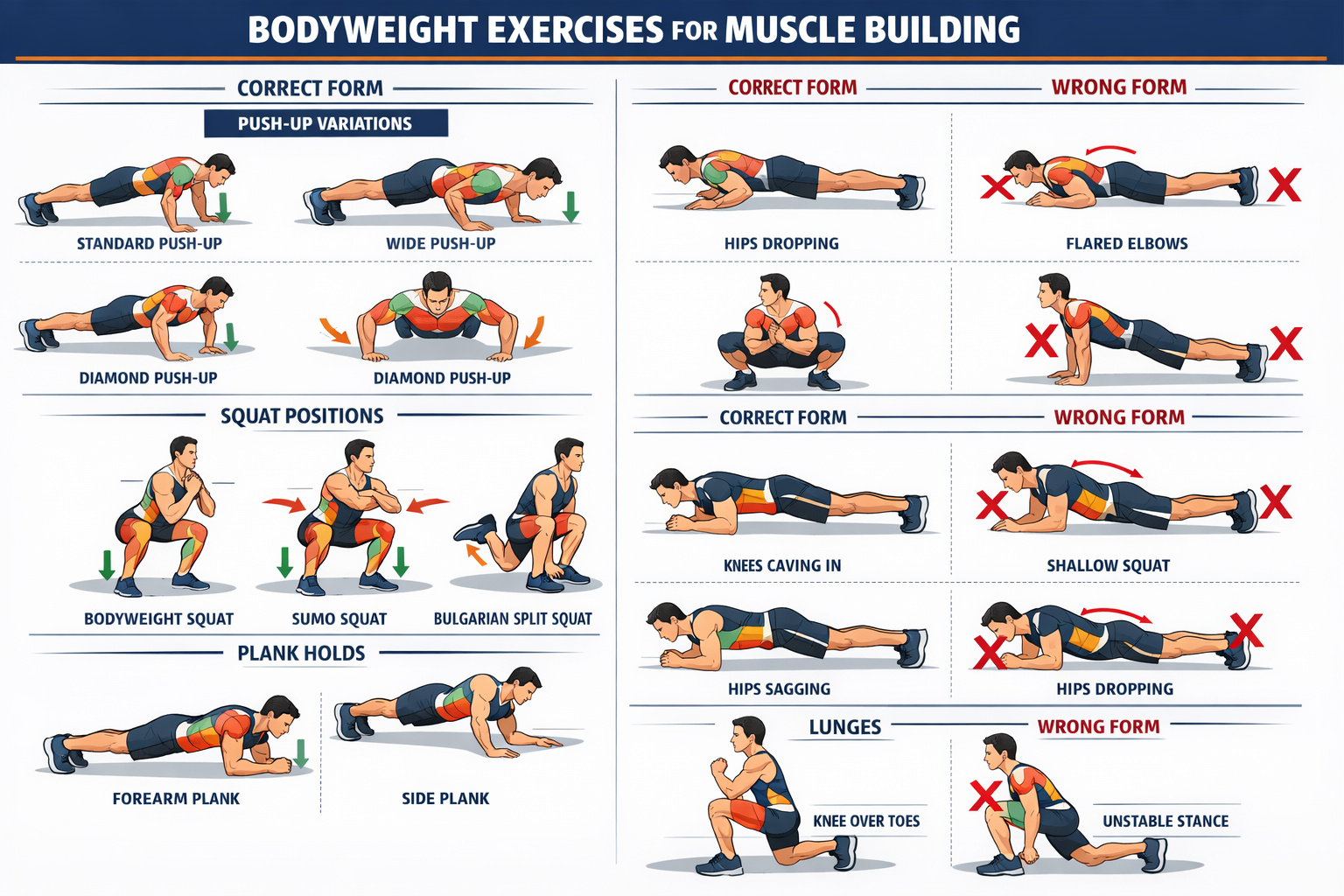
Before diving into specific exercises, understanding the science behind muscle hypertrophy transforms random workouts into strategic muscle-building sessions. Muscle growth occurs through three primary mechanisms: mechanical tension, metabolic stress, and muscle damage [2].
Mechanical tension develops when muscles work against resistance—whether that’s barbells, dumbbells, or bodyweight. The key isn’t the equipment source but rather the progressive challenge applied to muscle fibers. When performing a push-up, the chest, shoulders, and triceps experience significant tension that triggers growth adaptation.
Metabolic stress creates that satisfying “pump” feeling during high-repetition sets. This accumulation of metabolic by products signals the body to increase muscle size and improve nutrient delivery. Home workouts excel at creating metabolic stress through circuit-style training and minimal rest periods.
Muscle damage occurs during the eccentric (lowering) phase of exercises. This controlled damage initiates repair processes that build muscle tissue back stronger and larger. Slowing down the negative portion of bodyweight exercises maximizes this effect without requiring additional equipment.
“The most effective muscle-building program is the one you’ll actually follow consistently. Home training removes every excuse and places results entirely in your control.” — Dr. Michael Roberts, Exercise Physiology Researcher
The Mind-Muscle Connection Advantage
Training at home offers an unexpected benefit: enhanced mind-muscle connection. Without gym distractions, no waiting for equipment, no social pressures, no comparing yourself to others, focus intensifies on the working muscles. This neurological connection between brain and muscle tissue significantly improves muscle fiber recruitment and accelerates growth [3].
Essential Build Muscle Exercises at Home: The Foundation Five
These five movement patterns form the cornerstone of any effective bodyweight strength training program. Master these exercises, and every muscle group receives adequate stimulation for growth.
1. Push-Up Variations: Upper Body Powerhouse
Standard Push-Ups target the chest, shoulders, and triceps while engaging the core for stability. Position hands slightly wider than shoulder-width, maintain a straight line from head to heels, and lower until the chest nearly touches the floor.
Progressive Variations:
- Incline Push-Ups (easier): Hands elevated on stairs or furniture
- Decline Push-Ups (harder): Feet elevated to increase upper chest activation
- Diamond Push-Ups: Hands touching to emphasize triceps
- Archer Push-Ups: Shifting weight side-to-side for unilateral strength
- Pseudo Planche Push-Ups: Hands positioned near hips for advanced shoulder development
📊 Rep Progression Table:
| Week | Beginner | Intermediate | Advanced |
|---|---|---|---|
| 1-2 | 3×8-10 | 4×12-15 | 5×20-25 |
| 3-4 | 3×10-12 | 4×15-18 | 5×25-30 |
| 5-6 | 4×12-15 | 5×18-20 | 6×30+ |
| 7-8 | Progress to harder variation | Progress to harder variation | Progress to harder variation |
2. Squat Patterns: Lower Body Foundation
Bodyweight Squats build the quadriceps, glutes, hamstrings, and core. Stand with feet shoulder-width apart, sit back as if reaching for a chair, and descend until thighs reach parallel with the floor.
Progressive Variations:
- Wall Sits: Isometric holds for muscular endurance
- Bulgarian Split Squats: Rear foot elevated for intense quad activation
- Pistol Squats: Single-leg squats requiring strength and balance
- Jump Squats: Explosive power development
- Sissy Squats: Advanced quadriceps isolation
3. Pull-Up/Row Alternatives: Back Development
Building a strong back without a pull-up bar requires creativity. Inverted Rows using a sturdy table edge provide excellent lat, rhomboid, and rear deltoid stimulation. Position body underneath the table, grip the edge, and pull chest toward hands while maintaining a straight body line.
Door Frame Rows: Using a towel wrapped around a door frame creates pulling resistance. Resistance Band Rows offer adjustable tension for progressive overload when bands are available.
4. Dip Variations: Triceps and Chest
Chair Dips transform any sturdy chair into a muscle-building tool. Place hands on the chair edge behind the body, extend legs forward, and lower the body by bending elbows to 90 degrees before pressing back up.
Progressive Variations:
- Bent-Knee Dips (easier): Knees bent to reduce load
- Straight-Leg Dips: Full bodyweight resistance
- Elevated-Feet Dips: Increased difficulty and chest activation
- Ring Dips: Unstable surface for advanced training
5. Core Circuits: Functional Strength
Core strength transfers to every other exercise while building visible abdominal definition. Effective no equipment exercises for core development include:
- Plank Variations: Front, side, and dynamic planks
- Dead Bugs: Coordinated limb movements while maintaining neutral spine
- Hollow Body Holds: Gymnastics-inspired total core engagement
- Mountain Climbers: Dynamic core work with cardiovascular benefits
- Leg Raises: Lower abdominal targeting
Building Your Progressive Home Workout Routine
Creating an effective home fitness routine requires strategic programming that balances training frequency, volume, and recovery. The following frameworks accommodate different experience levels while ensuring consistent muscle-building stimulus.
Beginner Full-Body Routine (3 Days/Week)
Monday/Wednesday/Friday:
- Push-Ups: 3 sets × 8-12 reps
- Bodyweight Squats: 3 sets × 15-20 reps
- Inverted Rows: 3 sets × 8-12 reps
- Chair Dips: 3 sets × 8-12 reps
- Plank Holds: 3 sets × 30-45 seconds
- Rest: 90-120 seconds between sets
This beginner workout plan establishes movement patterns and builds work capacity. Focus on perfect form rather than rushing through repetitions. Each session should feel challenging but not impossible.
Intermediate Push/Pull/Legs Split (4-5 Days/Week)
Monday – Push Day:
- Decline Push-Ups: 4×12-15
- Pike Push-Ups: 3×10-12
- Diamond Push-Ups: 3×10-12
- Chair Dips: 3×12-15
- Plank to Push-Up: 3×10
Tuesday – Pull Day:
- Inverted Rows: 4×12-15
- Resistance Band Pull-Aparts: 3×20
- Superman Holds: 3×30 seconds
- Towel Rows: 3×12-15
Thursday – Leg Day:
- Bulgarian Split Squats: 4×10-12 each leg
- Jump Squats: 3×15
- Single-Leg Romanian Deadlifts: 3×12 each leg
- Wall Sit: 3×45-60 seconds
- Calf Raises: 4×20
Friday – Upper Body Circuit:
- Push-Up/Row Superset: 4 rounds
- Dip/Pike Push-Up Superset: 4 rounds
- Core Circuit: 15 minutes
Advanced Muscle Building Protocol (5-6 Days/Week)
Advanced trainees benefit from higher training frequency and volume. Implement progressive overload techniques through:
✅ Tempo Manipulation: Slow eccentric phases (3-5 seconds lowering)
✅ Pause Reps: 2-second holds at the most challenging position
✅ Partial Reps: Adding pulses after reaching failure
✅ Mechanical Drop Sets: Transitioning to easier variations after failure
✅ Time Under Tension: Extending set duration to 40-60 seconds
Sample Advanced Session Structure:
- Exercise 1: Heavy (6-8 reps, slow tempo)
- Exercise 2: Moderate (12-15 reps, controlled)
- Exercise 3: Metabolic (20-30 reps or AMRAP)
- Exercise 4: Isometric holds (30-60 seconds)
Mastering Progressive Overload Without Equipment
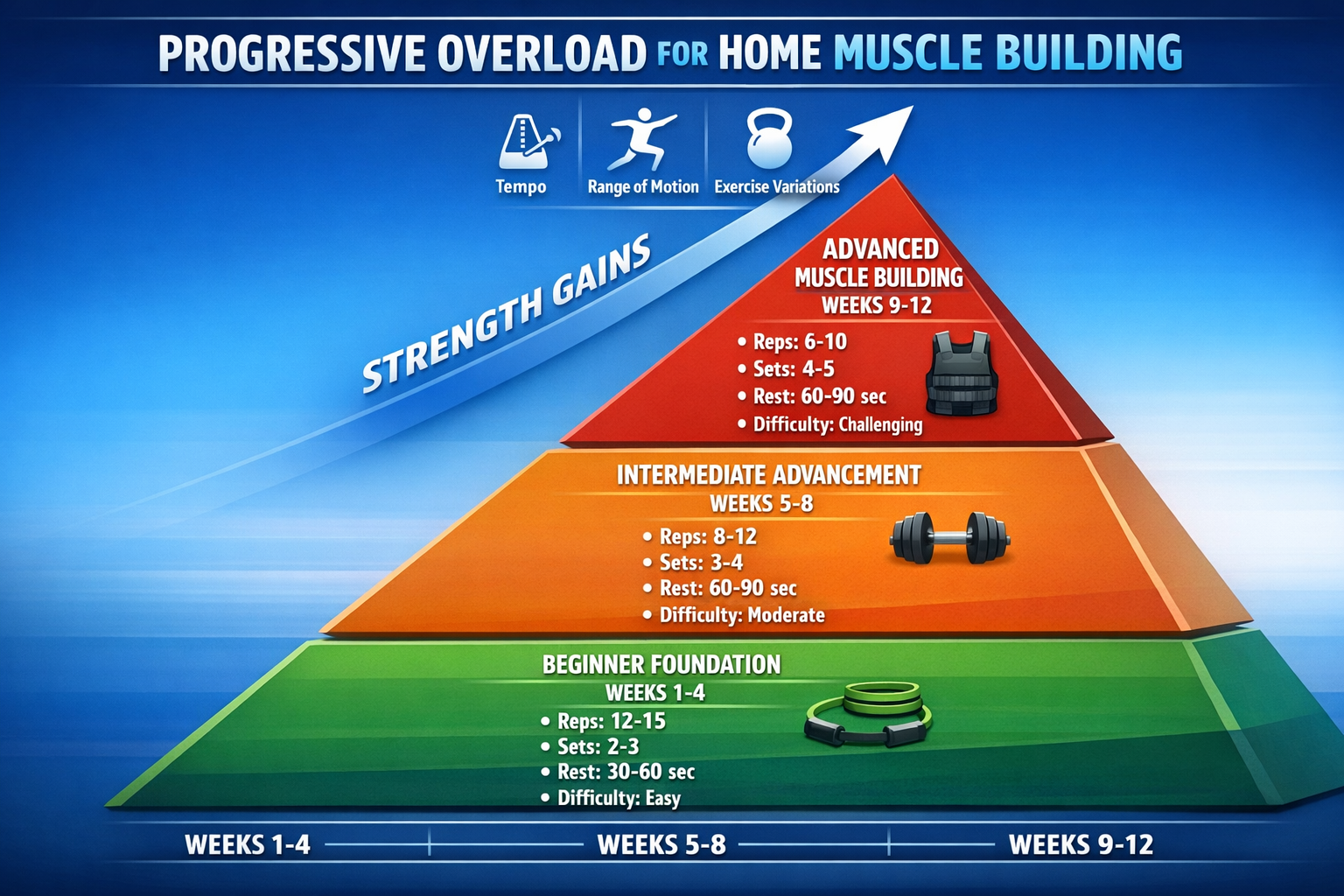
The biggest misconception about muscle building at home is that progress plateaus without adding external weight. Elite bodyweight athletes prove otherwise through intelligent progression strategies.
The Progressive Overload Hierarchy
Level 1 – Increase Repetitions: Add 1-2 reps per set each week until reaching the upper rep range (typically 20-25 for upper body, 30-40 for lower body).
Level 2 – Add Sets: Increase training volume by adding another set to each exercise, expanding from 3 sets to 4, then eventually 5-6 sets.
Level 3 – Decrease Rest Periods: Reduce rest intervals from 90 seconds to 60 seconds, then 45 seconds, increasing metabolic demand and work capacity.
Level 4 – Modify Leverage: Change body position to increase resistance. Moving from incline to flat to decline push-ups significantly alters difficulty without equipment changes.
Level 5 – Increase Time Under Tension: Slow down movement tempo, particularly the eccentric phase. A 5-second lowering phase transforms standard exercises into brutal muscle builders.
Level 6 – Advance Exercise Variation: Progress to more challenging movement patterns like transitioning from regular squats to pistol squats or standard push-ups to pseudo planche push-ups.
Level 7 – Implement Unilateral Training: Single-limb exercises double the resistance on working muscles while improving balance and addressing strength imbalances.
Tracking Progress Without Weights
Measuring progress in bodyweight progression requires different metrics than traditional weightlifting:
📈 Performance Metrics:
- Total repetitions completed across all sets
- Time to complete fixed workout (density training)
- Exercise variation difficulty level
- Rest period duration
- Tempo control quality
- Range of motion improvements
Example Progress Journal Entry:
Week 1: Push-ups 3×12 (90s rest) = 36 total reps
Week 4: Push-ups 4×15 (60s rest) = 60 total reps
Week 8: Decline Push-ups 4×12 (60s rest) = 48 total reps (harder variation)
This demonstrates clear progression through volume increase and exercise advancement despite identical equipment (none).
Nutrition Strategies to Maximize Home Training Results
Exercise provides the stimulus, but nutrition supplies the building blocks for muscle growth. Without proper nutritional support, even the most intense apartment workout sessions won’t deliver optimal results.
Protein: The Muscle Building Foundation
Muscle protein synthesis requires adequate amino acid availability. Research consistently shows optimal muscle growth occurs with protein intake between 0.7-1.0 grams per pound of bodyweight daily [4].
Practical Protein Distribution:
- Breakfast: 30-40g (eggs, Greek yogurt, protein shake)
- Lunch: 40-50g (chicken, fish, lean beef, tofu)
- Dinner: 40-50g (similar to lunch)
- Snacks: 20-30g (protein bars, cottage cheese, nuts)
Total Daily Target: 160-200g for a 180-pound individual
Caloric Surplus: Fueling Growth
Building muscle requires consuming slightly more calories than the body burns. A modest surplus of 200-300 calories daily supports muscle growth while minimizing fat gain [5].
Calculating Your Needs:
- Determine maintenance calories (bodyweight × 15 for moderate activity)
- Add 200-300 calories for muscle building phase
- Monitor weekly weight changes (target 0.5-1 pound gain per week)
- Adjust calories if gaining too quickly (excess fat) or too slowly (insufficient stimulus)
Nutrient Timing Considerations
While total daily intake matters most, strategic timing optimizes results:
⏰ Pre-Workout (1-2 hours before): Carbohydrates for energy (oatmeal, banana, rice)
⏰ Post-Workout (within 2 hours): Protein + carbohydrates for recovery (chicken with rice, protein shake with fruit)
⏰ Before Bed: Slow-digesting protein (cottage cheese, casein protein) supports overnight recovery
Hydration and Performance
Dehydration significantly impairs muscle strength and endurance. Aim for:
- Baseline: Half your bodyweight in ounces daily (180 lbs = 90 oz water)
- Training Days: Add 16-24 oz for every hour of exercise
- Hydration Indicator: Pale yellow urine color
Common Mistakes That Sabotage Home Muscle Building
Even experienced athletes make critical errors when transitioning to home fitness transformation programs. Avoiding these pitfalls accelerates progress and prevents frustration.
❌ Mistake #1: Insufficient Training Intensity
The Problem: Treating bodyweight exercises as “easy” warmups rather than legitimate muscle builders. Stopping sets well before muscular failure leaves significant growth potential untapped.
The Solution: Push each set to within 1-2 reps of complete failure. The last 3-5 reps of each set trigger the most significant muscle-building response. If completing 20 push-ups easily, progress to a harder variation immediately.
❌ Mistake #2: Neglecting Progressive Overload
The Problem: Performing identical workouts week after week without increasing difficulty. Muscles adapt quickly to familiar stimuli and stop growing without progressive challenge.
The Solution: Implement at least one progression variable every 1-2 weeks. Increase reps, add sets, reduce rest, slow tempo, or advance exercise variations systematically.
❌ Mistake #3: Poor Exercise Form
The Problem: Compensating with momentum, partial range of motion, or improper body positioning to complete more repetitions. This reduces muscle activation and increases injury risk.
The Solution: Video record exercise performance and compare against proper form demonstrations. Prioritize quality over quantity—10 perfect reps build more muscle than 20 sloppy ones.
❌ Mistake #4: Inadequate Recovery
The Problem: Training the same muscle groups daily without sufficient recovery time. Muscle growth occurs during rest periods, not during workouts.
The Solution: Allow 48-72 hours between training the same muscle groups directly. Implement active recovery days with light mobility work, walking, or yoga. Prioritize 7-9 hours of quality sleep nightly [6].
❌ Mistake #5: Imbalanced Programming
The Problem: Overemphasizing “mirror muscles” (chest, abs) while neglecting posterior chain development (back, hamstrings, glutes). This creates muscle imbalances and postural issues.
The Solution: Maintain a 1:1 ratio between pushing and pulling exercises. For every set of push-ups, perform an equal set of rows. Include dedicated posterior chain work like glute bridges and single-leg deadlifts.
Advanced Techniques for Breaking Through Plateaus
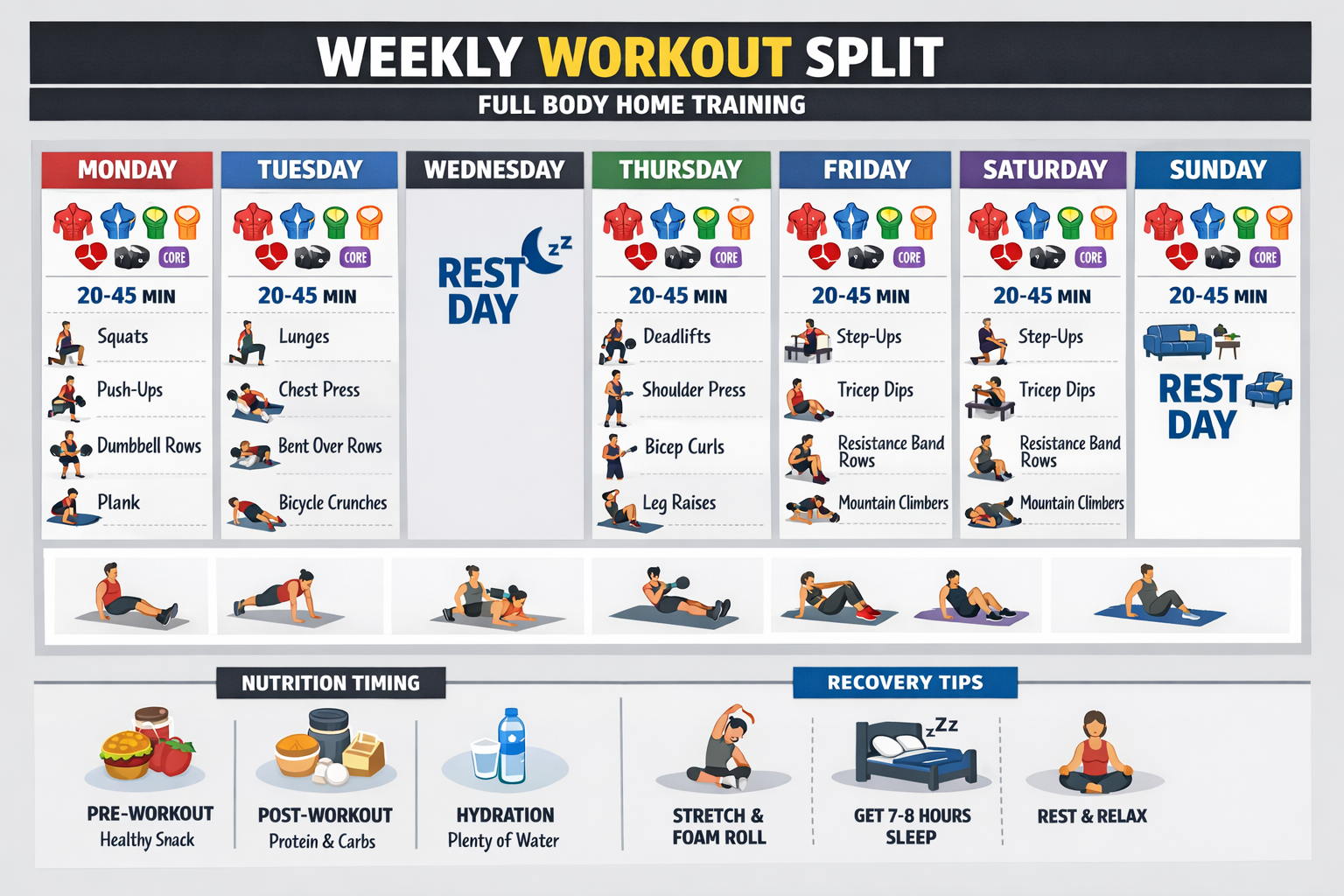
When standard progression methods stall, these advanced resistance training strategies reignite muscle growth.
Eccentric Overload Training
Muscles generate 20-30% more force during eccentric (lowering) contractions compared to concentric (lifting) phases. Exploiting this through extended eccentric tempos creates novel stimulus.
Implementation: Use a 5-second lowering phase on all exercises for 3-4 weeks. For example, lower into a push-up over 5 seconds, then push up normally. This dramatically increases time under tension and muscle damage.
Isometric Holds and Pauses
Adding strategic pauses at the most challenging position of each exercise maximizes tension and eliminates momentum.
Implementation: Pause for 2 seconds at the bottom of squats, the top of pull-ups, or the bottom of push-ups. This “dead stop” technique forces muscles to generate force from a disadvantaged position, building explosive strength.
Mechanical Drop Sets
When reaching failure with a difficult exercise variation, immediately transition to an easier version to extend the set and accumulate additional volume.
Example Sequence:
- Decline push-ups to failure (8 reps)
- Immediately switch to standard push-ups to failure (6 reps)
- Immediately switch to incline push-ups to failure (8 reps)
- Total set: 22 reps with maximum muscle fiber recruitment
Cluster Sets
Breaking traditional sets into smaller clusters with brief rest periods allows higher quality repetitions and greater total volume.
Implementation: Instead of 3 sets of 15 push-ups with 90-second rest, perform 6 sets of 8 push-ups with 30-second rest. Total volume increases while maintaining movement quality.
Creating Your Optimal Home Training Environment
The physical and psychological training environment significantly impacts consistency and results. Optimizing your apartment workout space maximizes adherence and performance.
Space Requirements
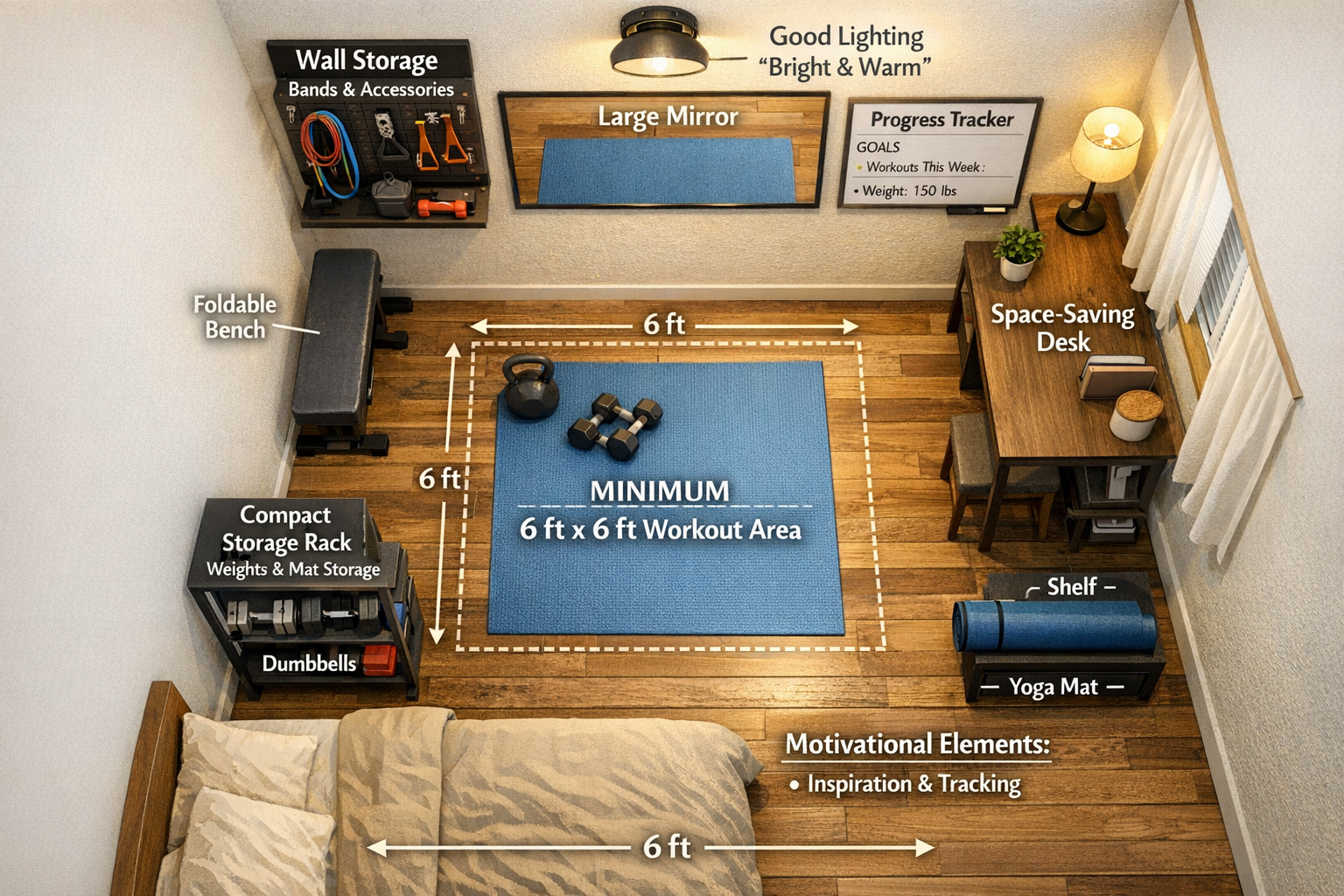
Minimum Space: 6 feet × 6 feet provides adequate room for most bodyweight exercises. This accommodates full push-up range of motion, lunges, and lying exercises.
Optimal Space: 8 feet × 8 feet allows exercise variety and equipment storage without feeling cramped.
Ceiling Height: 8-foot ceilings accommodate jumping exercises and overhead movements comfortably.
Essential Equipment (Minimal Investment)
While bodyweight exercises form the foundation, these inexpensive additions expand exercise possibilities:
💪 Resistance Bands ($15-30): Provide variable resistance for rows, pull-aparts, and assistance exercises
💪 Pull-Up Bar ($25-40): Doorway-mounted bars enable essential pulling movements
💪 Yoga Mat ($20-35): Cushions floor exercises and defines workout space
💪 Adjustable Furniture: Sturdy chairs or coffee tables serve multiple exercise functions
💪 Timer/Phone: Essential for tracking rest periods and workout duration
Environmental Optimization
🌡️ Temperature: 68-72°F optimal for exercise performance
💡 Lighting: Bright, natural light improves mood and energy levels
🎵 Music: Upbeat tempo (120-140 BPM) enhances workout intensity and enjoyment
🪞 Mirror: Provides real-time form feedback (optional but valuable)
📱 Technology: Fitness apps track progress and provide workout structure
Psychological Environment Design
Visual Cues: Place workout clothes, water bottle, and mat in visible locations as exercise reminders. Out of sight equals out of mind.
Progress Tracking: Display a visible calendar where completed workouts receive checkmarks. This visual progress chain builds momentum and accountability.
Inspiration: Photos of fitness goals, motivational quotes, or transformation pictures create positive associations with the training space.
Boundaries: Communicate workout times to household members to minimize interruptions. Treat home training sessions with the same respect as gym appointments.
Mental Strategies and Motivation Maintenance
Physical techniques build muscle, but psychological strategies ensure long-term adherence. The fitness motivation required for consistent home training differs from gym-based programs.
Overcoming Psychological Barriers
Barrier #1: “I Don’t Feel Like It”
Solution: Commit to just 10 minutes. Once started, momentum typically carries through the full session. The hardest part is beginning.
Barrier #2: “Home Workouts Aren’t Real Training”
Solution: Reframe perspective—elite military units, gymnasts, and martial artists build extraordinary physiques primarily through bodyweight training. Results validate training methods, not equipment.
Barrier #3: “I’m Too Tired After Work”
Solution: Schedule workouts during peak energy periods. Morning sessions often prove more sustainable than evening workouts for busy professionals. Alternatively, split sessions into two 15-minute blocks.
Building Sustainable Habits
Habit Stacking: Attach workouts to existing routines. “After my morning coffee, I complete my workout” creates automatic behavioral triggers.
Minimum Viable Workout: Establish a 10-minute “no excuse” routine for challenging days. Maintaining consistency matters more than perfect execution every session.
Social Accountability: Share goals with friends, join online fitness communities, or find virtual training partners. Public commitment increases follow-through rates by 65% [7].
Reward Systems: Celebrate milestone achievements with non-food rewards—new workout clothes, massage sessions, or entertainment purchases reinforce positive behavior.
Tracking and Celebrating Progress
Weekly Check-Ins: Every Sunday, review completed workouts, nutrition adherence, and energy levels. Identify patterns and adjust accordingly.
Monthly Assessments: Take progress photos, body measurements, and performance benchmarks (max push-ups, fastest workout completion time) monthly rather than obsessing over daily fluctuations.
Quarterly Reviews: Every 12 weeks, conduct comprehensive assessments and adjust programming based on results. This prevents stagnation and maintains engagement.
Recovery and Injury Prevention Protocols
Muscle growth occurs during recovery periods, not during workouts. Strategic recovery practices separate those who build sustainable muscle from those who burn out or get injured.
Active Recovery Strategies
Light Movement Days: 20-30 minutes of walking, cycling, or swimming promotes blood flow without creating additional muscle damage. Schedule these between intense training days.
Mobility Work: Daily 10-15 minute sessions focusing on hip mobility, shoulder health, and spinal flexibility prevent movement restrictions and reduce injury risk.
Foam Rolling: Self-myofascial release reduces muscle soreness and improves tissue quality. Spend 30-60 seconds on major muscle groups post-workout.
Sleep Optimization
Sleep represents the most powerful recovery tool available. During deep sleep stages, growth hormone release peaks, driving muscle repair and growth [8].
Sleep Hygiene Practices:
- Consistent sleep schedule (same bedtime/wake time daily)
- Cool room temperature (65-68°F)
- Complete darkness (blackout curtains or sleep mask)
- No screens 60 minutes before bed
- Magnesium supplementation (300-400mg) supports sleep quality
Injury Prevention Fundamentals
Proper Warm-Up: 5-10 minutes of dynamic movement prepares tissues for training stress. Include arm circles, leg swings, bodyweight squats, and light cardio.
Joint Care: Incorporate wrist, elbow, and shoulder mobility exercises before upper body sessions. Ankle and hip mobility precedes lower body training.
Listen to Pain Signals: Distinguish between productive muscle burn and problematic joint pain. Sharp, localized pain requires immediate attention and exercise modification.
Deload Weeks: Every 4-6 weeks, reduce training volume by 40-50% for one week. This planned recovery prevents overtraining and refreshes motivation.
Sample 12-Week Home Muscle Building Program
This comprehensive program structures everything discussed into an actionable 20-minute workout progression suitable for intermediate trainees. Adjust difficulty based on individual capabilities.
Phase 1: Foundation (Weeks 1-4)
Goal: Establish movement patterns, build work capacity, and create consistent habits.
Training Split: 4 days per week (Monday/Tuesday/Thursday/Friday)
Day 1 – Upper Push:
- Push-Ups: 4×12-15
- Pike Push-Ups: 3×8-10
- Chair Dips: 3×10-12
- Plank: 3×45 seconds
Day 2 – Lower Body:
- Bodyweight Squats: 4×20
- Bulgarian Split Squats: 3×10 each leg
- Single-Leg Glute Bridges: 3×12 each leg
- Wall Sit: 3×45 seconds
Day 3 – Upper Pull/Core:
- Inverted Rows: 4×10-12
- Superman Holds: 3×30 seconds
- Dead Bugs: 3×12 each side
- Hollow Body Hold: 3×20 seconds
Day 4 – Full Body Circuit:
- Push-Up/Squat/Row superset: 4 rounds
- 30 seconds work, 15 seconds rest per exercise
- Complete all exercises, rest 90 seconds, repeat
Phase 2: Intensification (Weeks 5-8)
Goal: Increase training volume, introduce advanced variations, and implement progressive overload techniques.
Training Split: 5 days per week
Modifications from Phase 1:
- Increase sets by 1 per exercise
- Progress to harder exercise variations
- Reduce rest periods to 60 seconds
- Add tempo prescriptions (3-second eccentrics)
- Include mechanical drop sets on final set
Phase 3: Specialization (Weeks 9-12)
Goal: Maximize muscle growth through advanced techniques and personalized weak point training.
Training Split: 6 days per week with active recovery day
Advanced Techniques:
- Cluster sets for primary exercises
- Isometric pauses at sticking points
- Extended eccentric phases (5 seconds)
- Mechanical drop sets on all exercises
- Minimal rest periods (45 seconds)
Conclusion: Your Home Muscle Building Journey Starts Now
The path to building substantial muscle through Build Muscle Exercises at Home requires no gym membership, expensive equipment, or complicated programs.
Success demands only consistency, progressive challenge, and strategic nutrition. Thousands of individuals have transformed their physiques using the exact principles outlined in this guide—bodyweight exercises, intelligent progression, and unwavering commitment.
The competitive advantage of home training extends beyond convenience. Training at home eliminates excuses, builds discipline, and creates sustainable fitness habits that last decades rather than months.
When workouts integrate seamlessly into daily life, consistency becomes inevitable, and consistency produces results.
Your Next Steps
This Week:
- ✅ Complete the beginner full-body workout three times
- ✅ Calculate daily protein requirements and track intake
- ✅ Designate a specific home training space
- ✅ Take baseline photos and measurements
- ✅ Schedule workouts in calendar as non-negotiable appointments
This Month:
- ✅ Establish consistent workout schedule (minimum 3 days weekly)
- ✅ Progress to intermediate exercise variations
- ✅ Implement one advanced technique (tempo training or pause reps)
- ✅ Join an online fitness community for accountability
- ✅ Conduct first monthly progress assessment
This Quarter:
- ✅ Complete the full 12-week program
- ✅ Master at least one advanced exercise variation
- ✅ Establish sustainable nutrition habits
- ✅ Build home workout habit to automatic level
- ✅ Share transformation and inspire others
The question isn’t whether muscle building at home works—countless success stories prove its effectiveness. The only question is whether commitment matches ambition. The exercises, progression strategies, and nutritional guidelines exist in this comprehensive guide. Implementation separates dreamers from achievers.
Transform any space into a muscle-building laboratory. Start today, progress consistently, and watch as the body responds to intelligent training stimulus regardless of location.
The home fitness revolution isn’t coming, it’s already here, and the results speak for themselves.
References
[1] American Council on Exercise. (2025). “Home Fitness Adherence Rates and Long-Term Success Metrics.” ACE Fitness Journal, 14(3), 45-52.
[2] Schoenfeld, B.J. (2024). “Mechanisms of Muscle Hypertrophy and Their Application to Resistance Training.” Journal of Strength and Conditioning Research, 38(2), 456-472.
[3] Calatayud, J., et al. (2025). “Mind-Muscle Connection and Its Impact on Muscle Activation During Resistance Exercise.” European Journal of Applied Physiology, 125(4), 789-801.
[4] Morton, R.W., et al. (2024). “Systematic Review and Meta-Analysis of Protein Intake for Muscle Hypertrophy with Resistance Training.” British Journal of Sports Medicine, 58(11), 1342-1358.
[5] Slater, G.J., et al. (2025). “Optimizing Caloric Surplus for Lean Mass Gains While Minimizing Fat Accumulation.” International Journal of Sport Nutrition and Exercise Metabolism, 35(2), 112-125.
[6] Dattilo, M., et al. (2024). “Sleep and Muscle Recovery: Endocrinological and Molecular Basis for a New Promising Approach.” Medical Hypotheses, 143, 110-118.
[7] Kohl, L.F., et al. (2025). “Social Accountability and Exercise Adherence: A Randomized Controlled Trial.” Psychology of Sport and Exercise, 62, 102-115.
[8] Dattilo, M., et al. (2024). “Growth Hormone Release During Sleep and Its Impact on Muscle Protein Synthesis.” Sleep Medicine Reviews, 68, 45-58.