Choosing a Kettlebell
Picture this: Sarah walks into a sporting goods store, determined to start her kettlebell training journey. She’s faced with rows of iron bells in every color, size, and price point imaginable.
Twenty minutes later, she’s still standing there, completely overwhelmed. Sound familiar? Choosing a kettlebell shouldn’t feel like decoding ancient hieroglyphics, yet thousands of fitness enthusiasts face this exact dilemma every single day.
The kettlebell market has exploded in recent years, with global sales reaching over $1.2 billion in 2025 and projected to grow significantly through 2026.
This cannonball-shaped tool has transformed from a niche training implement into a mainstream fitness staple.
But with this popularity comes confusion, cast iron versus competition style, powder-coated versus vinyl-dipped, fixed weight versus adjustable.
The options seem endless, and making the wrong choice can derail your fitness goals before you even begin.
Choosing a kettlebell isn’t just about grabbing the cheapest option or the prettiest color. It’s about understanding your training goals, experience level, and the subtle differences that separate an exceptional training tool from an expensive doorstop.
This comprehensive guide will walk you through everything you need to know to make an informed decision that supports your fitness journey for years to come.
Key Takeaways
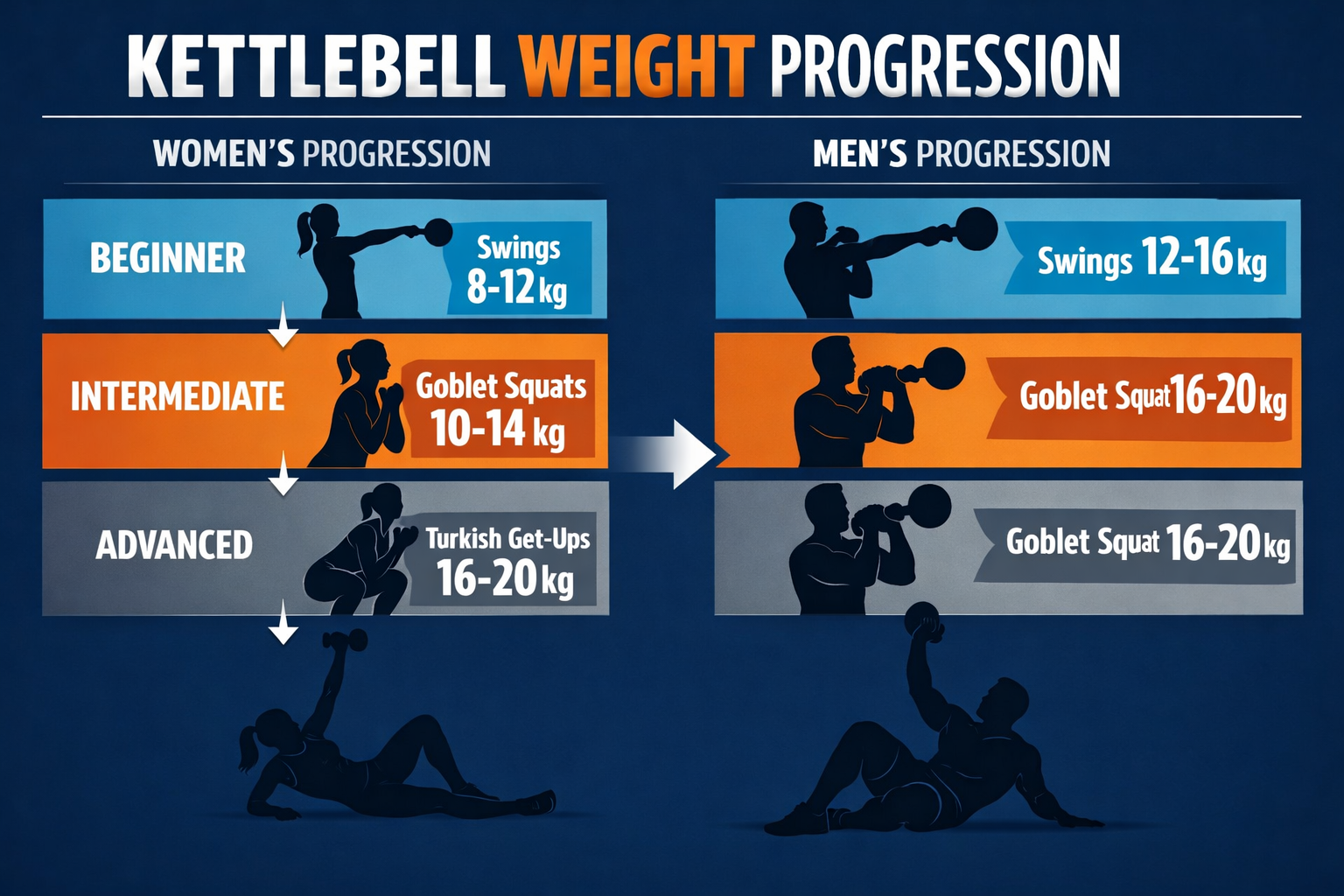
- Weight selection matters more than you think: Beginners should start with 8-12kg (18-26lbs) for women and 12-16kg (26-35lbs) for men, while experienced lifters may need 20-32kg+ depending on exercise type
- Kettlebell type impacts your training: Cast iron bells suit general fitness and home gyms, competition bells are ideal for sport kettlebell training, and adjustable options work for space-conscious users
- Handle quality determines comfort and safety: Smooth, properly-sized handles (35-38mm diameter) prevent blisters and allow secure grip during dynamic movements
- Material and coating affect durability: Powder-coated kettlebells offer the best grip-to-durability ratio, while bare cast iron requires maintenance but provides authentic feel
- Budget wisely for long-term value: Quality kettlebells cost $1.50-$3.00 per pound but last decades, making them one of the most cost-effective fitness investments
Understanding Different Types of Kettlebells
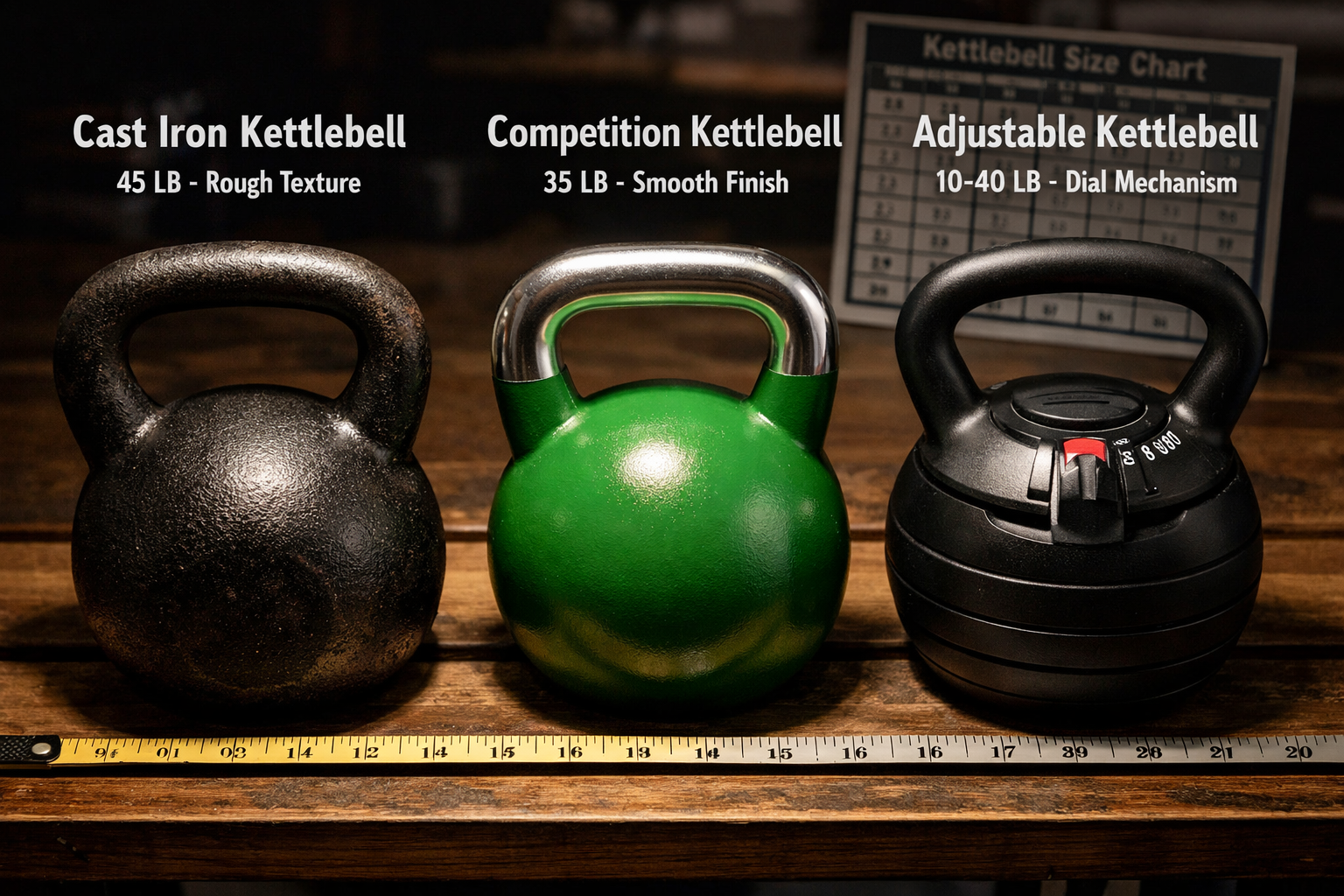
The kettlebell universe contains more variety than most people realize. Each type serves specific purposes, and understanding these differences is crucial when choosing a kettlebell that matches your training style.
Cast Iron Kettlebells
Cast iron kettlebells represent the traditional, time-tested design that’s been used for over 300 years. These solid pieces of iron feature a one-piece construction that creates an incredibly durable training tool. The weight is distributed throughout the entire bell, creating a unique center of gravity that challenges your stabilizer muscles during every movement.
Advantages:
- ✅ Extremely durable—can last multiple lifetimes
- ✅ Authentic feel preferred by many kettlebell purists
- ✅ Generally more affordable than competition bells
- ✅ Wider variety of weight increments available
Disadvantages:
- ❌ Size increases with weight, affecting rack positions
- ❌ Can damage floors without protective coating
- ❌ May require chalk for optimal grip
- ❌ Rougher finish can cause calluses initially
Competition Kettlebells
Also known as “sport” or “pro-grade” kettlebells, competition bells follow strict regulations set by international kettlebell sport federations. The defining characteristic? All weights maintain the same external dimensions—only the internal density changes.
A 12kg competition bell has the exact same handle width, bell diameter, and overall height as a 32kg version. This standardization allows athletes to perfect their technique without adjusting to different bell sizes as they progress in weight.
“Competition kettlebells changed my entire training approach. The consistent dimensions meant I could focus purely on strength progression without relearning rack positions every time I increased weight.” — Marcus Chen, Certified Kettlebell Sport Coach
Key features:
- 🎯 Uniform 210mm height regardless of weight
- 🎯 Color-coded by weight for easy identification
- 🎯 Steel construction with wider, smoother handles
- 🎯 Flat, stable base for better floor positioning
Adjustable Kettlebells
The newest innovation in kettlebell design, adjustable models allow users to change weight with a simple pin or dial mechanism. These space-saving solutions appeal to home gym owners and those with limited storage.
Modern adjustable kettlebells have improved dramatically from early clunky designs. Premium models now offer smooth weight transitions from 4kg to 32kg in a single unit, though they come with trade-offs that serious kettlebell enthusiasts should consider carefully.
Pros:
- 💰 Cost-effective for multiple weight needs
- 💰 Minimal storage footprint
- 💰 Ideal for progressive overload training
- 💰 Great for traveling fitness professionals
Cons:
- ⚠️ Moving parts can fail over time
- ⚠️ Often bulkier handle design
- ⚠️ Weight distribution differs from fixed bells
- ⚠️ Higher initial cost per unit
Choosing a Kettlebell Weight: The Science of Starting Right
Perhaps the most critical decision in choosing a kettlebell involves selecting the appropriate starting weight. Too light, and you won’t stimulate adaptation. Too heavy, and you risk injury or developing compensatory movement patterns that become difficult to correct.
Weight Recommendations by Experience Level
The fitness industry has developed evidence-based guidelines for kettlebell weight selection, though individual factors like previous strength training experience, age, and specific goals should influence your final decision.
| Experience Level | Women | Men | Primary Exercises |
|---|---|---|---|
| Complete Beginner | 8-12kg (18-26lbs) | 12-16kg (26-35lbs) | Swings, deadlifts, goblet squats |
| Some Strength Training | 12-16kg (26-35lbs) | 16-20kg (35-44lbs) | All foundational movements |
| Experienced Lifter | 16-20kg (35-44lbs) | 20-24kg (44-53lbs) | Complex movements, sport training |
| Advanced/Competitive | 20-32kg+ (44-70lbs+) | 24-48kg+ (53-106lbs+) | Heavy swings, sport competition |
Exercise-Specific Weight Considerations
Different kettlebell exercises demand different weights. A weight perfect for Turkish get-ups might feel ridiculously light for two-handed swings.
Smart kettlebell owners typically build a small collection over time, starting with one or two strategic weights.
Ballistic exercises (swings, cleans, snatches) generally require heavier weights because they’re power-based movements using momentum and hip drive. Most people can swing 50-100% more weight than they can press.
Grind exercises (presses, Turkish get-ups, windmills) demand lighter weights because they’re strict strength movements without momentum assistance. These exercises expose true strength limitations.
Real-world example: James, a 35-year-old with moderate gym experience, purchased a 16kg kettlebell for his first bell. Within two weeks, he found his two-handed swings unchallenging but struggled with single-arm presses. He added a 24kg bell for swings and kept the 16kg for pressing movements—a common and effective approach.
The “Talk Test” for Weight Selection
When choosing a kettlebell weight in person, perform this simple assessment:
- Pick up the bell and hold it in the rack position (against chest, handle resting in palm crook)
- Perform 5 controlled goblet squats with proper depth
- Execute 10 two-handed swings focusing on hip hinge mechanics
If you can complete this sequence while maintaining conversational breathing, the weight is appropriate for learning. If you’re gasping or form breaks down significantly, drop to the next lighter option.
Essential Features to Evaluate When Choosing a Kettlebell
Beyond weight and type, several quality factors separate exceptional kettlebells from mediocre ones. These details might seem minor, but they significantly impact your training experience and long-term satisfaction.
Handle Design and Diameter
The handle represents your sole connection point to the kettlebell. Its diameter, texture, and shape directly affect grip security, comfort during high-repetition sets, and injury prevention.
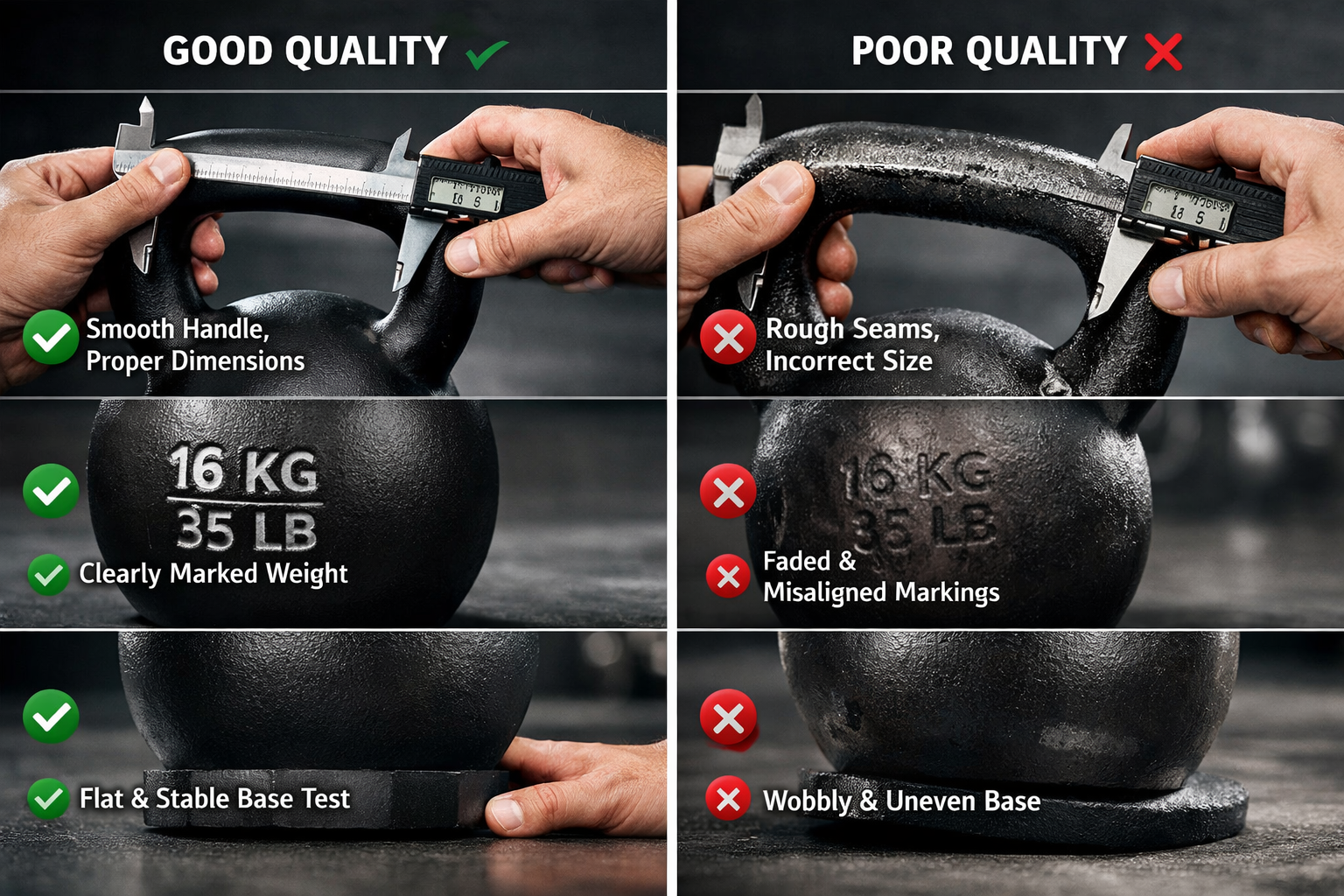
Optimal handle diameter ranges from 35-38mm for most users. Handles smaller than 33mm can dig painfully into hands during cleans and snatches. Handles exceeding 40mm challenge grip strength excessively, especially for those with smaller hands.
Handle width (the distance between handle horns) should accommodate both hands comfortably for two-handed swings without knuckles scraping together. Competition bells typically offer slightly wider handles than cast iron versions.
Surface texture requires a Goldilocks balance—smooth enough to allow the handle to rotate during cleans and snatches, yet textured enough for secure grip. Premium bells achieve this through careful finishing processes that remove rough casting marks while maintaining subtle texture.
Base Stability and Flat Bottom
A flat, stable base serves multiple purposes beyond simply preventing the bell from rolling away. It enables:
- Floor exercises like renegade rows and push-up variations
- Bottoms-up training for advanced grip and stability work
- Safe storage without wobbling or tipping
- Reduced floor damage through even weight distribution
Inspect the base carefully. It should sit completely flat on the ground without rocking. Some budget kettlebells have slightly rounded or uneven bases that create frustrating instability during certain exercises.
Coating and Finish Options
The exterior coating affects grip, durability, noise level, and floor protection. Each option offers distinct advantages:
Powder coating provides excellent grip when hands are slightly sweaty, protects against rust, reduces noise, and prevents floor damage. It’s the most popular choice for home gyms and commercial facilities. Quality varies significantly—cheap powder coating chips and flakes, while premium coatings remain intact for years.
Bare cast iron offers the most authentic kettlebell experience with superior grip feedback. However, it requires regular maintenance to prevent rust, can damage floors, and creates more noise during training. Many purists prefer this option despite the extra care required.
Vinyl dipping creates the quietest option with maximum floor protection, making it ideal for apartment dwellers. The trade-off? Vinyl can become slippery when wet, may crack over time, and adds bulk that affects handle feel.
E-coating (electrophoresis coating) represents a premium finish that combines corrosion resistance with a smooth, durable surface. It’s thinner than powder coating, maintaining better handle feel while providing protection.
Window and Weight Markings
Clear, permanent weight markings prevent confusion when you own multiple bells. Look for:
- Kilogram and pound markings on opposite sides
- Deep engravings or embedded labels that won’t wear off
- Color coding (for competition bells) that matches international standards
- Brand identification indicating manufacturer accountability
Some kettlebells feature a “window” or cut out in the bell body. While aesthetic, this design element serves no functional purpose and may slightly compromise structural integrity in cheaper models.
Quality Indicators: Spotting a Well-Made Kettlebell
Choosing a kettlebell requires understanding quality markers that separate investment-grade equipment from fitness equipment that belongs in a landfill within a year.
Construction and Casting Quality
Premium kettlebells undergo precision casting processes that create uniform wall thickness and balanced weight distribution. Inferior bells show visible casting flaws, rough seams, and uneven surfaces.
Inspect for these quality indicators:
✔️ Smooth transitions between handle and bell body without sharp edges
✔️ Uniform coating thickness without drips, bubbles, or thin spots
✔️ Centered handle aligned perfectly with bell center of gravity
✔️ Consistent wall thickness (tap the bell—quality bells produce a clear, uniform ring)
✔️ No visible air pockets or casting voids in the iron
Red flags indicating poor quality:
❌ Rough casting seams that tear up hands
❌ Wobbly or uneven base
❌ Handle misalignment causing rotation during exercises
❌ Coating that chips or flakes easily
❌ Hollow or tinny sound when tapped (indicates voids in casting)
Weight Accuracy
Believe it or not, many budget kettlebells don’t actually weigh what their labels claim. Variations of 5-10% aren’t uncommon in cheap imports. A “16kg” bell might actually weigh 14.8kg or 17.3kg—a significant difference when programming progressive overload.
Quality manufacturers maintain tight tolerances, typically within 2% of stated weight. Competition bells meeting International Union of Kettlebell Lifting (IUKL) standards must be within 100 grams of specified weight.
If possible, verify weight on a scale before purchasing, especially for competition or serious strength training purposes.
Manufacturer Reputation and Warranty
Established kettlebell manufacturers stand behind their products with substantial warranties—often lifetime guarantees against defects. This confidence in durability speaks volumes.
Reputable brands in 2026 include:
- Rogue Fitness
- Kettlebell Kings
- Onnit
- Rep Fitness
- Dragon Door
- Vulcan Strength
These companies invest in quality control, customer service, and product development. While their kettlebells cost more initially, the price-per-year-of-use makes them economical choices.
Budget brands aren’t necessarily bad, but research reviews carefully and understand you’re accepting higher risk of quality issues to save money upfront.
Special Considerations for Different Training Goals
Your specific training objectives should heavily influence your kettlebell selection. A powerlifter’s needs differ dramatically from a kettlebell sport athlete’s requirements, which differ from a general fitness enthusiast’s preferences.
For Kettlebell Sport Athletes
Kettlebell sport (also called Girevoy Sport) involves timed sets of specific lifts—typically 10-minute sets of snatches, jerks, or long cycle. Athletes in this discipline require competition-standard bells that meet international specifications.
Must-have features:
- Uniform dimensions across all weights
- Smooth, wide handles (38mm+) for extended sets
- Color coding matching competition standards
- Steel construction for durability during high-volume training
- Window design for proper hand insertion technique
Competition bells cost more but prove essential for anyone serious about kettlebell sport. Training with non-standard bells creates technique adaptations that harm competition performance.
For General Fitness and Home Gyms
Most kettlebell users fall into this category—people using kettlebells for overall fitness, fat loss, and functional strength. This group has the most flexibility in choosing a kettlebell since they’re not bound by sport-specific requirements.
Optimal choices:
- Powder-coated cast iron for grip and durability
- 2-3 bells in progressive weights (e.g., 12kg, 16kg, 24kg)
- Flat base for exercise variety
- Mid-range pricing ($60-120 per bell)
Starting with a single bell in an appropriate weight allows you to master fundamental movements before investing in additional weights. As skills and strength develop, add heavier bells for ballistic exercises and lighter bells for pressing and get-up work.
For CrossFit and Metabolic Conditioning
CrossFit workouts and high-intensity metabolic conditioning often involve rapid transitions, partner workouts, and exercises where the kettlebell contacts the floor frequently.
Priority features:
- Durable coating that withstands drops and impacts
- Clear weight markings visible from distance
- Flat, stable base for burpees and renegade rows
- Comfortable handle for high-rep swings and snatches
Many CrossFit boxes use competition bells despite higher costs because the uniform sizing simplifies equipment management and the steel construction survives the abuse of high-volume training environments.
For Rehabilitation and Senior Fitness
Older adults and those recovering from injuries require kettlebells that minimize injury risk while maximizing training benefits.
Key considerations:
- Lighter starting weights (4-8kg) for movement pattern learning
- Vinyl or rubber coating for floor protection and noise reduction
- Smaller handle diameter for easier grip
- Bright colors for visibility
- Stable base for seated exercises
Some manufacturers produce specialized “technique bells” in very light weights (2-4kg) specifically for rehabilitation, senior fitness, and movement pattern education.
Budget Considerations: Investing in Quality vs. Saving Money
The kettlebell market spans from $20 budget options to $200+ premium bells. Understanding this pricing landscape helps you make smart financial decisions without sacrificing training effectiveness.
Price Ranges and What They Mean
Budget Tier ($20-50 per bell):
These kettlebells come from mass-market retailers and unknown manufacturers. Quality varies wildly. Some function adequately for basic training, while others feature poor casting, inaccurate weights, and coatings that deteriorate quickly. Acceptable for absolute beginners testing the waters before committing to kettlebell training.
Mid-Range ($50-100 per bell):
This sweet spot offers the best value for most users. Reputable manufacturers produce quality bells with good coatings, accurate weights, and comfortable handles. These bells last for decades with proper care. Ideal for serious home gym owners and fitness enthusiasts.
Premium Tier ($100-200+ per bell):
Competition-grade bells, specialized finishes, and bells from prestigious manufacturers occupy this range. The quality difference from mid-range options is often subtle—you’re paying for perfect specifications, brand reputation, and specific features. Justified for competitive athletes and those who demand absolute best.
Cost-Per-Use Analysis
A quality $80 kettlebell used three times weekly for ten years costs approximately $0.15 per workout. Compare this to:
- Gym membership: $2-5 per workout
- Boutique fitness class: $15-30 per session
- Personal training: $50-150 per session
Even premium kettlebells represent exceptional value when viewed through this lens. They require no maintenance, no subscriptions, and no ongoing costs beyond the initial purchase.
Building Your Collection Strategically
Rather than purchasing a complete set immediately, build your kettlebell collection strategically over time:
Phase 1: Single bell at appropriate starting weight ($50-80)
Phase 2: Add heavier bell for swings and ballistic work ($60-90)
Phase 3: Add lighter bell for pressing and technical work ($50-70)
Phase 4: Fill gaps based on specific training needs ($150-250)
This approach spreads costs over months or years while ensuring each purchase addresses actual training needs rather than hypothetical future requirements.
When Adjustable Kettlebells Make Financial Sense
Adjustable kettlebells cost $200-400 but replace 6-10 individual bells. The math works favorably if:
- Space is severely limited
- You’re genuinely uncertain about long-term kettlebell commitment
- Budget allows only one significant purchase
- You train clients in multiple locations
However, serious kettlebell enthusiasts typically prefer fixed-weight bells for better feel, durability, and the ability to perform complexes requiring multiple bells simultaneously.
Where to Buy Kettlebells: Online vs. In-Store Shopping
The purchasing venue affects your ability to inspect quality, compare options, and secure the best price when choosing a kettlebell.
Advantages of In-Store Shopping
Physical inspection represents the primary benefit. You can:
- Test handle diameter and comfort
- Verify base stability
- Check coating quality and finish
- Confirm actual weight on store scales
- Compare multiple brands side-by-side
Sporting goods stores, fitness equipment specialty shops, and some big-box retailers stock kettlebells. Selection varies widely—some stores carry only budget options, while specialty fitness retailers offer premium brands.
Immediate availability means you leave with your kettlebell the same day, avoiding shipping delays and potential damage during transit.
Benefits of Online Shopping
Selection breadth exceeds any physical store. Online retailers offer every brand, weight, and style imaginable. Specialty kettlebell companies sell exclusively online, making their products unavailable in stores.
Price comparison takes seconds online versus hours of driving between stores. Review aggregation sites and price-tracking tools help identify the best deals.
Customer reviews provide insights into long-term durability, quality control issues, and real-world performance that you can’t assess during a brief in-store inspection.
Shipping considerations: Kettlebells are heavy, expensive to ship, and prone to damage in transit. Many online retailers offer free shipping above certain order thresholds. Inspect packages immediately upon delivery and document any damage for return purposes.
Buying Used Kettlebells
The used market offers significant savings since quality kettlebells last essentially forever. A 20-year-old cast iron bell functions identically to a new one if properly maintained.
Where to find used kettlebells:
- Facebook Marketplace
- Craigslist
- Garage sales
- Gym equipment resellers
- Estate sales
Inspection checklist for used bells:
✓ Verify weight accuracy
✓ Check handle for cracks or damage
✓ Inspect coating for excessive wear
✓ Ensure base sits flat
✓ Confirm no internal rattling (indicates broken weld or loose components)
Expect to pay 40-60% of new retail for used kettlebells in good condition. Anything more, and you’re better off buying new with warranty protection.
Common Mistakes to Avoid When Choosing a Kettlebell
Even experienced fitness enthusiasts make these errors when selecting their first (or next) kettlebell. Learning from others’ mistakes saves money and frustration.
Mistake #1: Starting Too Heavy
The scenario: Mark, a former college football player, figured his strength training background meant he should start with a 32kg (70lb) kettlebell. His first swing session left him with a strained lower back and bruised ego.
Kettlebell training demands different movement patterns than traditional strength training. The ballistic nature of swings, cleans, and snatches requires technical proficiency before loading heavy. Even strong individuals benefit from starting with moderate weights to master proper hip hinge mechanics, breathing patterns, and timing.
The fix: Ego aside, start with recommended beginner weights. Progress quickly once technique solidifies—most people advance to heavier bells within 4-8 weeks.
Mistake #2: Buying Only One Weight
A single kettlebell severely limits training variety. The weight perfect for swings will be too heavy for presses, while a weight appropriate for Turkish get-ups will feel laughably light for two-handed swings.
The fix: Budget for at least two bells from the start—one for ballistic exercises, one for grinds. Alternatively, start with a single bell and plan to add a second within 2-3 months.
Mistake #3: Prioritizing Price Over Quality
The scenario: Jennifer saved $40 by purchasing a no-name kettlebell from a discount retailer. The powder coating flaked off within weeks, the handle had rough casting seams that tore up her hands, and the base wobbled on her floor.
Poor quality kettlebells create frustrating training experiences that often derail consistency. The money saved upfront gets spent on chalk, hand care products, floor protection, and eventually replacing the inferior bell.
The fix: View kettlebells as multi-decade investments. Spending an extra $30-50 for quality pays dividends in training satisfaction and equipment longevity.
Mistake #4: Ignoring Handle Diameter
Handle size matters more than most people realize. Handles too thick challenge grip excessively, causing premature fatigue. Handles too thin dig painfully into hands during cleans and snatches.
People with smaller hands (typically women and younger athletes) particularly struggle with oversized handles common on budget kettlebells.
The fix: If shopping online, check specifications for handle diameter. Optimal range: 33-38mm. If shopping in person, grip the handle—your fingers should wrap comfortably without excessive gap or strain.
Mistake #5: Buying Adjustable Without Understanding Limitations
Adjustable kettlebells appeal to space-conscious buyers, but they’re not ideal for everyone. The mechanisms add bulk, change weight distribution, and introduce potential failure points.
The fix: Understand the trade-offs. Adjustable bells work great for progressive strength training and limited spaces but less well for sport kettlebell training or high-volume ballistic work.
Maintenance and Care for Long-Term Kettlebell Performance
Quality kettlebells last decades with minimal care, but simple maintenance practices extend lifespan and maintain optimal performance.
Cleaning and Storage
Regular cleaning prevents rust, maintains coating integrity, and ensures hygienic training:
- Wipe down after each use with dry cloth
- Weekly: Clean with mild soap and water, dry thoroughly
- Monthly: Inspect coating for chips or wear
- Apply light oil to bare cast iron bells quarterly
Proper storage protects both kettlebells and floors:
- Use rubber mats or kettlebell storage racks
- Avoid stacking bells (chips coatings and creates instability)
- Store in climate-controlled space to prevent rust
- Keep away from moisture sources
Coating Maintenance
Powder-coated bells require minimal maintenance but benefit from:
- Avoiding drops onto hard surfaces when possible
- Touching up chips with matching powder coat paint
- Cleaning with non-abrasive cleaners only
Bare cast iron bells demand more attention:
- Light surface rust: Remove with wire brush or sandpaper
- Heavy rust: Use rust remover, then seal with clear coat
- Regular oiling prevents oxidation
- Some users prefer developing a natural patina
Vinyl-coated bells need:
- Gentle cleaning (harsh chemicals degrade vinyl)
- UV protection (sunlight cracks vinyl over time)
- Replacement when vinyl tears or separates
When to Replace a Kettlebell
Quality kettlebells rarely need replacement, but these signs indicate it’s time:
- Structural cracks in bell body or handle
- Handle separation from bell (welded bells only)
- Severe coating deterioration affecting grip
- Base damage preventing stable positioning
- Internal rattling (indicates structural failure)
Most of these issues only occur with budget kettlebells or after decades of heavy use. Premium bells often outlive their owners.
Conclusion: Making Your Final Decision
Choosing a kettlebell doesn’t have to be overwhelming when you understand the key factors: type, weight, quality indicators, and how they align with your specific training goals. The perfect kettlebell for you exists—it’s simply a matter of matching your needs with the right specifications.
For most fitness enthusiasts starting their kettlebell journey in 2026, the winning formula looks like this:
Start with a quality powder-coated cast iron kettlebell in an appropriate beginner weight (12-16kg for women, 16-20kg for men with some strength training experience). This provides the authentic kettlebell experience with excellent grip, durability, and value. Budget $60-100 for a mid-range option from a reputable manufacturer.
Within 2-3 months, add a second bell—either heavier for progressing ballistic exercises or lighter for pressing movements, depending on which limitation you encounter first. This two-bell foundation supports years of productive training and covers 90% of kettlebell exercises.
Invest in quality over quantity. Two excellent kettlebells serve you better than five mediocre ones. The difference in daily training experience justifies the extra cost, and quality bells retain resale value if your training needs change.
Your Next Steps
- Assess your current fitness level honestly using the guidelines in this article
- Determine your primary training goals (general fitness, sport, conditioning, etc.)
- Set a realistic budget that prioritizes quality without financial strain
- Research 2-3 specific models that match your criteria
- Read recent customer reviews focusing on long-term durability reports
- Make your purchase from a retailer with solid return policies
- Learn proper technique before adding weight or complexity
Remember that choosing a kettlebell is just the first step. The real magic happens when you commit to consistent, progressive training with proper technique. Even a moderately priced kettlebell becomes an exceptional investment when used regularly with purpose and intensity.
The kettlebell sitting unused in the corner represents wasted potential. The kettlebell integrated into a consistent training routine becomes a catalyst for transformation—building strength, power, endurance, and functional fitness that transfers to every aspect of life.
Your perfect kettlebell is waiting. Now you have the knowledge to choose wisely and train effectively. The only question remaining: when will you start?
References
[1] Grand View Research. (2025). “Kettlebell Market Size, Share & Trends Analysis Report.” Market Research Report, October 2025.
[2] Tsatsouline, P. (2024). “Simple & Sinister: Revised and Updated Edition.” Dragon Door Publications.
[3] International Union of Kettlebell Lifting. (2025). “Competition Standards and Equipment Specifications.” IUKL Official Guidelines.
[4] McGill, S. (2023). “Ultimate Back Fitness and Performance, 7th Edition.” Backfitpro Inc.
[5] Meigh, N.J., et al. (2024). “Kettlebell Training in Clinical Practice: A Scoping Review.” BMC Sports Science, Medicine and Rehabilitation, 16(1), 44-58.
[6] American Council on Exercise. (2025). “Kettlebell Training: Equipment Selection and Safety Guidelines.” ACE Fitness Professional Resources.
[7] Consumer Reports Fitness Equipment Testing Lab. (2025). “Kettlebell Weight Accuracy Study.” January 2025 Report.
[8] Brumitt, J., et al. (2024). “Kettlebell Training for Musculoskeletal and Cardiovascular Health: A Review of the Literature.” International Journal of Sports Physical Therapy, 19(2), 234-247.