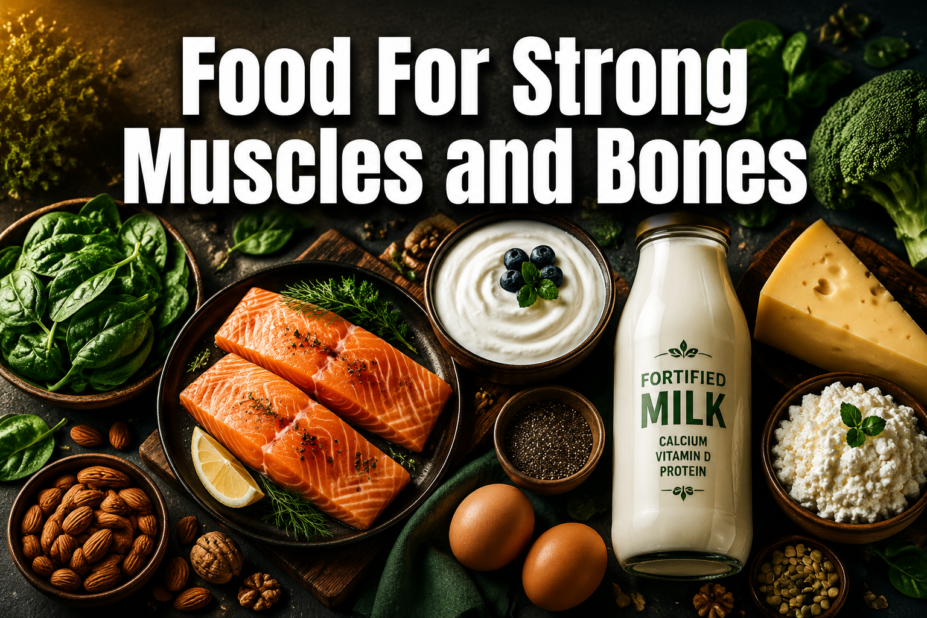
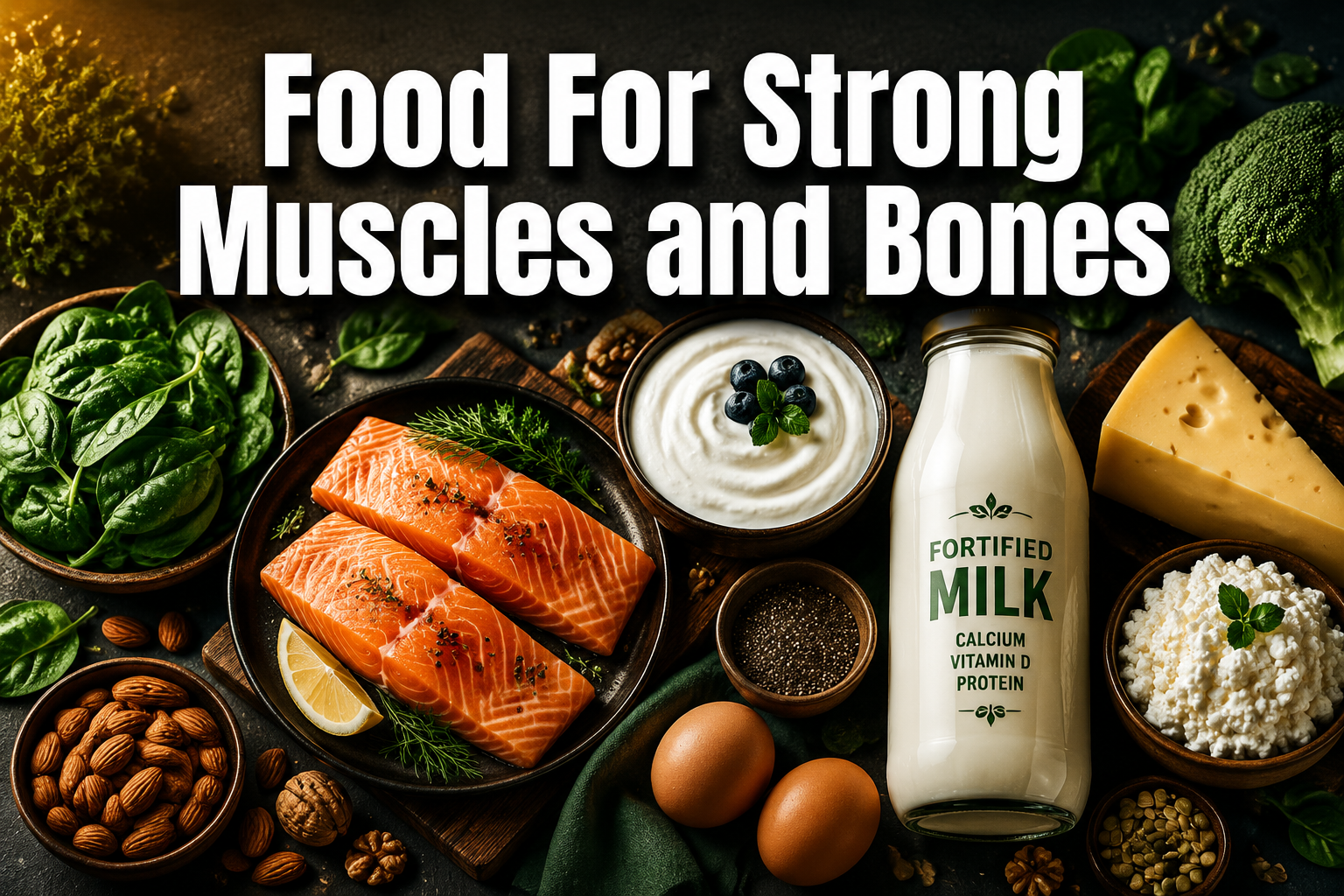
Food For Strong Muscles and Bones
Last updated: May 29, 2026
Quick Answer: The best Food For Strong Muscles and Bones includes calcium-rich dairy and leafy greens, vitamin D sources like fatty fish and fortified foods, and high-quality protein from lean meats, eggs, and legumes.
Adults need roughly 1,000–1,200 mg of calcium daily and 46–56 grams of protein, depending on age and sex. Combining these nutrients consistently, not just occasionally, is what drives real results for musculoskeletal health. [2][6]
Key Takeaways
- Calcium is the primary mineral for bone density; adults need 1,000–1,200 mg daily depending on age and sex [6]
- Vitamin D is essential for calcium absorption; aim for 600–800 IU daily from fatty fish, fortified foods, or supplements [6]
- Protein drives muscle protein synthesis; women need ~46 g/day and men ~56 g/day at minimum, with athletes needing more [2]
- Omega-3 fatty acids from salmon, sardines, and walnuts reduce inflammation and support joint and muscle recovery [1]
- Leafy greens like spinach and kale provide non-dairy calcium plus magnesium, which is critical for bone formation [5]
- Prunes have clinical evidence behind them — eating 5–6 daily helped postmenopausal women preserve hip bone mineral density [4]
- Ultra-processed foods, excess sodium, and soft drinks actively harm bone density and should be minimized [3]
- Plant-based eaters can fully meet calcium and protein needs through strategic food choices and targeted supplementation [5]
- Age-specific needs matter: older adults, teens, and athletes all require adjusted intake levels
- Nutrition and weight-bearing exercise work together — neither alone is sufficient for long-term bone and muscle health [6]
What Foods Help Build Muscle and Bone Strength Fastest?
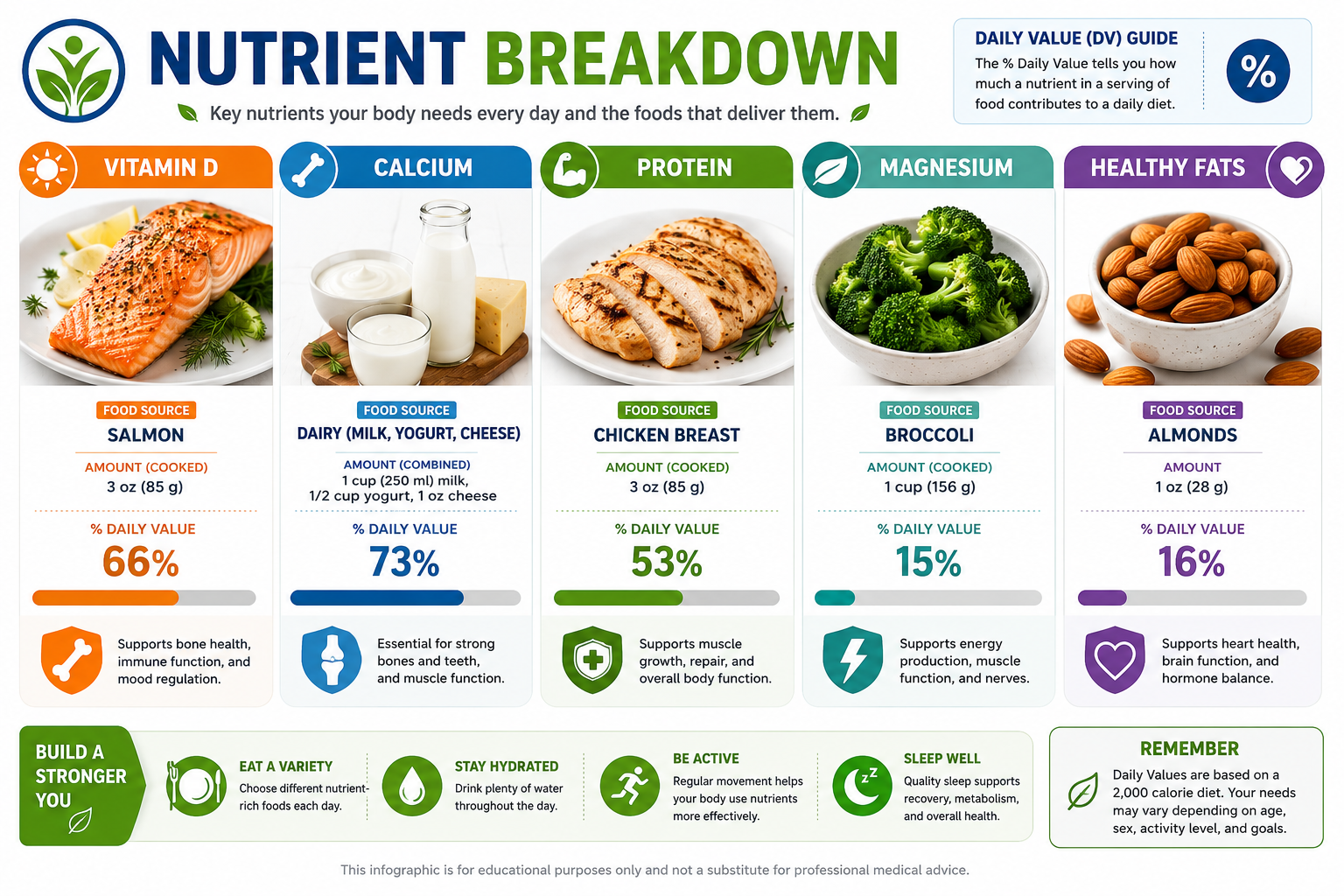
The fastest-acting foods for muscle and bone strength are those that deliver calcium, vitamin D, and complete protein in a single serving.
Fatty fish like salmon, fortified dairy products, and eggs are the most efficient options because they address multiple nutrient needs at once. [2]
Here are the top foods ranked by nutrient density for musculoskeletal health:
| Food | Key Nutrients | Daily Value Contribution |
|---|---|---|
| Sockeye salmon (3 oz) | Vitamin D, protein, omega-3s | 100%+ vitamin D [2] |
| Greek yogurt (1 cup) | Calcium, protein, vitamin D | ~30% calcium |
| Spinach (1 cup cooked) | Calcium, iron, magnesium | ~25% calcium [2] |
| Eggs (2 large) | Vitamin D, complete protein | ~10% vitamin D |
| Sardines (3 oz, with bones) | Calcium, vitamin D, protein | ~35% calcium [6] |
| Fortified milk (8 oz) | Calcium, vitamin D | ~30% calcium [2] |
| Almonds (1 oz) | Calcium, magnesium, protein | ~8% calcium |
| Edamame (1 cup) | Protein, calcium, magnesium | ~10% calcium |
“A healthy dietary pattern emphasizing fruits, vegetables, whole grains, fish, nuts, and low-fat dairy shows a direct association with improved bone mineral density and lower fracture risk.” [3]
For people who want faster results, pairing these foods with weight-bearing exercise, like walking, jogging, or kettlebell training, accelerates both muscle growth and bone remodeling significantly more than diet alone. [6]
How Much Protein Do You Really Need to Build Muscle?
The minimum daily protein recommendation is 46 grams for women and 56 grams for men, but these are baseline figures for sedentary adults. For anyone actively trying to build muscle, most sports nutrition guidelines suggest 1.2–2.0 grams of protein per kilogram of body weight per day. [2]
Why protein matters for muscle:
Protein provides the amino acids needed for muscle protein synthesis, the process by which your body repairs and builds new muscle tissue after exercise. Without adequate protein, muscle repair stalls regardless of how hard you train.
Practical protein targets by goal:
- Sedentary adult (maintenance): 46–56 g/day
- Active adult (moderate exercise): 0.8–1.2 g per kg body weight
- Strength training or muscle gain: 1.6–2.0 g per kg body weight
- Older adults (50+): Higher end of range recommended to offset age-related muscle loss
For a 70 kg (154 lb) person trying to build muscle, that means roughly 112–140 grams of protein per day. Spreading this across three to four meals, rather than eating it all at once, improves absorption and muscle protein synthesis. [2]
For more on how caloric intake supports muscle growth alongside protein, see this guide on building muscle with calories that support growth and repair.
Your Daily Nutritional Targets
Estimates based on National Academy of Medicine guidelines. Consult a healthcare provider for personalised advice, especially if you have a medical condition or are pregnant.
Cheap Protein Sources That Are Good for Muscles
High-quality protein doesn't require an expensive grocery bill. Several affordable foods deliver excellent protein content alongside other nutrients that support bone and muscle health. [2]
Budget-friendly protein sources (cost per gram of protein, approximate):
- Eggs — one of the cheapest complete proteins available; roughly $0.10–0.15 per egg
- Canned tuna or sardines — high protein, rich in vitamin D and omega-3s, often under $2 per can
- Lentils — about 18 grams of protein per cooked cup, plus calcium and iron
- Cottage cheese — 25 grams of protein per cup, affordable in most markets
- Chicken thighs — cheaper than breast meat, still high in protein and zinc
- Black beans — versatile, shelf-stable, and provide both protein and magnesium
- Peanut butter — 8 grams per two tablespoons, pairs well with whole grain bread
Common mistake: Many people focus only on chicken breast and protein shakes, missing out on cheaper, equally effective options like canned fish, legumes, and dairy.
Can Vegetarians Get Enough Protein for Muscle Growth?
Yes, vegetarians and vegans can absolutely get enough protein for muscle growth, but it requires more planning than an omnivorous diet. The key is combining complementary plant proteins to ensure all essential amino acids are covered. [5]
Best plant-based protein sources for muscle:
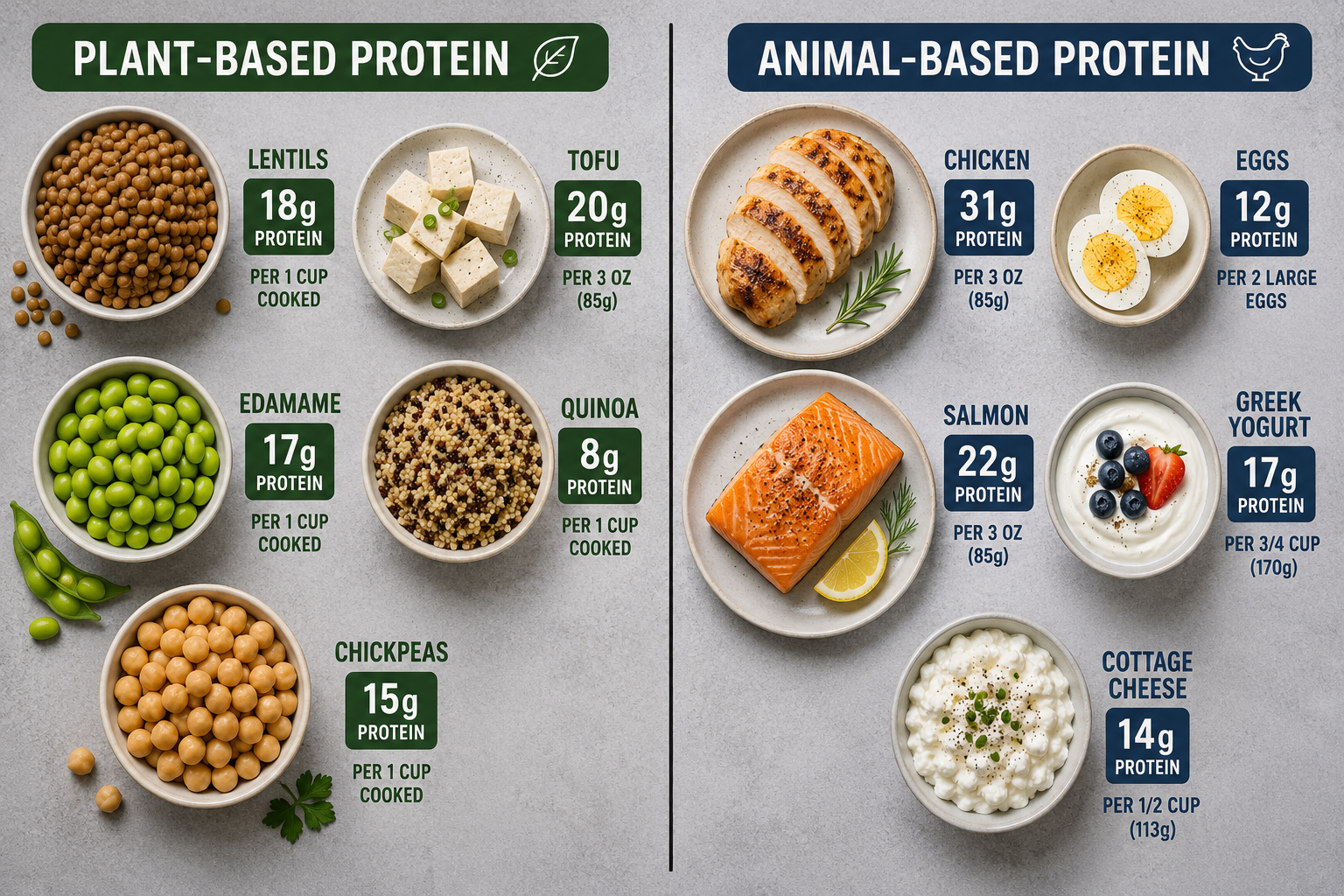
- Tofu (firm): ~20 g protein per cup
- Tempeh: ~31 g protein per cup — one of the highest plant sources
- Edamame: ~17 g protein per cup, plus calcium and magnesium
- Quinoa: ~8 g per cup cooked — a complete protein grain
- Lentils: ~18 g per cup cooked
- Chickpeas: ~15 g per cup cooked
- Hemp seeds: ~10 g per 3 tablespoons, with omega-3s included
The Physicians Committee for Responsible Medicine recommends including one daily serving each of beans and leafy greens to meet both calcium and magnesium requirements on a plant-based diet. [5]
For bone health specifically: Plant-based eaters should prioritize calcium-set tofu, fortified plant milks (look for 300+ mg calcium per serving), and dark leafy greens like kale and bok choy.
Vitamin B12 and vitamin D supplementation is generally necessary for vegans since these are difficult to get from plants alone.
Foods That Help Prevent Bone Loss as You Get Older
Bone loss accelerates after age 50, particularly in postmenopausal women. The most effective dietary strategy combines adequate calcium, vitamin D, magnesium, and anti-inflammatory foods while cutting out bone-depleting habits. [4][6]
Top bone-preserving foods for older adults:
- Prunes — A 2022 study in The American Journal of Clinical Nutrition found that eating 5–6 prunes daily helped postmenopausal women preserve hip bone mineral density, reducing fracture risk. This is one of the most specific dietary interventions with clinical outcomes. [4]
- Dairy products — An 8-oz glass of fat-free milk provides approximately 30% of daily calcium needs [2]
- Sardines with bones — Deliver both calcium and vitamin D in one food [6]
- Fortified orange juice — A practical calcium source for those who avoid dairy
- Kale and bok choy — High-calcium greens with better absorption rates than spinach
- Almonds — Provide calcium, magnesium, and vitamin E
Age-specific calcium targets (National Academy of Medicine):
- Women 50 and under: 1,000 mg/day
- Women 51 and older: 1,200 mg/day
- Men 51–70: 1,000 mg/day
- Men 71 and older: 1,200 mg/day [6]
For adults over 50 who are also focused on maintaining muscle mass, this guide on building muscle over 50 covers the exercise side of the equation alongside nutrition.

Best Diet for Someone Trying to Gain Muscle Mass
The best diet for muscle gain centers on a caloric surplus (eating slightly more than you burn), with protein making up 25–35% of total calories, carbohydrates fueling workouts, and healthy fats supporting hormone production and joint health. [2]
A practical muscle-gain day of eating:
- Breakfast: 3 scrambled eggs + 1 cup Greek yogurt + 1 cup fortified milk (~55 g protein, ~400 mg calcium)
- Lunch: 4 oz grilled chicken + 1 cup cooked quinoa + steamed broccoli + olive oil (~45 g protein)
- Snack: 1 oz almonds + 1 cup edamame (~18 g protein, ~150 mg calcium)
- Dinner: 4 oz salmon + 1 cup cooked spinach + sweet potato (~38 g protein, significant vitamin D)
This sample day provides roughly 156 grams of protein, 900+ mg of calcium, and substantial vitamin D — meeting the needs of a 75–85 kg person in active training.
Key principle: Carbohydrates are not the enemy for muscle gain. They replenish glycogen stores after training, which directly supports muscle recovery. Whole grains, oats, sweet potatoes, and fruit are excellent choices.
For a deeper look at what the best muscle-building diet looks like, see what is the best diet to build muscle.
Why Do Athletes Eat So Much Protein?
Athletes eat more protein because intense exercise causes micro-tears in muscle fibers, and protein provides the amino acids needed to repair and rebuild those fibers stronger than before. More training volume means more repair demand. [2]
Beyond repair, protein also:
- Supports immune function (which takes a hit during heavy training)
- Helps maintain lean muscle mass during caloric deficits
- Contributes to faster recovery between sessions
- Supports connective tissue repair, including tendons and ligaments that attach muscle to bone
Elite endurance athletes and strength athletes can require up to 2.2 grams of protein per kilogram of body weight per day during peak training blocks. For a 90 kg athlete, that's nearly 200 grams of protein daily — far above standard recommendations.
Practical note: Timing matters too. Consuming 20–40 grams of protein within two hours after training maximizes muscle protein synthesis. A post-workout meal of salmon with rice, or Greek yogurt with fruit, fits this window well.
Common Mistakes People Make When Trying to Build Muscle Through Diet
The most common mistake is focusing only on protein while ignoring calcium, vitamin D, and total caloric intake. Muscle and bone health require a full nutritional picture, not just one nutrient. [1][2]
Other frequent errors:
- Eating too little overall: A caloric deficit limits muscle protein synthesis regardless of protein intake
- Skipping dairy or calcium-rich foods: This accelerates bone density loss, especially in women over 40
- Relying only on supplements: Whole foods provide co-factors (magnesium, vitamin K2, zinc) that supplements often miss
- Ignoring anti-inflammatory foods: Chronic inflammation from poor diet slows muscle repair and degrades joint cartilage
- Excessive sodium intake: High sodium from processed foods increases calcium excretion through urine [5]
- Drinking too many soft drinks: Phosphoric acid in cola drinks may interfere with calcium absorption [3]
- Inconsistency: Eating well for three days and poorly for four produces minimal long-term results
Choose whole foods over supplements when possible. Supplements fill gaps but cannot replicate the full nutrient matrix of real food.
How Much Calcium Do You Need Daily for Strong Bones?
Adults aged 19–50 need 1,000 mg of calcium daily. Women over 51 and men over 71 need 1,200 mg daily to offset age-related bone loss. Getting this from food is preferable to supplements because food-based calcium comes with co-nutrients that improve absorption. [6]
How to hit 1,000 mg of calcium from food:
| Food | Serving | Calcium (mg) |
|---|---|---|
| Fortified milk | 8 oz | ~300 mg |
| Greek yogurt | 1 cup | ~250 mg |
| Sardines (with bones) | 3 oz | ~325 mg |
| Cooked spinach | 1 cup | ~245 mg |
| Fortified OJ | 8 oz | ~300 mg |
| Almonds | 1 oz | ~75 mg |
Important: Vitamin D is required for calcium absorption. Without adequate vitamin D (600–800 IU daily depending on age), much of the calcium you consume passes through unabsorbed. [6]
Differences Between Plant and Animal Protein for Muscle Building
Animal proteins are generally more efficient for muscle building because they contain all essential amino acids in ratios that closely match human muscle tissue. Plant proteins are often incomplete — missing or low in one or more essential amino acids — but this is easily addressed through food variety. [5]
Key comparison:
| Factor | Animal Protein | Plant Protein |
|---|---|---|
| Completeness | Complete (all EAAs) | Often incomplete |
| Digestibility | Higher (DIAAS score) | Variable |
| Leucine content | Higher | Lower (except soy) |
| Calcium co-benefit | Dairy is dual-purpose | Tofu, greens also provide Ca |
| Inflammation | Processed meats increase risk | Generally anti-inflammatory |
| Cost | Variable; can be high | Often cheaper |
Bottom line: Both work for muscle building. Animal proteins are more straightforward; plant proteins require more planning but carry additional anti-inflammatory benefits. Soy protein (tofu, tempeh, edamame) is the plant source most comparable to animal protein in terms of amino acid profile and leucine content.
What Happens If You Don't Get Enough Protein?
Inadequate protein leads to muscle loss (sarcopenia), slower recovery, weakened immune function, and — over time — reduced bone density, since bone matrix also contains collagen, which is protein-dependent. [2]
Signs of insufficient protein intake:
- Persistent muscle soreness that doesn't resolve between sessions
- Slow wound healing
- Hair thinning or brittle nails
- Loss of muscle mass despite regular training
- Fatigue and low energy
In older adults, protein deficiency is a leading contributor to frailty and increased fracture risk. The combination of low protein and low calcium creates a compounding problem for both muscle and bone health simultaneously.
Best Supplements for Muscle and Bone Health
Supplements are most useful when diet alone can't meet needs — common in older adults, vegans, people with limited sun exposure, or those with absorption issues. [7]
Evidence-backed supplements for musculoskeletal health:
- Calcium carbonate or calcium citrate: Calcium citrate absorbs better on an empty stomach; carbonate requires food. Use only if dietary intake is insufficient — excess supplemental calcium has been linked to cardiovascular concerns in some research. [7]
- Vitamin D3 (cholecalciferol): More effective than D2 at raising blood levels. 1,000–2,000 IU daily is a common maintenance dose for those with limited sun exposure. [6]
- Magnesium glycinate or malate: Supports bone mineralization and muscle contraction; many people are deficient
- Creatine monohydrate: Well-researched for improving strength and lean muscle mass, especially in older adults
- Omega-3 fish oil: Reduces muscle soreness and inflammation; 1–3 grams EPA/DHA daily is a common range [1]
- Vitamin K2 (MK-7 form): Directs calcium into bones rather than soft tissues; often paired with vitamin D3
Important: Always consult a healthcare provider before starting supplements, especially calcium and vitamin D, since over-supplementation carries real risks.
Foods to Avoid If You Want to Build Muscle and Bone Density
Certain foods actively work against bone density and muscle recovery. Cutting back on these has a measurable positive effect on musculoskeletal health. [3][5]
Foods and habits to limit:
- Cola soft drinks: Phosphoric acid may interfere with calcium absorption and bone mineralization [3]
- Excess alcohol: Impairs calcium absorption, disrupts hormone balance, and slows muscle protein synthesis
- Ultra-processed foods high in sodium: Increased sodium causes more calcium to be excreted in urine [5]
- Trans fats and fried foods: Promote systemic inflammation that slows muscle repair and degrades joint health [3]
- Excess caffeine: Very high intake (over 400 mg/day) may slightly reduce calcium absorption — moderate consumption is generally fine
- Highly processed meats (bacon, deli meats): High sodium content, plus some research links them to increased inflammatory markers [3]
The Mediterranean dietary pattern — emphasizing whole grains, vegetables, fish, olive oil, and legumes while minimizing processed foods — consistently shows the strongest evidence for bone mineral density and reduced fracture risk across multiple studies. [3]
Practical Meal Planning for Muscle and Bone Health
A well-structured weekly plan removes guesswork and ensures consistent nutrient intake across all age groups and dietary preferences.
Weekly meal planning principles:
- Include a calcium source at every meal — dairy, fortified plant milk, leafy greens, or canned fish with bones
- Eat fatty fish at least twice per week — salmon, mackerel, or sardines cover vitamin D and omega-3s simultaneously
- Distribute protein evenly — aim for 25–40 g per meal rather than loading it all at dinner
- Add one serving of beans or lentils daily — covers protein, magnesium, and fiber
- Use olive oil as your primary cooking fat — supports the anti-inflammatory dietary pattern linked to better bone outcomes [3]
- Limit processed snacks — replace with almonds, Greek yogurt, or edamame
For vegetarians and vegans: Fortify your plan with calcium-set tofu, fortified plant milks, and a vitamin D3 supplement (vegan D3 from lichen is available). Pair vitamin C-rich foods with iron and calcium-rich plant foods to improve absorption.
FAQ: Food For Strong Muscles and Bones
Q: What is the single best food for bone health?
A: Sardines with bones are arguably the most efficient single food — they provide calcium, vitamin D, and protein in one serving. Fortified dairy is a close second for most people. [2][6]
Q: Can I get enough calcium without dairy?
A: Yes. Calcium-set tofu, fortified plant milks, canned sardines, kale, bok choy, and fortified orange juice are all viable non-dairy sources. You'll need to be more deliberate about hitting 1,000 mg daily. [5]
Q: How long does it take to see results from a bone-healthy diet?
A: Bone remodeling is slow. Consistent dietary changes typically show measurable improvements in bone density markers within 6–12 months. Muscle changes from improved protein intake can be noticeable within 4–8 weeks when combined with resistance training.
Q: Is vitamin D from sunlight enough?
A: For many people, especially in northern latitudes or those who spend limited time outdoors, sunlight alone is insufficient — particularly in winter months. A vitamin D3 supplement of 1,000–2,000 IU is commonly recommended as a backup. [6]
Q: Do protein shakes count toward daily protein goals?
A: Yes, but whole food sources are preferable as a primary strategy because they deliver co-nutrients (zinc, B vitamins, calcium) that shakes often lack. Use shakes to fill gaps, not as a foundation.
Q: Are eggs good for bone health?
A: Yes. Eggs provide vitamin D (primarily in the yolk) and complete protein. Two large eggs contribute roughly 10% of daily vitamin D needs and about 12 grams of protein. [2]
Q: What's the best protein source for older adults?
A: Greek yogurt is particularly well-suited for older adults — it's high in calcium, protein, and often fortified with vitamin D, and it's easy to digest. Eggs and canned fish are also excellent choices. [2]
Q: Should I take a calcium supplement if I eat dairy?
A: Probably not, unless a blood test shows deficiency. Most adults who eat dairy regularly meet calcium needs through food. Excess supplemental calcium has been associated with cardiovascular concerns in some research. [7]
Q: Is magnesium important for bones?
A: Yes. Magnesium is involved in converting vitamin D to its active form and in bone crystal formation. About 60% of the body's magnesium is stored in bone. Almonds, spinach, black beans, and pumpkin seeds are good sources.
Q: What's the best post-workout meal for muscle recovery?
A: A combination of protein and carbohydrates within two hours of training works best. Examples: salmon with rice, Greek yogurt with fruit, or a chicken and vegetable stir-fry with whole grain noodles.
Q: Can resistance training replace good nutrition for bone health?
A: No — they work together, not as substitutes. Weight-bearing exercise stimulates bone remodeling, but your body needs calcium and vitamin D to actually build new bone tissue. Both are necessary. [6]
Q: Are there foods that specifically help with joint pain?
A: Omega-3-rich foods (salmon, sardines, walnuts, flaxseed) and anti-inflammatory foods (berries, olive oil, turmeric) have the most evidence for reducing joint inflammation. These support the connective tissue between muscles and bones. [1]
Conclusion: Building Your Musculoskeletal Nutrition Plan
Food For Strong Muscles and Bones aren't built by one superfood or one supplement. They're built by consistent, varied eating that covers the full range of nutrients your musculoskeletal system needs, calcium, vitamin D, protein, magnesium, omega-3s, and a low-inflammatory dietary foundation.
Your actionable next steps:
- Audit your calcium intake — track for three days and see if you're hitting 1,000–1,200 mg daily
- Add fatty fish twice a week — salmon or sardines cover vitamin D and protein simultaneously
- Distribute protein across meals — aim for 25–40 g per sitting rather than one large protein meal
- Cut ultra-processed foods and soft drinks — these actively deplete bone density over time
- Consider a vitamin D3 supplement if you have limited sun exposure, especially in winter
- Combine nutrition with resistance training — the two together produce results that neither achieves alone
Whether you're 25 or 65, an athlete or a casual exerciser, the food for strong muscles and bones is largely the same: whole, minimally processed, nutrient-dense foods eaten consistently over time. That's the real competitive advantage, not the latest supplement, but the daily habit.
For those who want to pair their nutrition improvements with effective training, explore how building muscle exercises at home can complement your dietary strategy without needing a gym membership.
References
[1] Foods For Healthy Bones And Muscles - https://www.goldenstateortho.com/foods-for-healthy-bones-and-muscles/
[2] 10 Foods For Building Strong Bones And Muscles - https://northcentralsurgical.com/10-foods-for-building-strong-bones-and-muscles/
[3] PMC5227978 - https://pmc.ncbi.nlm.nih.gov/articles/PMC5227978/
[4] Surprising Foods That Boost Bone Health - https://www.health.harvard.edu/bones-and-joints/surprising-foods-that-boost-bone-health
[5] Healthy Bones - https://www.pcrm.org/health-topics/healthy-bones
[6] Bone Health (Art 20045060) - https://www.mayoclinic.org/healthy-lifestyle/adult-health/in-depth/bone-health/art-20045060
[7] Nutrition for Bones - https://www.bonehealthandosteoporosis.org/patients/treatment/nutrition/
[8] 9 Surprising Foods Keep Bones Strong - https://swhcoronaregional.com/about/blog/9-surprising-foods-keep-bones-strong/
[9] Strengthen Your Bones With Healthy Foods - https://healthcare.utah.edu/healthfeed/2023/04/strengthen-your-bones-healthy-foods
[10] Nutrition For Bones - https://theros.org.uk/information-and-support/bone-health/nutrition-for-bones/