Functional Longevity for the 50+
Latest Update: April 05, 2026
If you’ve ever wondered whether staying strong, mobile, and independent past 50 is genuinely achievable, the data paints a sobering picture and a hopeful one.
Only 13.9% of adults aged 65 and older currently meet federal guidelines for both aerobic and muscle-strengthening activities, revealing a massive gap between the interest in functional longevity for the 50+ demographic and the actual follow-through.
The good news? The strategies that close that gap are more accessible, more practical, and more suited to home training than most people realize.
Key Takeaways
| Question | Answer |
|---|---|
| What is functional longevity for the 50+ demographic? | It is the ability to perform everyday physical tasks, like carrying groceries, climbing stairs, and rising from the floor, with ease and confidence as you age, sustained through intentional training and recovery habits. |
| What type of exercise is best for functional longevity after 50? | A combination of resistance training (such as adjustable kettlebells for compact home gym setups), low-impact cardio, and mobility work produces the most well-rounded results for the 50+ demographic. |
| Is it too late to build strength after 60? | Absolutely not. Consistent resistance training is associated with significant improvements in muscular strength and functional capacity even in adults in their 70s and beyond. |
| Do I need a gym membership for functional longevity training? | No. A well-chosen set of home gym equipment pieces, including adjustable kettlebells or dumbbells, can fully support a functional longevity program from a spare room or apartment. |
| How important is sleep for functional longevity after 50? | Extremely important. Recovery, including consistent quality sleep, is now widely recognized as a foundational pillar of long-term physical function, not just a nice-to-have bonus. |
| What are joint-friendly exercise options for older adults? | Soft or vinyl-coated kettlebells, resistance band work, walking-based movement, yoga, and swimming are all associated with lower joint stress compared to high-impact activities like running or plyometrics. |
| How many days per week should someone over 50 train for functional longevity? | Most guidance points to at least two strength sessions per week combined with several days of low-impact movement, with rest and active recovery built into the schedule intentionally. |
Why Functional Longevity for the 50+ Demographic Is the Defining Fitness Priority of 2026
Something has shifted fundamentally in how adults over 50 think about fitness. It is no longer about looking a certain way in a mirror.
It is about whether you can still carry your own bags, play with grandchildren on the floor, or take a hiking trip at 70 without bracing yourself for a week of recovery.
In 2026, 37.8% of consumers identified longevity as the single most important wellness trend of the year, and that number is not driven by biohackers or elite athletes.
It is driven by everyday adults in their 50s and 60s who have started asking a smarter question: not “how do I lose weight?” but “how do I keep working well for decades?”
This is the shift we have been paying close attention to at Best Kettlebells Review. The same equipment we review for competitive athletes and home gym enthusiasts also happens to be extraordinarily well-suited for building the kind of functional strength that makes a real difference in daily life for the 50+ demographic.
The interest is clearly there. The challenge, as that 13.9% compliance figure shows, is bridging the gap between intention and consistent action.
Understanding What “Functional” Actually Means for the 50+ Demographic
The word “functional” gets used a lot in fitness circles, but it has specific meaning when we are talking about longevity for adults over 50.
Functional fitness refers to training that directly improves your capacity to perform real-world movements, not just isolated muscle exercises done for aesthetics.
Think about the movements life actually demands: squatting down to pick something up, pressing overhead to reach a shelf, carrying loads from one room to another, rotating to look behind you, and balancing on one leg while putting on a shoe. These are the movements that functional longevity training targets.
The compound, multi-joint nature of kettlebell exercises, for example, mirrors these patterns almost perfectly. A kettlebell swing trains your hips, glutes, core, and shoulders simultaneously, in the same way your body would load up to shovel snow or lift a heavy bag from a car boot. That is the “functional” difference.
“Functional longevity is not about surviving to old age. It is about arriving at old age in a state where life is still worth showing up for fully.”
For the 50+ demographic, this framing matters because it shifts training from vanity metrics toward capability metrics. Progress becomes measured in what you can do, not just how you look.
The Muscle Mass Problem: Why Resistance Training Is Non-Negotiable After 50
Here is the number that should get every adult over 50 off the couch: after age 60, lower limb muscle mass typically decreases at a rate of 1.0% to 1.4% per year without active intervention.
Over a decade, that adds up to a dramatic reduction in the strength and stability you need to stay independent and injury-free.
This process, known as sarcopenia, does not announce itself with sudden dramatic symptoms. It creeps in quietly, showing up as the stairs that feel a little harder than they used to, or the grocery bags that feel heavier than last year. By the time most people notice it, the losses are already significant.
That 40% strength improvement figure is not just impressive on paper. It represents a real, measurable change in what someone’s body can do.
And a 30% reduction in fall risk translates directly into fewer fractures, fewer hospital visits, and more independence.
The practical takeaway is simple: two or more days of resistance training per week is not optional for the 50+ demographic pursuing functional longevity. It is the single most impactful habit available.
Best Equipment for Functional Longevity in the 50+ Demographic
Choosing the right tools matters enormously, especially when joint health is a priority. Not all equipment is created equal for older adults, and the wrong choice can lead to unnecessary discomfort that derails consistency.
Adjustable Kettlebells: The Compact Powerhouse
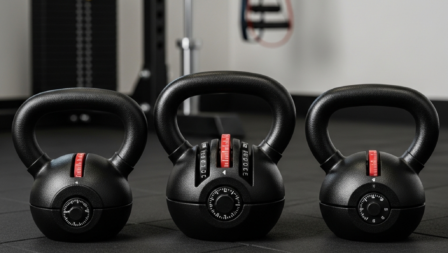
Adjustable kettlebells are, in our view, one of the smartest investments an adult over 50 can make for their home gym. A single shell covering a wide weight range, like the Titan’s 12kg to 32kg format, gives you the ability to progress gradually without buying a rack full of individual bells.
Gradual progression is especially important for functional longevity training. Moving from lighter loads to heavier ones over weeks and months builds not just strength but connective tissue integrity, something that takes longer to develop than muscle but matters far more for long-term joint durability.
Our guide to the best adjustable kettlebells for compact home gym setups walks through the top options in detail.
Soft Kettlebells: The Joint-Friendly Option
For adults who are newer to training or managing joint sensitivity, soft kettlebells are worth serious consideration.
Our testing found that options like the Bodimax Soft Pastel Kettlebell offer a noticeably different experience than cast iron, particularly when it comes to impact during floor-based movements.
We specifically note that soft kettlebells can reduce joint impact by up to 40% compared to traditional cast iron, which is a significant differentiator for older or injury-prone lifters.
For the 50+ demographic pursuing functional longevity, this is not a minor detail. It is often the difference between staying consistent and getting sidelined.
Adjustable Dumbbells
Kettlebells are our specialty, but we recognize that many functional longevity programs benefit from both bells and dumbbells.
Adjustable dumbbell systems, reviewed in our PowerBlock adjustable dumbbells review, offer a different grip pattern and load distribution that complements kettlebell work well, especially for pressing and row movements.
Best Movement Patterns That Support Functional Longevity for the 50+ Demographic
Rather than prescribing specific exercise names, it is more useful for the 50+ demographic to think in terms of movement patterns. Every well-rounded functional longevity program should cover the following categories.
- Hip-hinge movements (deadlifts, kettlebell swings): Train the posterior chain for picking things up safely and powering through daily tasks.
- Squat-pattern movements (goblet squats, box squats): Build the quad and glute strength needed for rising from chairs, stairs, and the floor.
- Push patterns (overhead press, floor press): Maintain the shoulder stability and pressing strength needed for lifting and reaching overhead.
- Pull patterns (rows, lat pull variations): Counter the forward posture many adults develop and support upper back health.
- Carry patterns (farmer’s carries, suitcase carries): Directly replicate the load-bearing tasks of daily life and challenge core stability simultaneously.
- Rotation and anti-rotation (pallof press, woodchop): Protect the spine and improve the ability to turn and reach without pain.
- Single-leg stability (split squats, step-ups): Build balance and unilateral strength, critical for fall prevention in the 50+ demographic.
A 20-minute beginner kettlebell workout can hit four or five of these patterns in a single session without requiring more than one piece of equipment. That efficiency is one of the primary reasons we keep coming back to kettlebells as a cornerstone tool for functional longevity.
A practical 5-step roadmap to Functional Longevity for the 50+ demographic. This infographic highlights activity, nutrition, sleep, health checks, and resilience as essential levers for lasting well-being.
The Low-Impact Revolution: Smarter Cardio for Functional Longevity After 50
The cardio landscape for the 50+ demographic has changed dramatically in 2026. Adults are walking away, sometimes literally, from high-impact aerobics classes and pounding pavement sessions in favor of something that feels more sustainable and respectful of their joints.
Interest in “Japanese Walking,” a mindful, posture-focused walking technique, saw a staggering 2,968% increase in search volume entering 2026.
That is not a random spike. It reflects a growing recognition that the form and intention behind movement matters as much as the volume of it.
Similarly, “Walking Yoga,” a form of moving meditation that blends mindful movement with light stretching, has surged 2,414% among those seeking stress reduction and functional health.
For functional longevity in the 50+ demographic, these trends matter because they address both the physical and the mental dimensions of aging well.
In practice, this means the best cardio approach for most adults over 50 combines brisk daily walking with one or two weekly sessions of something more structured, such as cycling, swimming, or a kettlebell circuit kept at a moderate intensity.
The right footwear for these activities matters more than most people expect, and our overview of good workout shoes covers what to look for in terms of support and stability for functional training.
Sleep and Recovery: The Underestimated Pillars of Functional Longevity for the 50+
We talk a lot about what happens during training sessions. But the adaptations that training produces, the actual strength gains and tissue repair, happen during recovery. And for the 50+ demographic, this is where many programs quietly fall apart.
A striking data point from 2026 research found that 69% of people would choose getting a consistent 8 hours of sleep over the ability to eat unlimited snacks without gaining weight.
That preference reveals something important: adults increasingly understand that sleep is not a luxury. It is infrastructure.
For functional longevity specifically, poor or insufficient sleep accelerates the muscle loss process that resistance training is working to counteract.
It also impairs coordination and reaction time, which matters enormously for fall prevention in older adults.
Practical recovery habits worth building into any functional longevity program for the 50+ demographic include:
- Prioritizing 7 to 9 hours of consistent sleep by maintaining regular sleep and wake times
- Including at least one full rest day between strength sessions, especially in the early weeks of a new program
- Using active recovery sessions (gentle walking, light stretching, or yoga) rather than complete inactivity on non-training days
- Paying attention to nutrition timing around workouts, particularly adequate protein intake to support muscle protein synthesis
- Managing stress through consistent low-intensity movement, which emerging data suggests compounds the functional longevity benefits of structured training
Building a Weekly Routine for Functional Longevity in the 50+ Demographic
Consistency over intensity is the mantra that matters most here. A moderate, well-structured weekly routine that someone can sustain for years is worth far more than aggressive programs that burn bright for six weeks and then collapse under their own demands.
Here is a practical framework for a weekly functional longevity routine that covers the major bases without overwhelming someone new to structured training:
| Day | Session Type | Focus | Duration |
|---|---|---|---|
| Monday | Strength (Lower Body) | Squat, hinge, single-leg patterns | 30-40 min |
| Tuesday | Low-Impact Cardio | Brisk walk, cycling, or mindful walking | 30-45 min |
| Wednesday | Strength (Upper Body + Core) | Push, pull, carry, and anti-rotation | 30-40 min |
| Thursday | Active Recovery | Gentle yoga, walking yoga, or light stretching | 20-30 min |
| Friday | Full-Body Strength Circuit | Compound kettlebell or dumbbell circuit | 25-35 min |
| Saturday | Recreational Activity | Hiking, swimming, dancing, or sport of choice | 45-60 min |
| Sunday | Full Rest | Sleep, nutrition, and recovery focus | N/A |
Notice that this template includes only three dedicated strength sessions per week. For many adults in the 50+ demographic starting from a low baseline, that is enough stimulus to drive meaningful improvements when combined with consistent low-impact movement on the other days.
Best Home Gym Setups for the 50+ Demographic Pursuing Functional Longevity
One of the most common barriers to consistent training in the 50+ demographic is the gym itself. Commuting, locker rooms, unfamiliar equipment, and the social dynamic of commercial gyms can all create friction that erodes long-term consistency.
Home training removes that friction almost entirely. And in 2026, the quality of home gym equipment available at reasonable price points has made this more viable than ever.
A minimal but effective home setup for functional longevity in the 50+ demographic might include:
- One adjustable kettlebell covering a range from light to moderately heavy (the Titan 12kg-32kg shell format is a benchmark we use for this type of versatility)
- A set of resistance bands for pull-based movements and mobility work
- A sturdy step or box for step-ups and elevated variations
- A yoga mat for floor-based core work and mobility sessions
- A foam roller for basic soft tissue recovery work between sessions
That entire setup can fit in a corner of a bedroom or home office. Our deep-dive into the best home gym equipment for all training styles and spaces covers this in much greater detail if you want to build out a more comprehensive setup over time.
For those who want to add dumbbell-based movements alongside kettlebell training, the Bowflex SelectTech 552 dumbbells are worth considering as a space-efficient complement to the setup above.
The Mindset Shift That Makes Functional Longevity Training Stick
We hear it constantly from people who have struggled to maintain a training habit past 50: the program was fine, but the motivation kept running dry.
And this is almost always because the goal was framed around something external, a number on a scale, a physique comparison, a deadline fitness event.
Functional longevity for the 50+ demographic offers a different, more durable motivation: capability. When you start measuring progress in terms of what you can do rather than how you look, the feedback loop changes completely.
The squat you could not complete without knee discomfort six months ago now feels manageable. The carry that used to leave your lower back aching now feels controlled.
These wins are personal, consistent, and directly tied to the quality of your daily life. That is a far more powerful engine for long-term consistency than aesthetics alone.
56% of fitness enthusiasts over the age of 40 now prioritize joint-friendly exercise options specifically to protect their long-term mobility.
That figure tells us the mindset is already shifting in the right direction. The equipment and the programs just need to catch up with that priority, and in our view, they already have.
Conclusion
Functional longevity for the 50+ demographic is not a niche fitness topic anymore. In 2026, it is the mainstream priority for millions of adults who have decided that aging well is worth training for deliberately and consistently.
The data confirms the need, the interest is at an all-time high, and the tools available for home-based functional training have never been better or more accessible.
The formula is straightforward, even if it takes time to build: two to three resistance training sessions per week using joint-friendly, compound-focused equipment, supported by regular low-impact movement, intentional recovery, and quality sleep.
None of this requires a commercial gym membership, expensive equipment stacks, or hours of daily effort.
What it does require is a clear-eyed commitment to building the physical capability to live your best decades, not just survive them.
If you are in the 50+ demographic and functional longevity is on your radar, there has never been a better moment to start building the habits and the home gym setup that support it.
Frequently Asked Questions
What is the best exercise for functional longevity in the 50+ demographic?
The strongest evidence points to consistent resistance training as the cornerstone of functional longevity for the 50+ demographic, particularly compound movements like squats, hinges, presses, and carries. Combining two to three strength sessions per week with regular low-impact cardio, such as walking or swimming, covers the most ground for long-term mobility and independence.
Is it safe to use kettlebells after age 50?
Yes, kettlebells are used extensively by adults over 50 precisely because they support functional movement patterns and can be scaled to any fitness level. Soft or vinyl-coated kettlebell options further reduce joint impact, making them particularly suitable for older adults or those managing existing joint sensitivity.
How quickly can someone over 60 build strength with resistance training in 2026?
Research consistently shows that adults over 60 can make meaningful strength gains within 8 to 12 weeks of consistent resistance training, with some studies indicating increases of approximately 40% in muscular strength with sustained programs. The key variable is consistency, not intensity, particularly in the early stages of training.
What does “functional longevity” mean for someone in their 50s or 60s?
For the 50+ demographic, functional longevity means maintaining the physical capability to perform everyday tasks, from climbing stairs and carrying loads to getting up off the floor, comfortably and without injury as the years progress. It shifts the fitness focus from appearance-based goals toward capability-based goals that directly improve quality of life.
Can I build a functional longevity program at home without a gym?
Absolutely. A compact home setup with one adjustable kettlebell, resistance bands, and a mat is enough to cover all the major movement patterns required for Functional Longevity for the 50+ demographic. Many adults in this demographic find home training more consistent precisely because it removes the logistical barriers of gym commuting and scheduling.
Is walking enough exercise for functional longevity after 50?
Walking is valuable and forms an important part of any functional longevity program for the 50+ demographic, but it is not sufficient on its own. Without resistance training, muscle mass will continue to decline at a rate of 1.0% to 1.4% per year after 60, and walking does not provide enough stimulus to counteract that loss. Combining walking with at least two strength sessions per week is the more complete approach.
What is the most common mistake adults over 50 make when trying to improve functional longevity?
The most common mistake is prioritizing intensity and short-term programs over sustainable, moderate-load training done consistently over months and years. For functional longevity in the 50+ demographic, a program you can maintain for two years at moderate effort will produce far better results than six weeks of aggressive training followed by burnout or injury.