Goblet Squat With Kettlebell
The goblet squat with kettlebell is one of the most practical lower-body exercises you can learn, combining strength, mobility, and conditioning in a single movement.
In some coaching case studies, structured goblet squat progressions have been reported to increase working weights by several hundred percent in just four weeks when volume and load are progressed systematically, highlighting how responsive this pattern is to smart programming.
This guide walks you step by step through how to perform the kettlebell goblet squat correctly, how to program it, and how to avoid the most common mistakes.
Key Takeaways
| Question | Answer |
|---|---|
| What is a goblet squat with kettlebell? | A front-loaded squat performed while holding a kettlebell at chest height (by the horns), emphasizing upright posture, core engagement, and strong leg drive. |
| Is the goblet squat good for beginners? | Yes. Beginners commonly start with 8/12 reps for 1/2 sets, building technique before loading heavier. |
| How often can I do kettlebell goblet squats? | Most lifters use them 2/3 times per week, adjusting sets, reps, and kettlebell weight to match recovery and goals. |
| What weight should I start with? | Many adults begin comfortably with an 8 kg kettlebell, then move up as technique and strength improve. A versatile starting option is a quality adjustable or fixed kettlebell such as those found on this kettlebell selection. |
| What muscles does the kettlebell goblet squat work? | Primarily quadriceps, glutes, and core, with assistance from hamstrings and upper back to keep the kettlebell stable and the torso upright. |
| Can I build strength with goblet squats alone? | You can build meaningful strength, especially as an early to intermediate lifter, by progressively increasing load, sets, or reps and maintaining solid technique. |
| How do I progress the exercise over weeks? | One practical strategy is to increase total sets over several weeks (for example, building toward as many as 10 sets of 5 reps) while gradually increasing the kettlebell weight as it becomes manageable. |

What Is a Goblet Squat with Kettlebell and Why It Belongs in Your Training
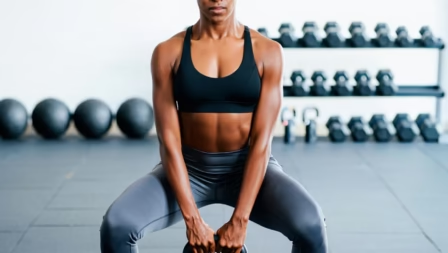
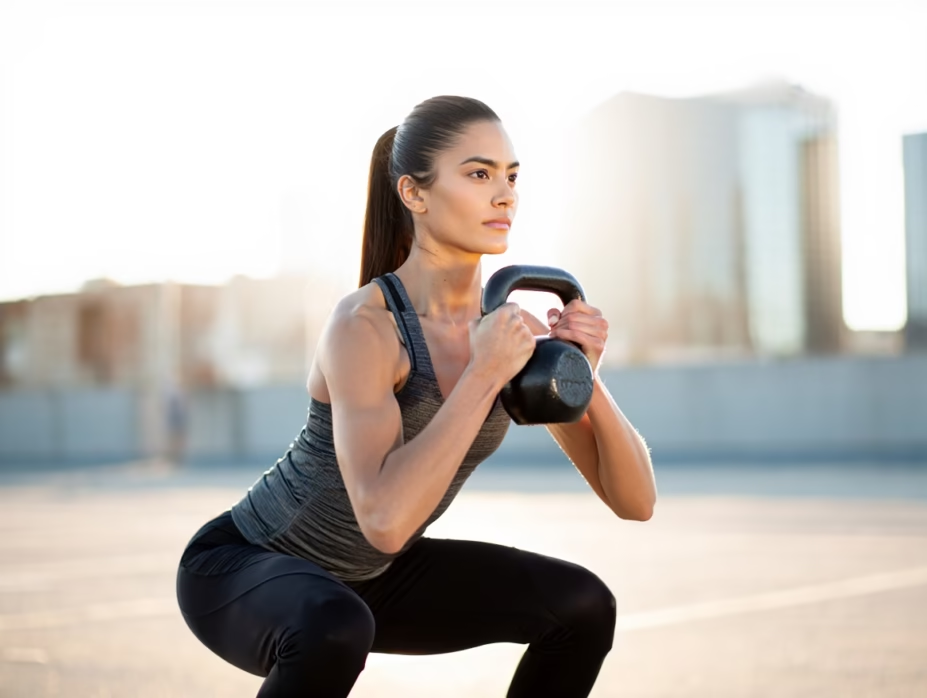
The kettlebell goblet squat is a squat variation where you hold a single kettlebell close to your chest, like a goblet, and sit down into a deep, controlled squat.
The front-loaded position encourages a more upright torso and strong core bracing compared with many back-loaded squat variations.
Kettlebell goblet squats are widely used in strength and conditioning programs and kettlebell complexes because they strongly load the quads and core while teaching clean squatting mechanics.
They fit well into warm-ups, strength blocks, and conditioning circuits, whether you train at home or in a gym.
Muscles Worked in the Kettlebell Goblet Squat
Understanding which muscles work hardest in the goblet squat helps you use it more intentionally. The main drivers are your quadriceps, which extend the knee, and your glutes, which extend the hips as you stand up from the bottom of the squat.
Because the kettlebell is held in front of your body, your core and upper back also have to work hard to keep the torso stable and upright.
Research comparing goblet and landmine squats shows that goblet squats produce higher quadriceps activation, with women in particular displaying greater quad activity than men in both variations.
Primary and Secondary Muscles
- Primary: Quadriceps, gluteus maximus
- Secondary: Hamstrings, adductors, calves
- Stabilizers: Abdominals, obliques, spinal erectors, upper back and shoulders (to hold the kettlebell)
How to Perform the Goblet Squat with Kettlebell: Step-by-Step Technique
Technique is the foundation of every useful goblet squat. A controlled, consistent pattern lets you progress load and volume safely while getting the most out of each repetition.
Use the following checklist each time you perform the movement. If you cannot maintain these positions, lower the weight or range of motion until you can perform the exercise with stability and control.
Step-by-Step Form Guide
- Set your stance. Stand with feet about shoulder-width apart, toes slightly turned out (10–30 degrees), and weight balanced across the whole foot.
- Rack the kettlebell. Hold the kettlebell by the horns at chest height, bottom hanging down, forearms vertical, elbows just in front of your ribs.
- Brace. Take a breath in, gently brace your midsection as if preparing for a light punch, and keep your ribs stacked over your pelvis.
- Initiate the squat. Sit your hips slightly back and then bend your knees, letting them travel in line with your toes as you lower straight down.
- Depth. Descend until your thighs are at least parallel to the floor (or as low as you can control) while keeping your heels down and torso upright.
- Drive up. Push the floor away through mid-foot and heel, stand tall, and exhale near the top while keeping the kettlebell close and chest proud.
Choosing the Right Kettlebell Weight and Type for Goblet Squats
Selecting an appropriate kettlebell for your goblet squat is essential for both technique and progression. Many studies and coaching examples use an 8 kg kettlebell as an entry-level weight in testing goblet squat variations, which is a practical starting reference for many adults.
As you gain confidence, you can move up to 12 kg, 16 kg, and beyond. The limiting factor is usually how well you can hold the weight in the goblet position while maintaining posture, not just how strong your legs feel.
Fixed vs. Adjustable Kettlebells
| Type | Pros for Goblet Squats | Considerations |
|---|---|---|
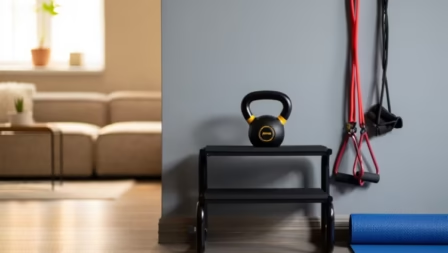
| Fixed Kettlebell | Simple, durable, predictable feel; great horn shape for goblet grip. | Need multiple bells as you get stronger. |
| Adjustable Kettlebell | Multiple weights in one; easy to progress without buying new bells. | Some designs are bulkier and may feel different in the goblet hold. |

Stance, Alignment, and Breathing Cues for a Strong Goblet Squat
Fine-tuning your stance and breathing patterns turns a basic goblet squat into a reliable training tool. A good stance allows your knees and hips to move freely while your feet stay planted.
Breathing and bracing help you stay stable under the kettlebell and maintain consistent reps, especially as the weight goes up. These details are often what separate comfortable goblet squats from sloppy, tiring ones.
Stance and Alignment Tips
- Keep feet roughly shoulder-width, adjust slightly wider or narrower based on hip comfort.
- Let knees track over the second and third toes; avoid knees collapsing inward.
- Keep the kettlebell close to your chest; do not let it drift away from your body.
Breathing and Bracing
- Inhale through the nose before you descend, filling the lower ribcage with air.
- Brace your midsection gently around that air; avoid aggressive bearing down.
- Exhale near the top of the ascent, then reset before the next repetition.
Common Goblet Squat Mistakes and How to Fix Them
Even experienced lifters can develop habits that reduce the effectiveness of their kettlebell goblet squats. Spotting and correcting these issues early keeps your training productive and comfortable.
Many of these errors come from using a weight that is too heavy for your current technique, or from rushing through sets without paying attention to alignment and tempo. Address them one at a time rather than trying to fix everything at once.
Frequent Technique Errors
- Heels lifting: Often due to a stance that is too narrow or trying to squat deeper than your current ankle mobility allows.
- Knees collapsing inward: Common as you fatigue; focus on pushing knees slightly outward in line with toes.
- Torso collapsing forward: Usually a sign that the kettlebell has drifted away from the body or the load is too heavy.
- Elbows flaring wide: Keep them angled down and slightly forward to help keep the kettlebell close and the upper back engaged.
Coaching tip: Film a set of goblet squats from the side and from the front. Small adjustments in stance or kettlebell position often produce immediate improvements in how stable and powerful the movement feels.
Goblet Squat Variations with Kettlebell: Depth, Tempo, and Pauses
Once your standard goblet squat is consistent, variations let you target specific qualities like control, power, or time under tension. Changing tempo or adding pauses can make a moderate-weight kettlebell feel significantly more demanding.
Some research on goblet squat variations using 8 kg kettlebells has shown that different holding and movement strategies can influence balance and pelvic positioning.
That means your technique choices stance, arm position, tempo matter for how the exercise loads your body.
Useful Kettlebell Goblet Squat Variations
- Pause Goblet Squat: Pause for 2/3 seconds at the bottom before standing, focusing on tension and control.
- Slow Eccentric Goblet Squat: Lower in 3–5 seconds, then stand up more quickly to train control and power.
- Goblet Squat to Box: Squat to a box or bench to standardize depth and build confidence in the bottom position.
Programming Goblet Squats with Kettlebell: Sets, Reps, and Weekly Structure
How you program the kettlebell goblet squat depends on your main goal: learning the movement, building strength, or using it for conditioning. Properly planned volume and frequency help you progress without feeling worn down.
Because the goblet squat is relatively simple to set up, it works well at the start of a session as a primary strength movement or later in a workout as a technique and volume builder.
Sample Goblet Squat Rep Ranges
- Technique / Warm-up: 2/3 sets of 6/8 reps with light to moderate weight.
- Strength focus: 4/6 sets of 4/8 reps with a challenging but controllable weight.
- Hypertrophy / Volume: 3/5 sets of 8/15 reps, stopping a few reps before form breaks down.
- Conditioning: Timed sets (e.g., 30/40 seconds) or inclusion in complexes and circuits.
Example Weekly Structure (2 Days/Week)
| Day | Focus | Goblet Squat Prescription |
|---|---|---|
| Day 1 | Strength | 5 — 6 reps, 2/3 minutes rest between sets |
| Day 2 | Volume / Conditioning | 3 — 10/12 reps, 60/90 seconds rest or in a circuit |
Using Goblet Squats in Kettlebell Complexes and Conditioning Sessions
The kettlebell goblet squat works exceptionally well in complexes, where you move between several exercises without putting the kettlebell down.
Research on kettlebell complexes that include goblet squats suggests they can produce post-session oxygen consumption responses similar to other high-intensity functional formats, adding a modest after burn of extra calories.
Because goblet squats are front-loaded and relatively self-limiting, they fit nicely between swings, rows, and presses without overwhelming your grip or lower back, as long as you choose weights you can control.
Sample Kettlebell Complex Including Goblet Squats
Perform 3/5 rounds, resting 60/90 seconds between rounds:
- 8 Kettlebell Swings
- 6 Kettlebell Goblet Squats
- 6 Single-Arm Rows (each side)
- 6 Push Presses (each side)
Keep technique crisp and stop the session if your goblet squat form deteriorates, quality comes before quantity.
Progressions: How to Get Stronger at the Kettlebell Goblet Squat Over 4/6 Weeks
Progressing the goblet squat does not have to be complicated. A simple, consistent approach over 4/6 weeks can noticeably improve your strength, work capacity, and confidence with heavier kettlebells.
One practical method is to start with moderate sets and reps and gradually add sets before increasing weight. This approach gives your body time to adapt to the pattern and volume before you ask it to handle much heavier bells in the goblet position.
Example 4-Week Goblet Squat Progression (Twice Weekly)
| Week | Day 1 | Day 2 |
|---|---|---|
| Week 1 | 4 — 5 reps @ comfortable weight | 4 — 8 reps @ same or slightly lighter weight |
| Week 2 | 6 — 5 reps | 4 — 10 reps |
| Week 3 | 8 — 5 reps (shorter rests) | 5 — 8/10 reps (optional small weight increase) |
| Week 4 | 10 — 5 reps (focus on crisp technique) | 3/4 — 8 reps @ slightly heavier weight if available |

After this block, you can reassess your goblet squat weight and either continue progressing with heavier kettlebells or shift to other squat variations while keeping goblet squats as a warm-up or accessory movement.
Conclusion
The Goblet Squat With Kettlebell is a straightforward, highly effective way to train lower-body strength, core stability, and clean squatting mechanics with minimal equipment.
Its front-loaded position encourages an upright torso and strong bracing, making it accessible to beginners and still challenging for advanced lifters when programmed intelligently.
By choosing an appropriate kettlebell, dialling in stance and breathing, and following structured set-and-rep progressions, you can steadily develop your goblet squat over weeks and months.
Whether you use it as a primary squat pattern, a technique builder, or a staple in kettlebell complexes, the kettlebell goblet squat deserves a permanent place in your training toolkit.