Best Carrying Cases and Travel Accessories For Kettlebells
Latest Update: October 29, 2026
Our guide for the Best Carrying Cases and Travel Accessories For Kettlebells, explains how to protect a bell, control its weight in transit, and choose a practical option for a car journey or a flight. Updated for 2027, it also compares dedicated carriers with improvised containers and portable training alternatives.
Key Takeaways
- Choose a dedicated carrier when its stated capacity and interior dimensions suit the bell.
- A backpack can distribute a load across both shoulders, while a hand held bag suits shorter walks and a rigid case adds protection from impacts.
- Use padding and firm dividers to prevent kettlebells from rubbing against other equipment or striking each other.
- In a car, secure kettlebells with suitable cargo restraints rather than relying on luggage to hold them in place.
- Airline rules for cabin baggage and checked baggage can differ. Confirm current requirements with the airline and relevant authorities before travel.
- A fillable kettlebell or a dumbbell attachment can reduce the amount of equipment you need to pack, but each handles differently from a solid bell.
View on Amazon —>
Choose between a dedicated carrier and an improvised option
A dedicated kettlebell carrying case is the better choice when its stated load capacity and dimensions fit your bell.
A carrier designed for a heavy, concentrated load is less likely to strain at its seams or handles than an ordinary bag made for lighter belongings.
Before choosing a carrier, compare the bell’s weight with the stated capacity and check whether its body and handle fit through the opening. A bag that holds the weight but cannot accommodate the shape is the wrong fit.
A sturdy container can work as an improvised option when it has firm walls, padding and closures that stay secure during the journey.
Do not trust an ordinary shopping bag or soft duffel to support a dense weight without a stable base and reinforced handles.
For repeated carrying, favor padded straps and a close, stable fit over appearance or quick access alone. A shifting bell is harder to control, especially when you need to change direction or set it down.
Our guide to kettlebell options for travel looks at compact equipment for workouts away from home. You can also browse our workout accessories articles for related equipment guidance.
Picture this: you have a compact bag, a heavy bell and a long walk from the car to your room. If the straps dig in or the bell swings inside the bag, convenience quickly turns into a difficult carry.
Match the carrier style to the bell and the distance
View on Amazon —>
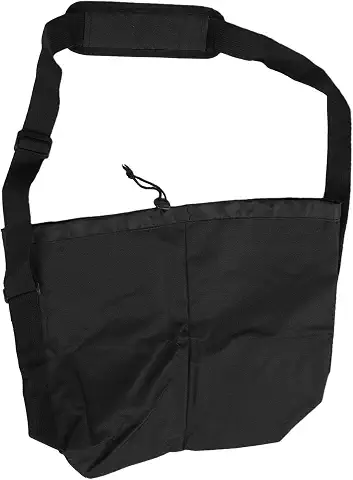
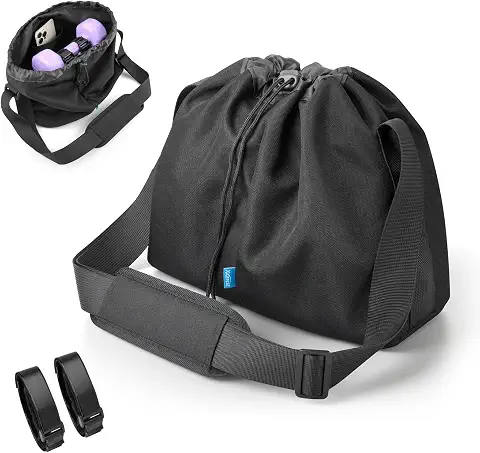
A kettlebell backpack can spread the load across both shoulders, which is useful when you have a longer walk.
Choose one that holds the bell close to your back, since a load that swings away from your body can pull at the straps and make your steps less steady.
A hand held kettlebell carry bag gives you quick access and works well for moving a manageable load over a short distance.
As the bell gets heavier or the walk gets longer, carrying it by hand becomes less comfortable and leaves one hand occupied.
A rigid case provides more protection from impacts and crushing than a soft bag. A soft bag takes up less storage space, but needs enough internal padding to protect the bell and the surrounding items.
For more than one kettlebell, choose separate compartments or firm dividers. Check that the combined weight stays within the carrier’s capacity, and that the bells cannot knock together when the bag moves.
- For a long walk: choose a backpack style carrier with padded straps and a close fitting interior.
- For a short walk: a hand held bag can be simpler to load and unload.
- For fragile contents: choose a rigid case with a secure closure and room for padding.
Stop guessing and start measuring. Compare the carrier’s interior length, width and height with the bell, then account for the padding that will sit around it.
Protect the bell and nearby surfaces in transit
Wrap each kettlebell or place it in a padded compartment to reduce rubbing against other weights, bags and the vehicle interior. Metal can mark nearby surfaces, while repeated contact can scratch the bell’s finish.
When packing more than one bell, put a firm separator between them. Loose fabric can soften contact, but it may not keep heavy objects from striking each other when the bag shifts.
Keep the handle and body from pressing against fragile gear such as screens, bottles or small accessories. Soft clothing can fill gaps and add padding, but it should not be the main restraint holding a kettlebell in place.
For any soft kettlebell bag, keep hard objects away from the handle and use a separate compartment for small accessories. That simple arrangement reduces contact between items without asking soft fabric to hold a heavy load in place.
Secure kettlebells for a car journey
Place kettlebells low in the luggage compartment and secure them to suitable cargo anchor points with restraints designed for the load.
A properly fitted cargo restraint, including a suitable ratchet strap where appropriate, can limit movement during a turn or sudden stop.
Do not rely on wedging a bell against suitcases or other luggage. A load that feels firmly packed while the car is parked can shift when the vehicle changes speed or direction.
Pad and separate the bells before tightening a restraint around them. The restraint should limit movement, while the padding and dividers prevent the bells from colliding with each other or nearby surfaces.
Keep heavy equipment out of an unsecured passenger area, where it can move during a sudden stop. If equipment must travel inside the passenger area, secure its carrier using an appropriate vehicle restraint system and follow the vehicle’s guidance.
- Use the luggage compartment when practical.
- Keep the bell low and restrained, not loose on top of other luggage.
- Use padding to protect both the bell and nearby surfaces.
A seat belt is not a substitute for a cargo restraint when you are securing equipment in a luggage compartment. Match the restraint to the load and the anchor point, then check that the bell cannot roll or slide.
View on Amazon —>
Plan ahead when taking a kettlebell on a flight
Can you bring a kettlebell on an airplane? Cabin baggage and checked baggage requirements can differ.
Before traveling, check the current rules with your airline and the relevant authorities. If the bell is not accepted in the cabin, plan for checked baggage and pack it in a case that protects the contents while meeting the applicable baggage requirements.
Include the bell’s weight and shape in your luggage planning. A compact case still needs enough space and protection for the handle and body, and the packed bag still has to meet the airline’s baggage rules.
Keep the kettlebell’s weight separate from your estimate of the case itself. That helps you plan the overall luggage load rather than discovering at the airport that the packed bag is heavier than expected.
Consider portable training alternatives for travel
A fillable soft kettlebell can travel empty and be filled at your destination, reducing the amount of solid weight you carry for the whole journey.
Its contents can shift and its softer shape handles differently from a solid bell, so do not expect the same feel during swings or other dynamic movements.
Choose a fillable option for adaptable packing, not as an exact replacement for cast iron. A solid bell keeps a fixed shape and weight, while a fillable bag changes with its contents and setup.
A short farmer’s carry can move a kettlebell between nearby locations when the load is manageable and the path is clear.
Use controlled steps, and choose a secure carrier rather than relying on a hand carry for a longer journey.
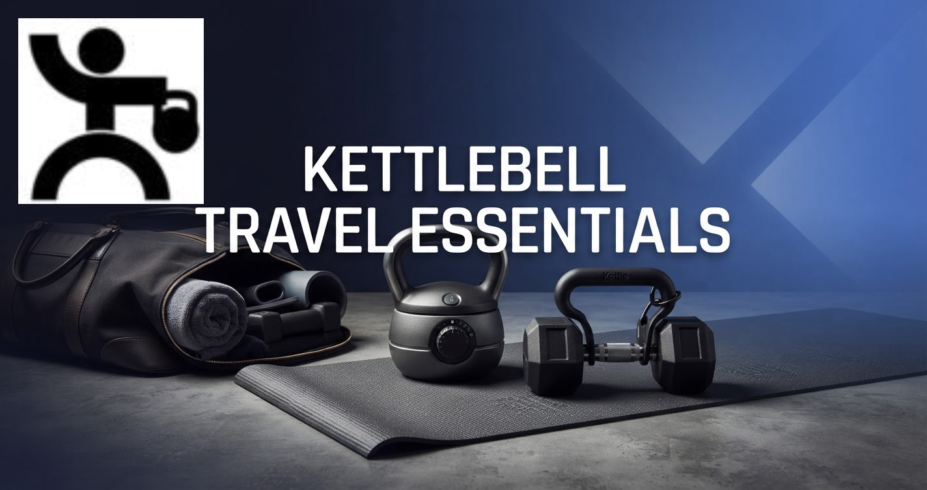
The Kettle Gryp is a USA made hinged handle system that clamps onto an existing dumbbell to convert it into a kettlebell. At $34.95, it offers a compact way to adapt available equipment for a travel workout.
Our Kettle Gryp review covers the hinged dumbbell attachment and its travel use. Consider it when a dumbbell is available at your destination and carrying a complete kettlebell is impractical.
Explore carrying cases and travel accessories for kettlebells, plus portable training options to keep workouts going on the road.
Frequently Asked Questions
Can a kettlebell damage car upholstery?
Yes. A bare metal bell can scuff upholstery, and grit trapped between the bell and the seat can add abrasion during the drive. A firm floorboard or dense protective mat beneath the secured carrier helps shield the vehicle surface.
Is a fillable kettlebell suitable for swings?
A fillable kettlebell can suit swings when its design supports dynamic movement and its contents stay secure. Keep the movement controlled, and stop if the fill shifts enough to change the shape or balance in your grip.
Can one carrier hold kettlebells of different sizes?
Yes, if the carrier has room for each bell and its combined load stays within the stated capacity. Measure the widest part of each bell and the full height including its handle, because the opening may limit which shapes fit.
What is the safest way to carry a kettlebell up stairs?
Carry one bell at a time, keep it close to your body, and use the handrail when you can. Clear the steps first and avoid carrying loose accessories in your other hand.
How should I measure a kettlebell for a carrying case?
Measure the bell’s widest body, its total height including the handle, and the handle’s outer width. Compare those measurements with the case opening and interior, then leave room for padding around the bell.
Conclusion
The Best Carrying Cases and Travel Accessories For Kettlebells match the bell’s weight and shape, protect nearby surfaces, and keep the load stable for the journey.
Use a padded carrier for regular trips, secure bells properly in a vehicle, and check current airline requirements before packing one for a flight.
When a solid kettlebell is too cumbersome to transport, a fillable option or a dumbbell attachment can make travel workouts more practical.
Choose the format that suits your route, available equipment and preferred training style.