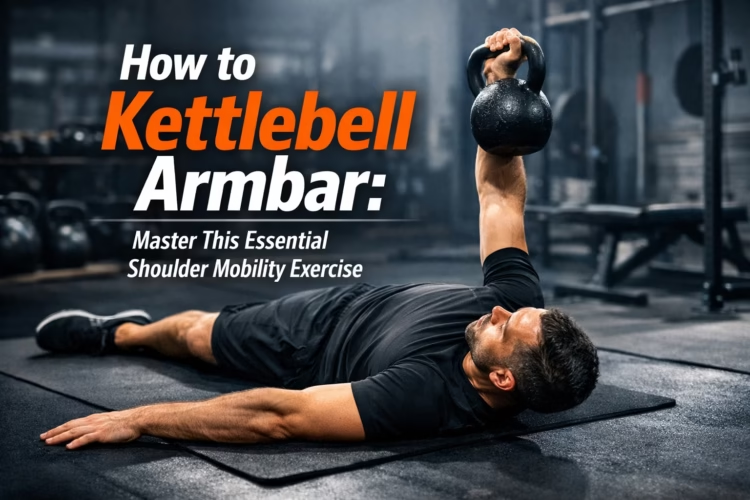
How to Kettlebell Armbar
Picture this: A seasoned CrossFit athlete walks into the gym, confident in their ability to swing, snatch, and press kettlebells with ease.
Yet when their coach introduces the kettlebell armbar, they find themselves humbled by this deceptively simple movement that exposes every weakness in their shoulder stability and thoracic mobility.
This scenario plays out daily in gyms across the world, highlighting why learning How to Kettlebell Armbar properly is crucial for anyone serious about kettlebell training.
The kettlebell armbar isn’t just another exercise—it’s a foundational movement that bridges the gap between mobility and stability, offering benefits that extend far beyond what meets the eye.
Whether you’re a beginner looking to build a solid foundation or an experienced lifter seeking to unlock new levels of performance, mastering How to Kettlebell Armbar will transform your understanding of shoulder mechanics and full-body integration.
Key Takeaways
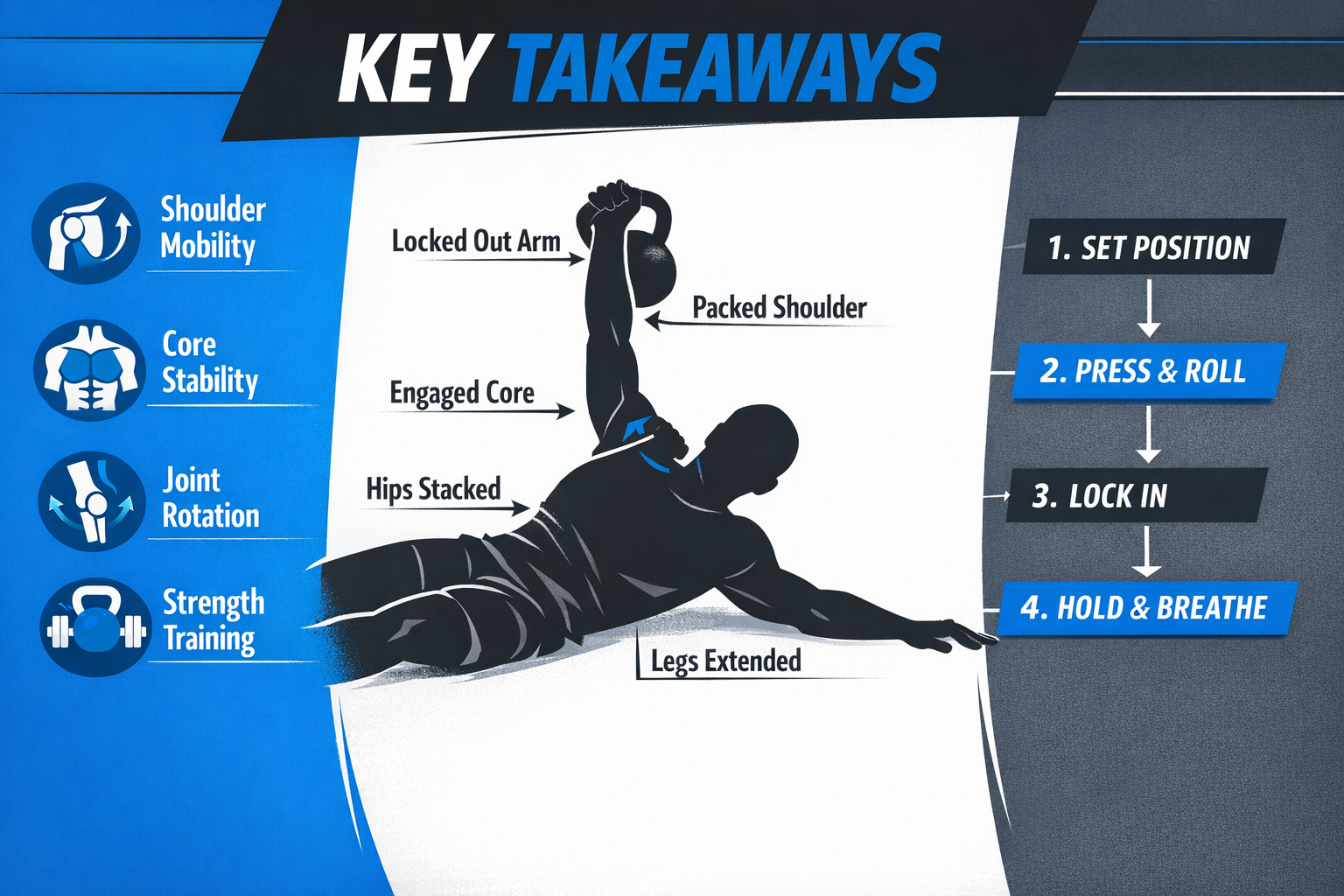
• The kettlebell armbar is a fundamental mobility and stability exercise that targets shoulder health, thoracic spine rotation, and core strength simultaneously
• Proper setup and progression are essential – rushing into heavy weights without mastering the basic movement pattern can lead to injury
• This exercise serves as both a diagnostic tool and corrective movement – it reveals imbalances while simultaneously addressing them
• Consistent practice of the armbar improves overhead pressing strength and reduces injury risk in other kettlebell movements
• The movement requires patience and focus – it’s about quality over quantity, making it perfect for active recovery days
Understanding the Kettlebell Armbar Movement
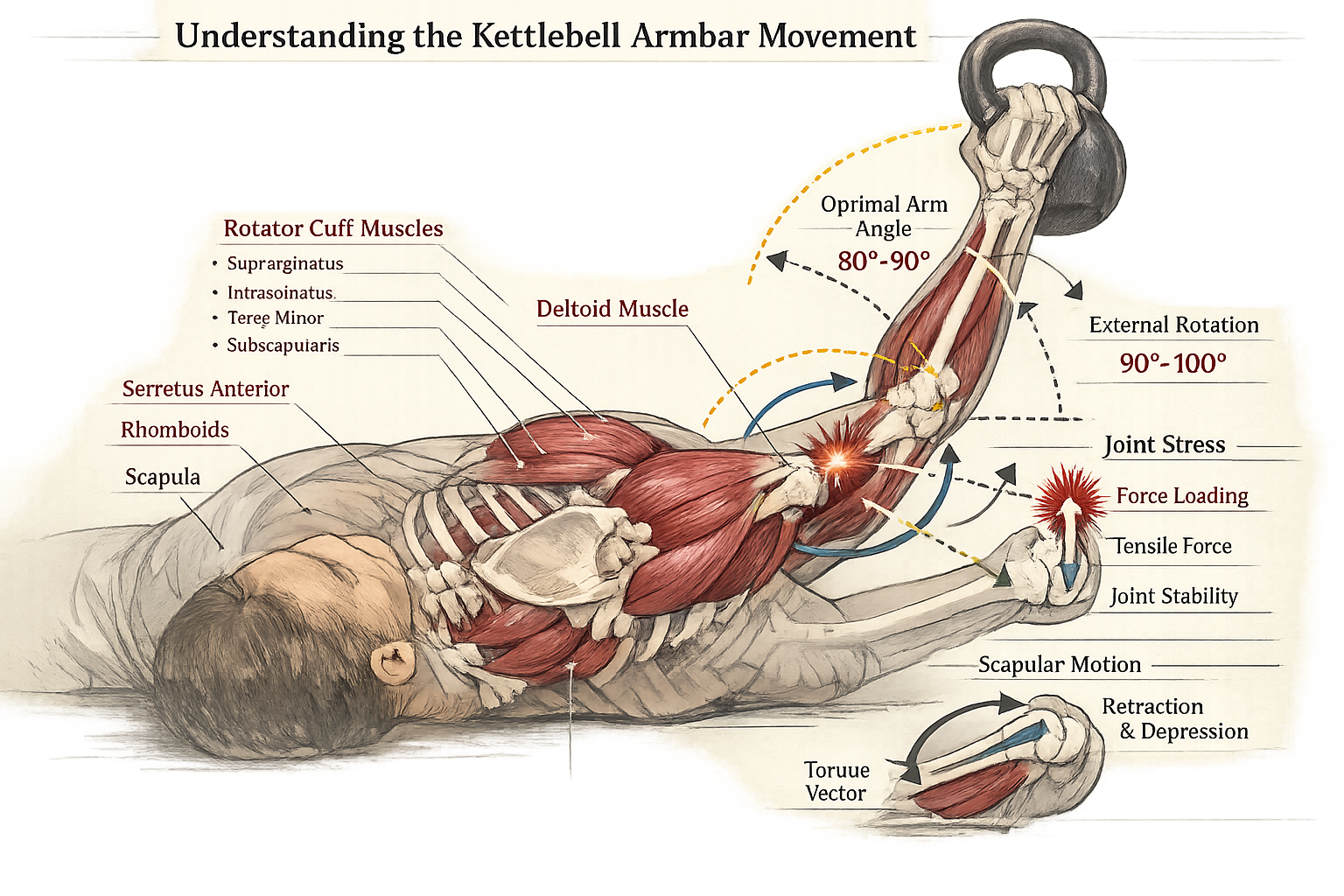
The kettlebell armbar stands as one of the most underutilized yet powerful exercises in the kettlebell arsenal.
At its core, this movement combines shoulder stability, thoracic rotation, and hip mobility into a single, flowing exercise that challenges the body’s ability to maintain control while moving through multiple planes of motion.
What Makes the Armbar Special? 🎯
Unlike traditional strength exercises that focus on moving weight from point A to point B, the kettlebell armbar emphasizes positional strength and mobility.
The exercise requires maintaining a stable shoulder position while the rest of the body moves around it—a skill that translates directly to improved performance in overhead pressing, snatching, and daily activities.
The beauty of learning how to kettlebell armbar lies in its dual nature as both an assessment and a corrective exercise.
When performed correctly, it immediately reveals limitations in shoulder mobility, thoracic rotation, and hip flexibility. More importantly, consistent practice addresses these limitations, creating a more resilient and capable body.
The Science Behind the Movement
Research in movement science shows that exercises combining stability and mobility—like the kettlebell armbar—create superior adaptations compared to addressing these qualities separately.
The armbar forces the rotator cuff muscles to work overtime while the thoracic spine learns to rotate independently of the lumbar spine, a crucial skill for spinal health.
Dr. Stuart McGill, renowned spine researcher, has noted that exercises requiring anti-rotation strength (like the armbar) are particularly effective for developing core stability that transfers to real-world activities. This makes the kettlebell armbar not just a gym exercise, but a movement that enhances quality of life.
For those interested in expanding their kettlebell knowledge, incorporating the armbar into a comprehensive kettlebell routine can significantly enhance overall movement quality and strength development.
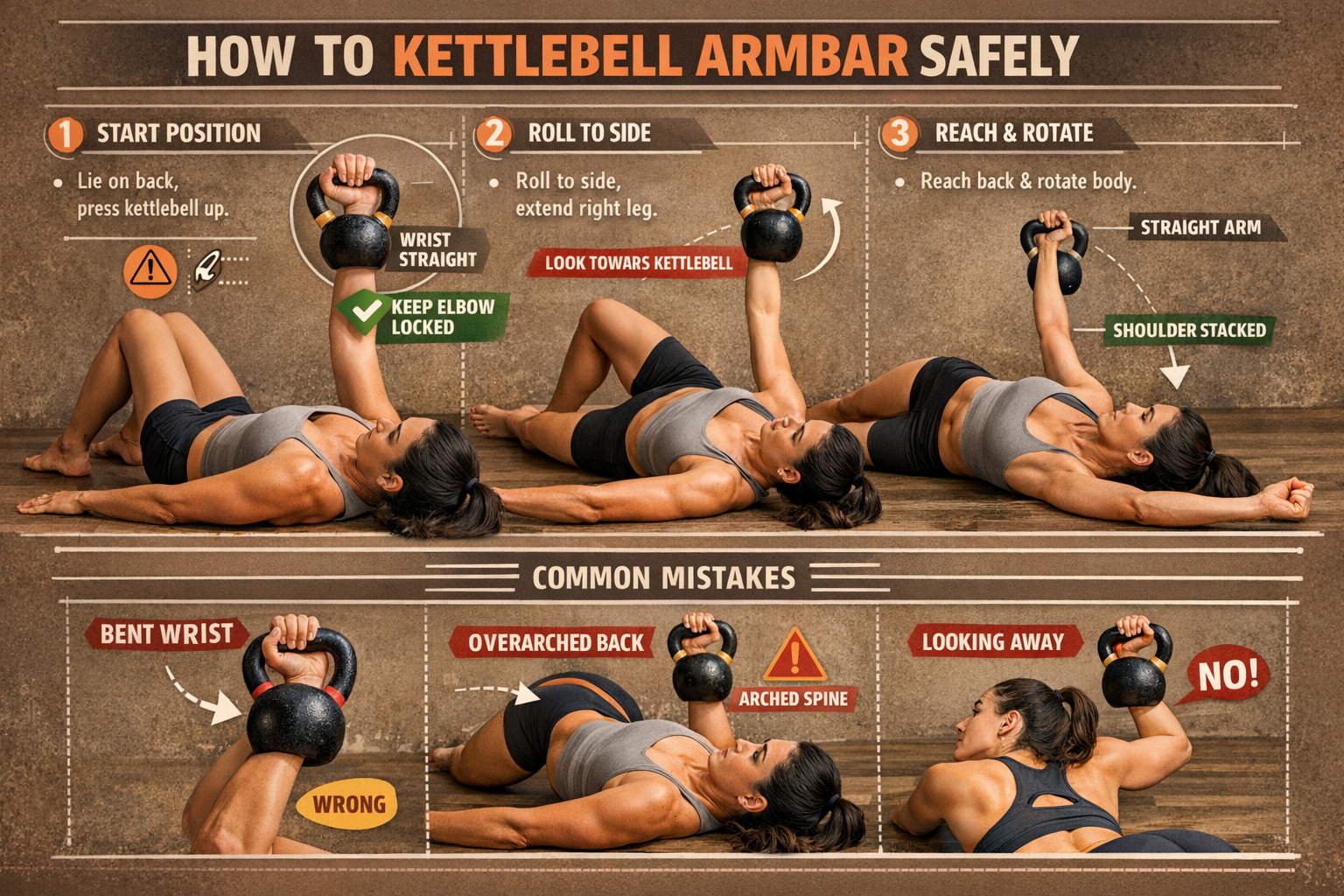
Step-by-Step Guide: How to Kettlebell Armbar Safely
Learning How to Kettlebell Armbar: requires attention to detail and respect for the movement’s complexity. This isn’t an exercise to rush through—each phase demands focus and control. Let’s break down the movement into manageable steps that ensure both safety and effectiveness.
Phase 1: The Setup 🏗️
Starting Position:
- Lie on your side with the kettlebell positioned next to your torso
- Use both hands to grip the kettlebell handle and press it to a single-arm overhead position
- Keep the working arm perpendicular to the floor—this is your anchor point
- Position your legs at roughly 90 degrees to your torso for initial stability
Critical Setup Points:
- The kettlebell should feel locked into position overhead
- Your shoulder blade should be pulled down and back
- Keep your core engaged from the very beginning
- Ensure your neck remains neutral—don’t crane to watch the kettlebell
Phase 2: The Transition Movement
The Roll-Through:
- Maintain the overhead position as you begin to roll from your side toward your back
- Allow your legs to follow the movement naturally
- Keep constant visual contact with the kettlebell throughout
- Stop when you reach your back with the kettlebell still perfectly vertical
Common Mistakes to Avoid:
- ❌ Allowing the kettlebell to drift away from vertical
- ❌ Rolling too quickly without control
- ❌ Losing shoulder stability during the transition
- ❌ Holding your breath during the movement
Phase 3: The Extension and Return
The Leg Thread-Through:
- From the back position, slowly extend the leg opposite to the working arm
- Thread this leg under the working arm while maintaining kettlebell position
- Continue until you reach a comfortable stretch position
- Reverse the movement slowly and with control
- Return to the starting side position
Breathing Pattern:
- Inhale during setup and stabilization phases
- Exhale during movement transitions
- Breathe steadily during hold positions
- Never hold your breath during the movement
The kettlebell armbar integrates beautifully with other kettlebell arm exercises to create a comprehensive upper body training program that emphasizes both strength and mobility.
Progressive Loading Strategy
Week 1-2: Bodyweight Only
Start without any weight to master the movement pattern. Focus on smooth transitions and maintaining perfect alignment throughout.
Week 3-4: Light Kettlebell (8-12kg)
Introduce a light kettlebell once the bodyweight version feels natural. The weight should feel almost effortless overhead.
Week 5+: Gradual Progression
Increase weight only when you can complete all repetitions with perfect form and control. Many practitioners find their “working weight” to be significantly lighter than their pressing weight—and that’s perfectly normal.
Advanced Techniques and Progressions for Kettlebell Armbar Mastery
Once the basic kettlebell armbar becomes comfortable, the real journey begins. Advanced progressions not only increase the challenge but also unlock deeper levels of mobility and stability that can transform your entire training experience. These variations require patience and respect for the movement’s complexity.
Progression Level 1: Extended Hold Variations ⏱️
The Static Hold Progression:
Instead of moving through the armbar continuously, introduce strategic holds at key positions:
- Setup Hold: Maintain the side-lying position for 30-60 seconds
- Transition Hold: Pause halfway through the roll for 15-30 seconds
- End Position Hold: Hold the final stretched position for 45-90 seconds
This progression builds isometric strength and allows the nervous system to adapt to challenging positions. Many practitioners discover that their mobility improves dramatically when they spend time in these static positions.
Progression Level 2: Breathing Integration
The Respiratory Challenge:
Advanced practitioners can integrate specific breathing patterns:
- Box Breathing: 4 counts in, 4 counts hold, 4 counts out, 4 counts hold
- Extended Exhale: Focus on longer exhales to enhance parasympathetic activation
- Diaphragmatic Emphasis: Maintain deep belly breathing throughout the movement
This approach transforms the armbar into a meditative practice that combines physical challenge with mental focus.
Progression Level 3: Loaded Variations
The Bent Press Integration:
For advanced practitioners, the armbar can flow seamlessly into a bent press:
- Complete the standard armbar sequence
- From the final position, begin to press up to standing
- Maintain kettlebell overhead throughout the transition
- Return to the starting position with control
This combination creates one of the most challenging full-body movements in kettlebell training.
Troubleshooting Common Challenges 🔧
“I Can’t Keep the Kettlebell Vertical”
- Start with a lighter weight or no weight at all
- Focus on shoulder blade stability before adding movement
- Practice the overhead position in isolation first
“My Shoulder Feels Uncomfortable”
- Ensure proper warm-up with shoulder mobility exercises
- Check that you’re not forcing the range of motion
- Consider working with a qualified instructor initially
“I Feel Unstable During the Movement”
- Slow down the tempo significantly
- Use a wider leg position for more stability
- Practice the movement pattern without weight first
Integration with Training Programs
The kettlebell armbar works exceptionally well as:
Pre-Workout Preparation: 2-3 repetitions per side with light weight
Active Recovery: Extended hold variations on rest days
Post-Workout Mobility: Longer holds with focus on breathing
Standalone Practice: 10-15 minutes of focused armbar work
For those following structured programs, the armbar integrates beautifully with 20-minute kettlebell workouts as either a warm-up or cool-down component.
Advanced Programming Considerations
Frequency: 3-5 times per week for mobility benefits, 2-3 times for strength focus
Volume: 3-8 repetitions per side, depending on goals
Intensity: Should feel challenging but never forced
Progression: Increase hold time before increasing weight
The key to mastering advanced kettlebell armbar techniques lies in consistent practice rather than aggressive progression. Many experienced practitioners return to the basic version regularly, finding new layers of challenge and benefit in the fundamental movement.
Remember that the armbar is as much about what you feel as what you do. Each session should leave you feeling more mobile, stable, and connected to your body’s movement patterns. This mindful approach ensures long-term success and injury prevention.
Benefits and Safety Considerations
Understanding the comprehensive benefits of learning how to kettlebell armbar helps practitioners appreciate why this movement deserves a permanent place in their training routine. Beyond the obvious mobility improvements, the armbar creates adaptations that enhance performance across all areas of fitness and daily life.
Physical Benefits: Beyond Basic Mobility 💪
Shoulder Health and Stability
The armbar’s greatest gift is its ability to rehabilitate and bulletproof shoulders. By requiring the shoulder to maintain stability while the body moves around it, the exercise strengthens the rotator cuff in a functional way that traditional isolation exercises cannot match. Physical therapists often prescribe similar movements for shoulder rehabilitation, making the armbar both preventive and corrective.
Thoracic Spine Mobility
Modern life creates epidemic levels of thoracic stiffness from prolonged sitting and forward head posture. The armbar directly addresses this by requiring independent thoracic rotation while maintaining neutral cervical and lumbar spine positions. This specific mobility translates to improved posture, reduced back pain, and enhanced performance in rotational sports.
Core Integration and Anti-Rotation Strength
Unlike traditional core exercises that focus on flexion or extension, the armbar develops anti-rotation strength—the ability to resist unwanted movement. This type of core strength is crucial for spinal health and athletic performance, as most real-world activities require the core to stabilize rather than move.
Neurological and Cognitive Benefits 🧠
Enhanced Body Awareness
The armbar demands constant attention to multiple body parts simultaneously. This proprioceptive challenge enhances body awareness and movement quality that carries over to other exercises and daily activities. Practitioners often report feeling more “connected” to their bodies after consistent armbar practice.
Stress Reduction and Mindfulness
The slow, controlled nature of the armbar, combined with focused breathing, creates a meditative quality that reduces stress and promotes relaxation. Many practitioners use the armbar as a bridge between intense training and recovery, finding it helps them transition from a sympathetic (stress) to parasympathetic (recovery) nervous system state.
Safety Considerations and Contraindications ⚠️
Who Should Approach with Caution
- Individuals with acute shoulder injuries should consult a healthcare provider before attempting the armbar
- Those with severe thoracic spine limitations may need preparatory exercises first
- People with uncontrolled high blood pressure should avoid inverted positions
Absolute Safety Rules
- Never force the range of motion—the armbar should feel challenging but not painful
- Start without weight until the movement pattern is mastered
- Maintain visual contact with the kettlebell throughout the movement
- Stop immediately if sharp pain occurs
- Progress gradually—rushing leads to injury
Environmental Safety
- Ensure adequate ceiling height for the overhead position
- Use appropriate flooring that provides cushioning but isn’t slippery
- Maintain clear space around your body for the full movement
- Consider using proper kettlebell equipment designed for safety and durability
Injury Prevention Through Proper Progression
The 3-Phase Safety Approach:
Phase 1: Movement Mastery (Weeks 1-2)
- Practice without weight until movement feels natural
- Focus on smooth transitions and breathing
- Address any mobility limitations with preparatory exercises
Phase 2: Light Loading (Weeks 3-4)
- Introduce minimal weight (8-12kg for most people)
- Emphasize control over speed or range of motion
- Build confidence in the loaded position
Phase 3: Progressive Challenge (Week 5+)
- Gradually increase weight, hold times, or complexity
- Listen to body feedback and adjust accordingly
- Maintain perfect form as the primary goal
Long-Term Health Benefits
Regular armbar practice creates cumulative benefits that compound over time:
- Reduced risk of shoulder impingement and rotator cuff injuries
- Improved posture and reduced neck/back pain
- Enhanced overhead pressing strength and stability
- Better sleep quality from reduced muscle tension
- Increased resilience to daily movement demands
The armbar pairs exceptionally well with other mobility-focused exercises and can be integrated into comprehensive programs like HIIT kettlebell workouts for a balanced approach to fitness.
Red Flags: When to Stop and Seek Help
Discontinue the exercise and consult a professional if you experience:
- Sharp, shooting pain in the shoulder or neck
- Numbness or tingling in the arms or hands
- Dizziness during or after the movement
- Persistent soreness that doesn’t resolve with rest
Remember, the goal of learning how to kettlebell armbar is to enhance health and performance, not to push through pain or discomfort. When performed correctly and progressed appropriately, the armbar becomes a powerful tool for lifelong shoulder health and movement quality.
Conclusion
Mastering How to Kettlebell Armbar represents far more than learning another exercise—it’s an investment in long-term shoulder health, movement quality, and overall physical resilience.
Throughout this comprehensive guide, we’ve explored how this deceptively simple movement combines mobility, stability, and strength in ways that few other exercises can match.
The journey of learning the kettlebell armbar teaches patience, body awareness, and respect for proper progression.
Unlike exercises focused purely on strength or cardiovascular benefits, the armbar demands a mindful approach that connects physical practice with mental focus.
This unique quality makes it an invaluable addition to any training program, whether you’re a beginner building foundational movement patterns or an advanced athlete seeking to optimize performance.
Key points to remember:
- Start with bodyweight-only practice to master the movement pattern
- Progress gradually, prioritizing form over weight or speed
- Use the armbar as both an assessment tool and corrective exercise
- Integrate breathing techniques to maximize the mobility and relaxation benefits
- Listen to your body and never force painful ranges of motion
The benefits extend far beyond the gym floor. Improved shoulder stability, enhanced thoracic mobility, and better core integration translate to reduced injury risk, better posture, and enhanced quality of life in daily activities.
Whether you’re reaching for something on a high shelf or playing recreational sports, the strength and mobility developed through consistent armbar practice will serve you well.
Your Next Steps 🎯
- Start today with bodyweight-only practice, focusing on smooth, controlled movements
- Practice consistently for 2-3 weeks before adding any weight
- Document your progress by noting improvements in range of motion and comfort level
- Integrate the armbar into your existing routine as a warm-up, cool-down, or standalone mobility session
- Consider working with a qualified instructor initially to ensure proper form and progression
Remember that mastering the kettlebell armbar is a journey, not a destination. Even experienced practitioners continue to discover new layers of challenge and benefit in this fundamental movement. Embrace the process, stay consistent, and allow this powerful exercise to transform your relationship with movement and mobility.
The path to kettlebell armbar mastery begins with a single, mindful repetition. Take that first step today, and begin experiencing the profound benefits this remarkable exercise has to offer.