Kettlebell Hip Hinge
The kettlebell hip hinge is the foundation behind powerful swings, deadlifts, and many athletic kettlebell drills.
In one recent biomechanics study on female kettlebell users, overhead swings increased kettlebell travel distance by about 23.4% compared with shoulder-height swings, underlining how strongly hip hinge style changes the training effect.
If you want efficient, hip-driven power without relying on heavy machines, learning to hinge correctly with a kettlebell is one of the most valuable skills you can build.
Key Takeaways
| Question | Answer |
|---|---|
| 1. What is a kettlebell hip hinge? | It’s a movement where you push your hips back with a neutral spine while the kettlebell moves close to your body, forming the base for swings, deadlifts, and other hip dominant lifts. |
| 2. Is the kettlebell hip hinge only for advanced lifters? | No. Beginners often start with light deadlifts and controlled swings. A structured guide like the Kettlebell Guide 2025 can help you build from basics upward. |
| 3. How do I choose a starting weight? | Most people begin with moderate loads that let the hips, not the arms, do the work. See the detailed advice in Kettlebell Weights for Beginners for practical ranges. |
| 4. What exercises use the kettlebell hip hinge? | Conventional and sumo deadlifts, Russian swings, kettlebell cleans, and certain glute focused drills all rely on a solid hip hinge pattern. |
| 5. Can I build leg and glute strength with hip hinge work? | Yes, hip dominant kettlebell moves heavily involve the hamstrings and glutes. For more lower body ideas, check out the kettlebell leg workout for beginners. |
| 6. How does the hip hinge differ from a squat? | A squat bends more at the knees and keeps the torso upright, while the hinge emphasizes pushing the hips back with relatively less knee bend and a more inclined torso. |
| 7. Where can I learn more hip dominant routines? | Hip hinge patterns show up in swings, glute circuits, and athletic programs such as those described in kettlebell workouts for athletes. |
What the Kettlebell Hip Hinge Really Is (and Why It Matters)
The kettlebell hip hinge is a movement pattern where the hips travel back and forward while the spine stays neutral and the knees bend just enough to allow that motion. Instead of sitting down like a squat, you reach back with your hips while the kettlebell stays close to your center of mass.
This pattern is the engine behind kettlebell swings, deadlifts, and many explosive drills used in athletic conditioning. When the hinge is crisp and consistent, you can generate strong, smooth power from the hips while keeping the rest of the body organized and stable.


Hip Hinge vs. Squat: Key Differences for Kettlebell Training
Many people confuse the kettlebell hip hinge with a squat, but they are different patterns with different purposes.
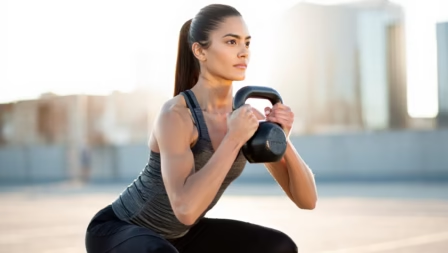
A squat drops the hips down between the heels with more knee bend and a relatively upright torso, as you see in kettlebell squat variations.
In a hip hinge, your shins stay more vertical while your hips glide back, loading the hamstrings and glutes like a spring.
Understanding this distinction is critical when you move from kettlebell squats, described in what muscles do kettlebell squats work, into hinge-dominant work like kettlebell swings and deadlifts.
Step-by-Step Technique: How to Perform a Perfect Kettlebell Hip Hinge
Hip Hinge Setup Without the Kettlebell
Start by standing with your feet about hip to shoulder width apart, toes pointing mostly forward. Place your hands on your hip bones and soften your knees slightly.
From here, imagine you are closing a car door with your glutes: push your hips straight back while keeping your spine long and your chest from collapsing.
Stop when you feel strong tension in your hamstrings, then drive the floor away and return to standing.
Adding the Kettlebell
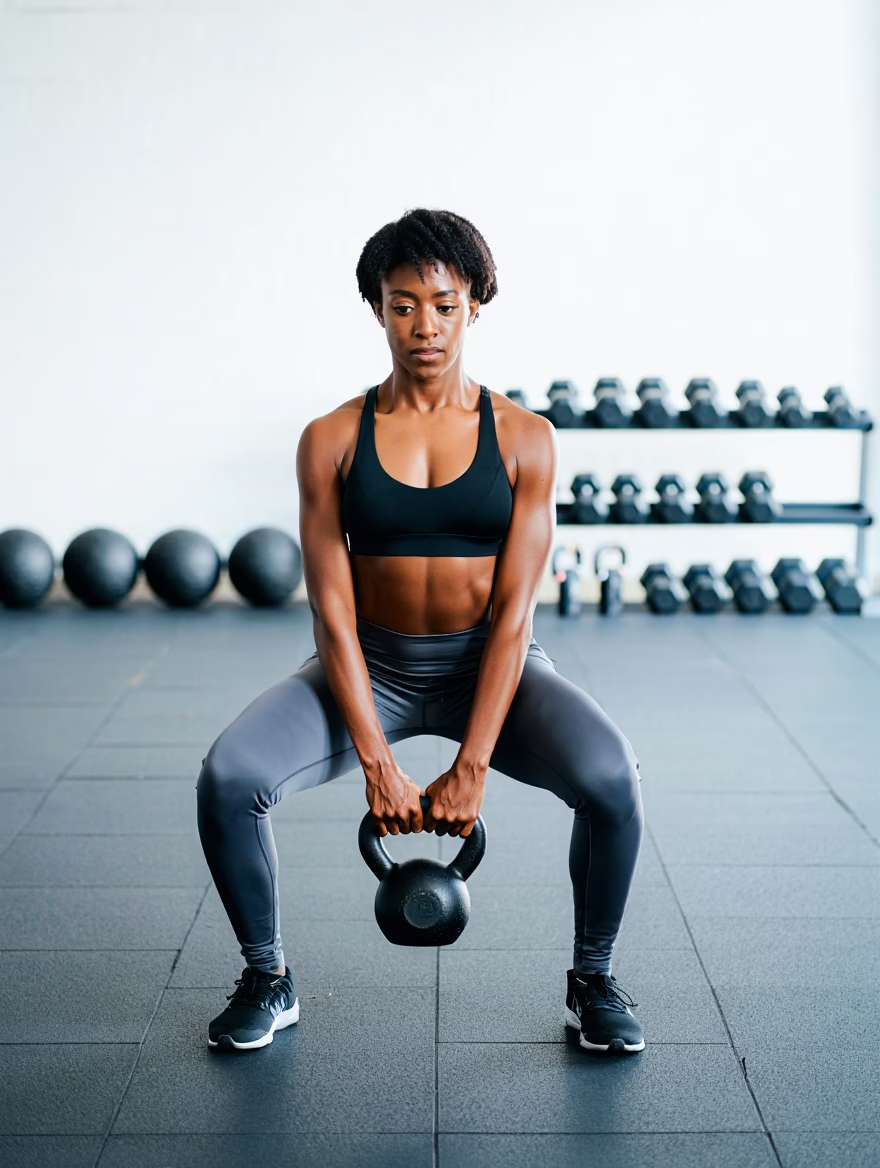
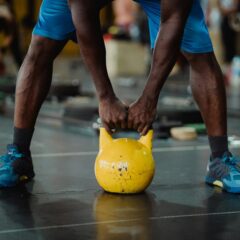
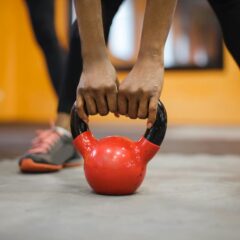
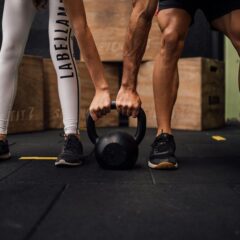
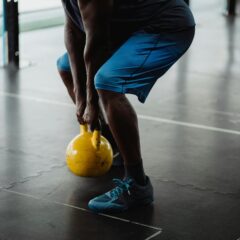
Place the kettlebell a few inches in front of you for a swing start, or between your feet for a deadlift. Grip the handle with both hands, pack your shoulders (think pull them into the sockets), and hinge back until the hamstrings are loaded.
From this position, you can either stand up for a kettlebell deadlift or hike the bell back between your legs to start the swing. In both cases, the hips lead; the arms simply connect you to the kettlebell.


Muscles Involved: What the Kettlebell Hip Hinge Trains
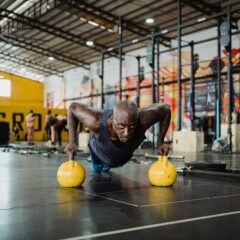
The kettlebell hip hinge heavily involves the posterior chain, primarily the glutes and hamstrings, which act as the prime movers.
The lower back muscles contribute to maintaining a stable, neutral spine, while the lats and upper back help keep the kettlebell close to the body.
Your core muscles, including the abdominals and deep stabilizers, brace isometrically to support the torso as the hips move.
This links well with the standing core work featured in kettlebell exercises for abs, where the hips and trunk coordinate under load.
Essential Kettlebell Hip Hinge Exercises (From Beginner to Advanced)
Foundational Hip Hinge Moves
For beginners, the best place to start is the kettlebell deadlift from the floor or blocks. This slow, controlled movement allows you to rehearse hip hinge mechanics while handling a manageable load.
Once you can maintain a consistent hinge and neutral spine, you can add Romanian style deadlifts (starting from the top and lowering down) to further groove the pattern. Both help prepare you for more dynamic kettlebell hip hinge work like swings.
Dynamic Hip Hinge Variations
The Russian kettlebell swing (to about shoulder height) is the classic ballistic hinge exercise. Here, you load the hips back, then snap them forward, allowing the kettlebell to float up without lifting it with the arms.
More advanced athletes may explore single arm swings, swing cleans, and hip dominant deck squat variations.
Moves like the kettlebell deck squat described in kettlebell deck squat blend squat and hinge patterns for a complex full body challenge.
Kettlebell Hip Hinge and Swings: Shoulder Height vs. Overhead
Within kettlebell swings, you’ll commonly see two endpoints: shoulder height (often called the Russian swing) and overhead (American style or overhead swing).
Both rely on the same basic kettlebell hip hinge, but they distribute the effort differently through the body.
Research on female kettlebell users shows that overhead swings increase kettlebell travel distance by 17.5/25.1% of body height, and concentric swing time is about 15.5% longer compared with shoulder height swings. This means you’re working through a larger arc with a slightly longer effort per rep, even with the same kettlebell mass.
| Swing Style | End Position | Hip Demand | Common Use |
|---|---|---|---|
| Shoulder‑height swing | Bell floats to about chest level | High, but shorter lever and travel | General conditioning, learning the hinge |
| Overhead swing | Bell finishes above head | Higher hip velocity and longer concentric phase | More advanced power and conditioning work |
For most people building a kettlebell hip hinge foundation, shoulder, height swings are sufficient and easier to learn. You can progress to overhead swings later if they match your training goals and you have solid control over your hip hinge, shoulders, and trunk stability.

Choosing the Right Kettlebell for Hip Hinge Training
Weight Selection Basics
For hip hinge patterns like swings and deadlifts, most people can handle more load than they can overhead press or snatch.
Guides such as kettlebell set for beginners and kettlebell weights for beginners emphasize choosing a weight that challenges the hips while still allowing you to maintain posture and control.
As a simple rule of thumb, the kettlebell should feel heavy enough that you can’t just muscle it around with your arms, but not so heavy that your back rounds or your knees cave in.
If your shoulders and lower back fatigue long before your hips during hip dominant lifts, the load may be too heavy for your current technique.
Example Beginner Friendly Kettlebell
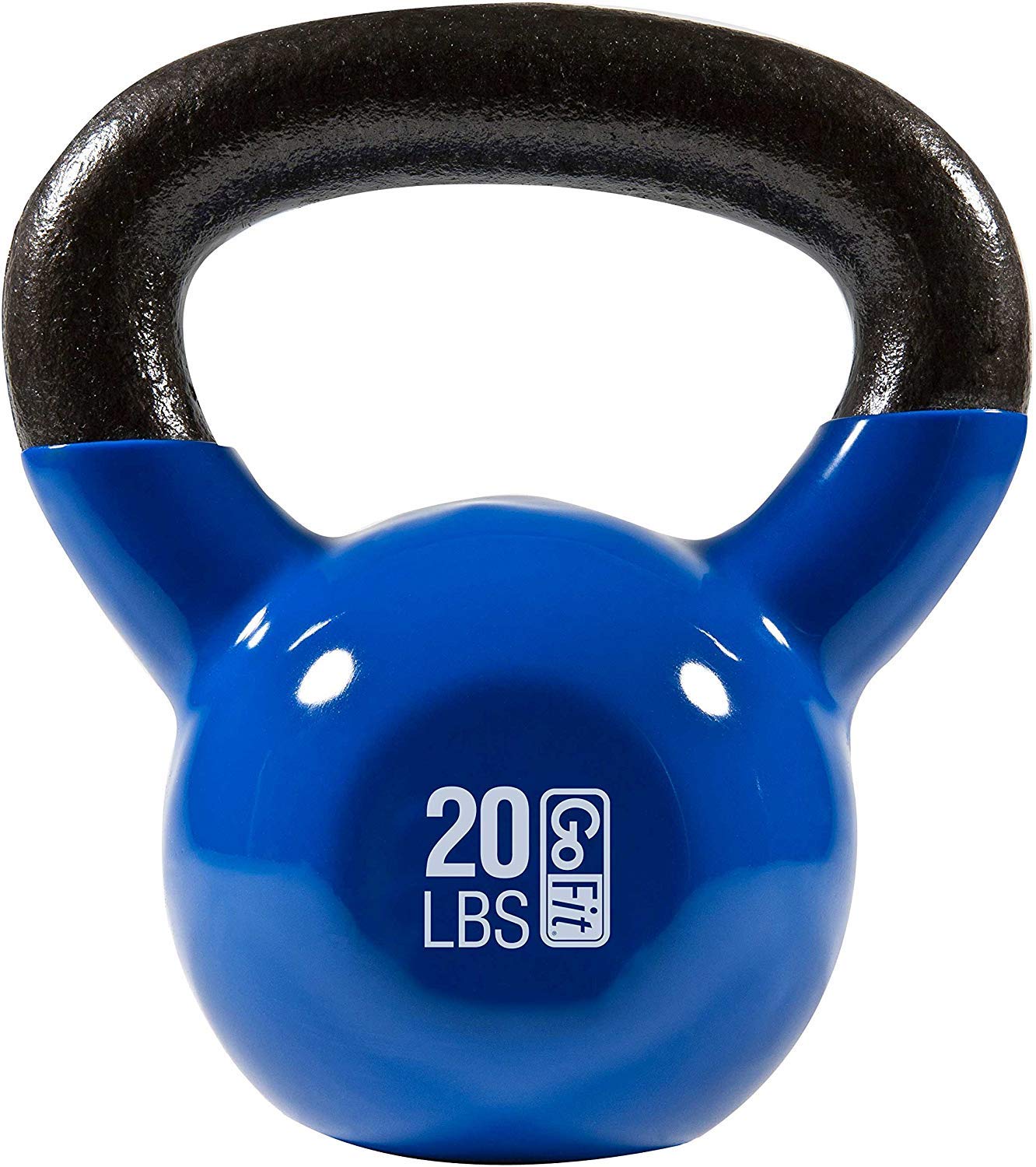
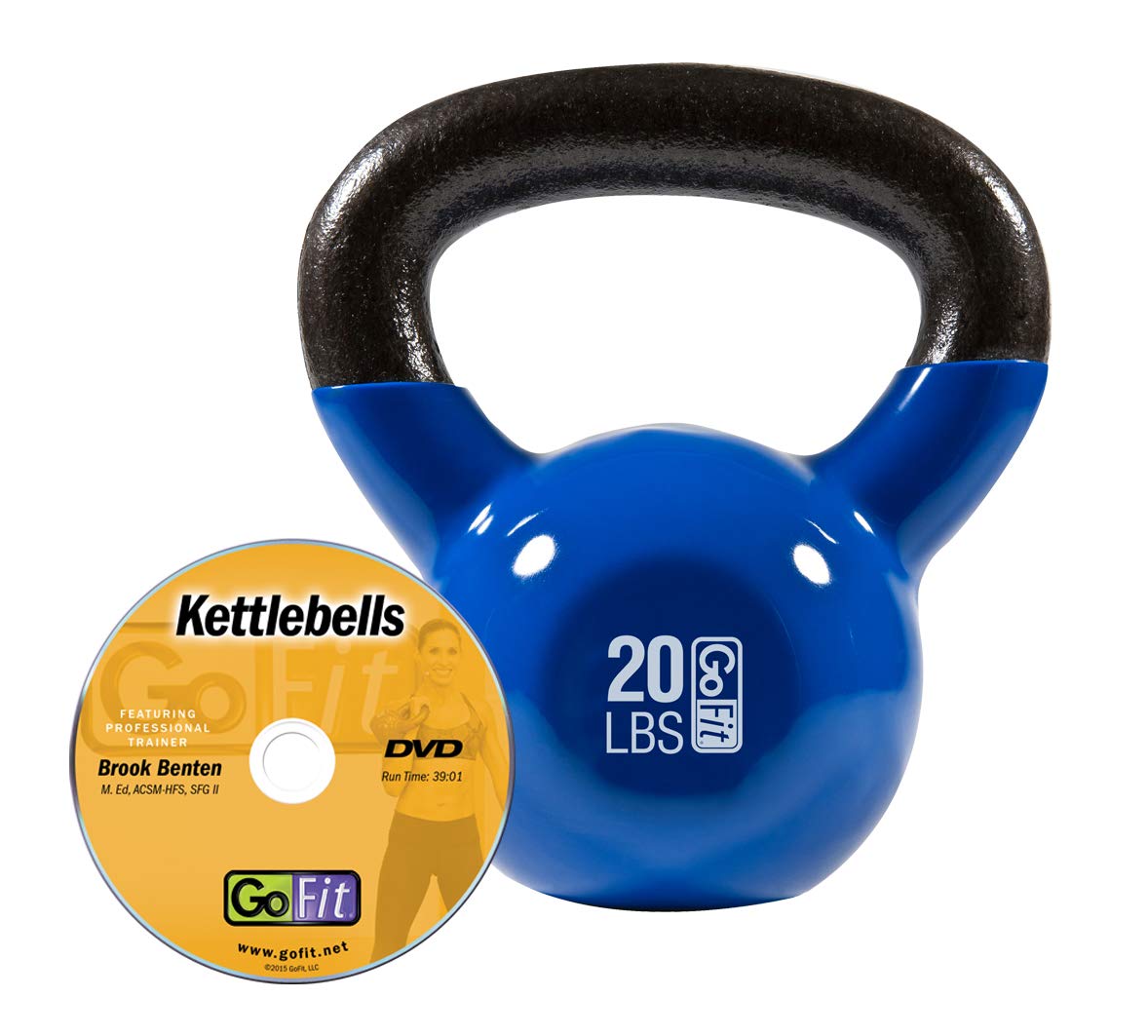
A commonly recommended starter bell is a vinyl coated 20 pound kettlebell, which offers enough resistance for learning the hip hinge and basic swings. For instance, the GoFit 20 Pound Blue Kettlebell with training DVD (around $44/$50 depending on current offers) gives you a durable bell plus instructional content, which can be helpful when dialling in hinge mechanics.
If you plan to focus heavily on hip hinge training, consider owning at least two bells: one moderate weight for practice and higher rep swings, and one heavier bell for strength focused deadlifts and lower rep work.
Common Mistakes in the Kettlebell Hip Hinge (and How to Fix Them)
Certain errors show up repeatedly when people practice the kettlebell hip hinge. Recognizing them early will save you frustration and help you progress faster.
- Squatting the swing or deadlift: Excess knee bend and upright torso turn a hinge into a squat hybrid, reducing posterior chain loading. Think hips back rather than down.
- Rounding the back: Losing spinal alignment often comes from reaching for the kettlebell instead of hinging to it. Move your torso as one solid piece, not segment by segment.
- Lifting with the arms: In swings, the hips drive the motion. The arms should feel like ropes, not primary movers.
Filming your hinge from the side and front is a useful way to check form. You can compare your footage against technique demonstrations in resources like kettlebell workouts for endurance athletes, where consistent hip patterns matter over many repetitions.
Programming the Kettlebell Hip Hinge: Sets, Reps, and EMOMs
Once your technique is reliable, you can integrate kettlebell hip hinge movements into structured sessions. For strength-oriented deadlifts, 5 sets of 5/8 reps with sufficient rest is a productive starting point.
For conditioning and power, swings fit well into EMOM (every minute on the minute) structures. For example, a 20‘minute kettlebell EMOM might alternate sets of Russian swings with other movements, as outlined in kettlebell EMOM, giving you regular exposure to hip hinge mechanics under fatigue.
Keep at least 1/2 clean reps in the tank on each set when you’re learning. Quality hip hinges build better long term results than pushing to sloppy failure.
When you’re ready for more variety, you can weave in swings and hinge-dominant drills into circuits with squats, presses, and core work, as shown in many kettlebell routines including kettlebell exercises for weight management.

Building a Full-Body Routine Around the Kettlebell Hip Hinge
The kettlebell hip hinge doesn’t exist in isolation; it sits at the center of a balanced training plan that also includes squats, pushes, pulls, and core work.
A simple weekly structure might feature one day with heavier deadlifts, another with swing-based conditioning, and a third where the hinge appears in complexes.
Many beginner friendly programs, including kettlebell leg and glute sessions like those described in HIIT glute workout, naturally weave in hinge patterns because of how effectively they involve the glutes and hamstrings.
As you gain experience, you can tailor volume and intensity around your goal, whether that’s athletic performance, general fitness, or simply building confidence with a kettlebell.
If you want a compact, adjustable option for ongoing hinge based training, adjustable kettlebell systems such as the Bowflex SelectTech 840 Adjustable Kettlebell (typically around $149/$179) allow rapid weight changes between hip, dominant strength work and lighter, faster swing intervals.

Conclusion
The kettlebell hip hinge is a cornerstone skill for anyone serious about kettlebell training. Whether you are performing deadlifts, swings, or complex athletic drills, a crisp hinge lets your hips drive the work while the rest of your body stays organized and strong.
By understanding the difference between hinging and squatting, selecting appropriate kettlebell weights, and programming your sets and reps with intention, you can build a training approach that suits your goals and experience level.
Start with slow, controlled deadlifts, add in Russian swings as your timing improves, and then decide whether more advanced variations like overhead swings or single-arm work fit your needs.
Most importantly, treat the kettlebell hip hinge as a movement skill to refine over time rather than a single exercise to rush through. The quality of your hinge will shape the quality of nearly every kettlebell session you do.