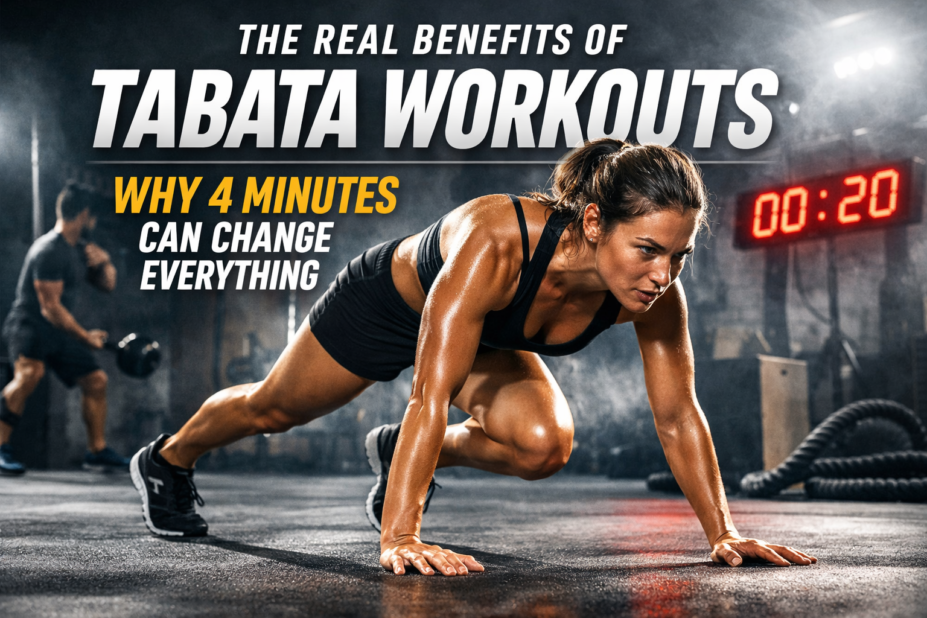
Benefits of Tabata Workouts
A 2023 study published in the Journal of Sports Science & Medicine found that just four minutes of Tabata training can burn as many calories as 30 minutes of moderate-intensity jogging, and the afterburn effect keeps your metabolism elevated for hours afterward.
If you’ve been spending long stretches on the treadmill hoping to get lean, this might be the most important thing you read all year. The Benefits of Tabata Workouts go far beyond simple calorie burning.
This protocol, developed by Japanese scientist Dr. Izumi Tabata in the 1990s, packs cardiovascular training, fat loss, muscle conditioning, and metabolic boosting into one of the most time-efficient formats in modern fitness.
Whether you’re a beginner or an experienced athlete, understanding what Tabata can do for your body is the first step toward transforming your training.
Key Takeaways 🔑
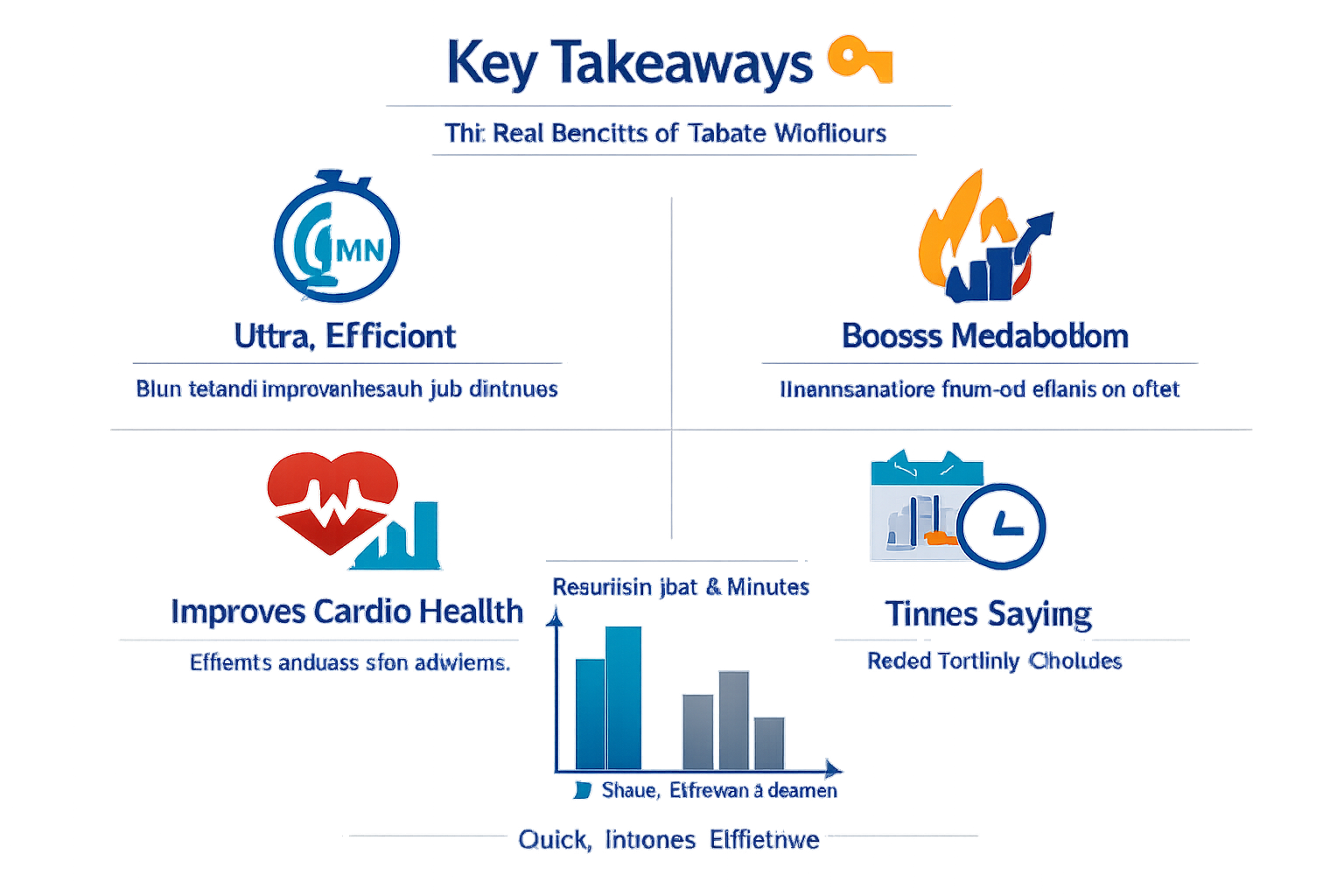
- Tabata burns more calories per minute than almost any other training method, including steady-state cardio.
- The EPOC (afterburn) effect means your body keeps burning calories for up to 24 hours after a Tabata session.
- Tabata improves both aerobic and anaerobic fitness simultaneously, a rare dual benefit.
- Sessions last as little as 4 to 20 minutes, making it ideal for busy schedules.
- Tabata can be done with or without equipment, at home or in the gym.
What Is Tabata Training? A Quick Overview
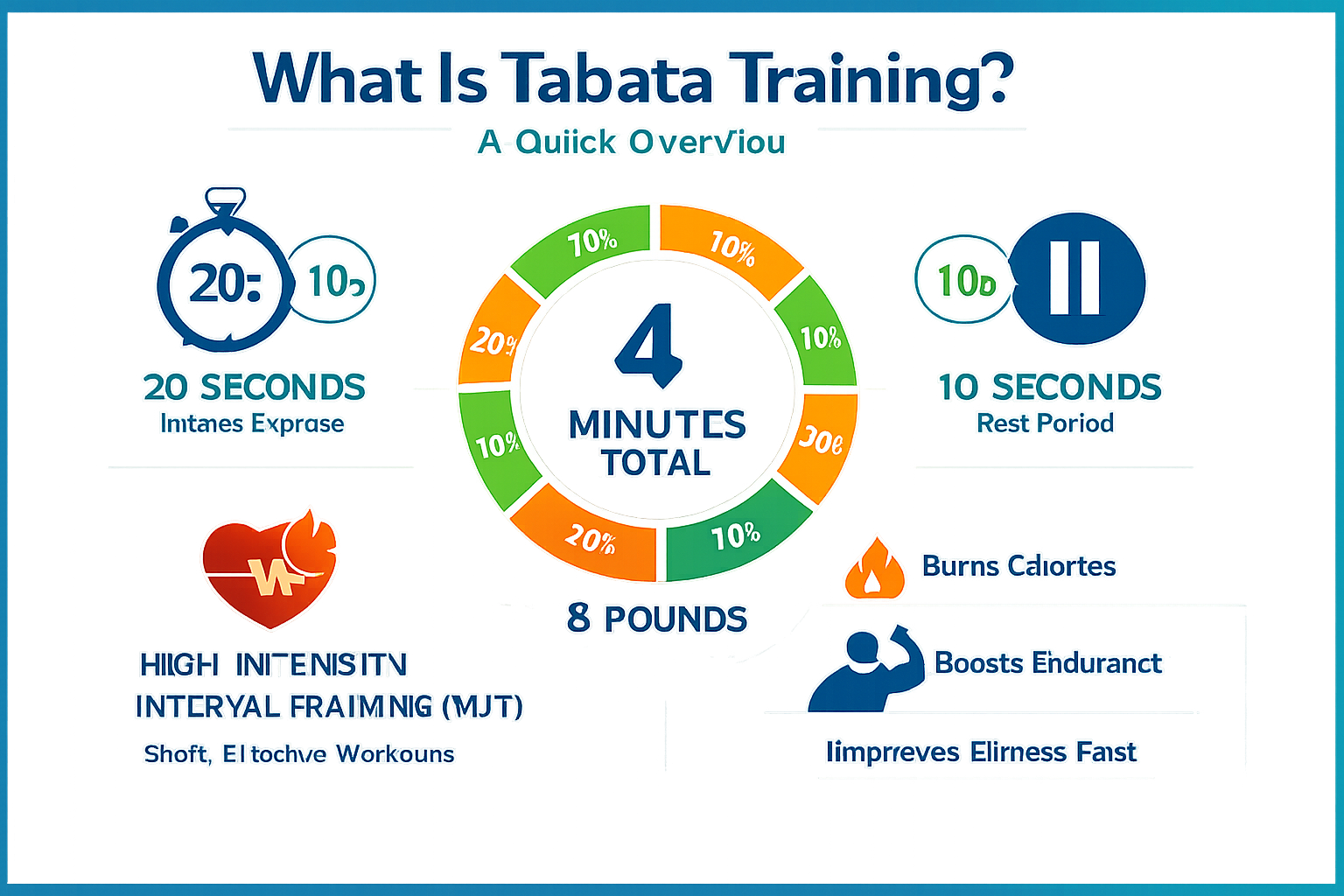
Before diving into the full benefits of Tabata workouts, it helps to understand the structure. Tabata follows a strict interval pattern:
| Phase | Duration |
|---|---|
| High-intensity work | 20 seconds |
| Rest | 10 seconds |
| Rounds per exercise | 8 |
| Total time per exercise | 4 minutes |
You perform an exercise at maximum effort for 20 seconds, rest for 10 seconds, and repeat 8 times. That’s one Tabata round. A full session typically includes 4–6 exercises, lasting 20–30 minutes total.
The original research by Dr. Tabata showed that this format improved VO2 max (a key measure of cardiovascular fitness) by 14% and anaerobic capacity by 28% in just six weeks, results that rival much longer traditional training programs.
Top Benefits of Tabata Workouts for Your Body and Mind
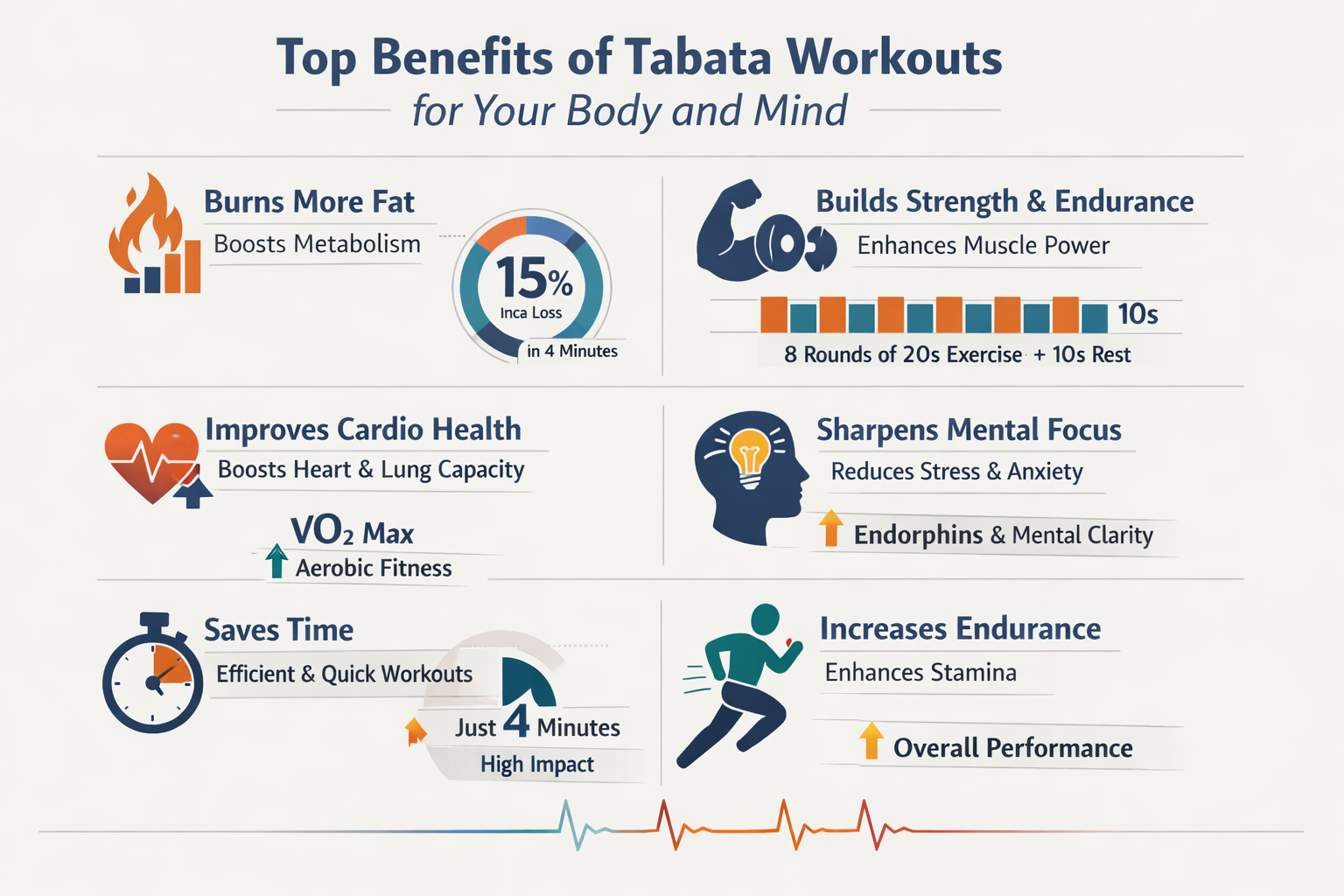
🔥 1. Massive Calorie Burn in Minimal Time
One of the most celebrated Benefits of Tabata Workouts is their extraordinary calorie-burning efficiency.
Research consistently shows that high-intensity interval training (HIIT) formats like Tabata can burn 240–360 calories in a single 20-minute session, and that’s before accounting for the afterburn effect.
“Tabata training is one of the most time-efficient strategies for improving fitness and reducing body fat. The science is clear.” Dr. Martin Gibala, McMaster University
Because you’re working at near-maximum intensity, your body demands more oxygen, burns through glycogen stores faster, and recruits more muscle fibers than it would during moderate exercise. This makes every second count.
If you’re looking to combine this intensity with equipment, our guide to HIIT kettlebell workouts for burning fat and building muscle shows how to pair Tabata timing with kettlebell exercises for even greater results.
⚡ 2. The EPOC Afterburn Effect
Perhaps the most scientifically compelling benefit of Tabata is Excess Post-Exercise Oxygen Consumption (EPOC), commonly called the “afterburn effect.”
After an intense Tabata session, your body works hard to:
- Restore oxygen levels in the blood
- Repair micro-tears in muscle tissue
- Replenish depleted energy stores
- Regulate elevated body temperature
This recovery process burns additional calories for 12–24 hours after your workout ends. Studies suggest EPOC from high-intensity training can account for an extra 6–15% of total calories burned during the session itself.
In practical terms: a 300-calorie Tabata session could result in 330–345 total calories burned when EPOC is factored in.
💪 3. Simultaneous Aerobic and Anaerobic Conditioning
Most workout formats target either your aerobic system (long, steady efforts) or your anaerobic system (short, explosive bursts). Tabata trains both at the same time, and this is what makes it genuinely unique.
Dr. Tabata’s original 1996 study demonstrated:
- 14% improvement in VO2 max (aerobic capacity)
- 28% improvement in anaerobic capacity
This dual adaptation means your heart, lungs, and muscles all get stronger together. You’ll notice improvements in endurance, strength, and speed, benefits that carry over into everyday life and other sports.
For those interested in exploring similar dual-benefit training, check out our overview of best Tabata workouts to find routines that match your fitness level.
🏠 4. No Equipment Required — Train Anywhere
One of the most practical benefits of Tabata workouts is their flexibility. You don’t need a gym membership, expensive machines, or even a single piece of equipment to get a world-class Tabata session done.
Effective bodyweight Tabata exercises include:
- Burpees
- Jump squats
- Mountain climbers
- Push-ups
- High knees
- Plank holds
Our dedicated guide to bodyweight Tabata workouts covers beginner-friendly routines you can do in your living room with zero equipment.
That said, adding weights can amplify the results. Our guide to Tabata workouts with weights shows how to incorporate dumbbells and kettlebells safely into the protocol.
🧠 5. Mental Toughness and Discipline
Tabata is as much a mental workout as a physical one. Pushing through 20 seconds of maximum effort — repeatedly, builds psychological resilience that transfers to other areas of life.
Research in exercise psychology shows that high-intensity interval training improves:
- Mood and stress reduction (via endorphin release)
- Cognitive function (increased blood flow to the brain)
- Self-efficacy (confidence in your ability to handle challenges)
Many people find that the structured, timed nature of Tabata makes it easier to stay focused compared to open-ended gym sessions. You always know exactly how much time is left, and that clarity is motivating.
📈 6. Improved Metabolic Health
Beyond aesthetics, the benefits of Tabata workouts extend to serious metabolic health markers. Studies have shown that regular HIIT-style training like Tabata can:
- Lower fasting blood sugar by improving insulin sensitivity
- Reduce blood pressure in both healthy and hypertensive individuals
- Improve cholesterol profiles — lowering LDL and raising HDL
- Decrease visceral fat (the dangerous fat stored around organs)
These outcomes make Tabata a powerful tool not just for athletes, but for anyone managing weight, diabetes risk, or cardiovascular health.
Benefits of Tabata Workouts for Specific Populations
👴 Tabata for Seniors
Tabata can be safely modified for older adults by reducing intensity and choosing low-impact exercises. Our guide to Tabata workouts for seniors provides age-appropriate routines that deliver cardiovascular and strength benefits without excessive joint stress.
🏋️ Tabata for Beginners
New to exercise? Start with a modified Tabata using bodyweight movements at 70–80% effort rather than maximum intensity.
As fitness improves over 4–6 weeks, gradually increase the effort level. You can also explore our low-impact HIIT workouts as a gentler entry point before transitioning to full Tabata protocols.
🥊 Tabata for Athletes
For trained athletes, Tabata can serve as a powerful conditioning tool during off-season training or as a supplement to sport-specific practice.
Its ability to push VO2 max higher makes it particularly valuable for endurance athletes looking to add speed.
How to Structure a Tabata Workout Session
Here’s a simple, effective 20-minute Tabata Workout session you can start with:
| Round | Exercise | Work | Rest |
|---|---|---|---|
| 1 | Burpees | 20 sec x 8 | 10 sec |
| 2 | Jump Squats | 20 sec x 8 | 10 sec |
| 3 | Push-Ups | 20 sec x 8 | 10 sec |
| 4 | Mountain Climbers | 20 sec x 8 | 10 sec |
Rest 1 minute between each round.
Use a Tabata timer app (many are free) to keep precise intervals. Proper footwear also matters, the quick lateral movements in Tabata put stress on your feet and ankles, so make sure you’re wearing supportive shoes. Our guide on the importance of good workout shoes covers what to look for.
Common Mistakes to Avoid
Even with all the Benefits of Tabata Workouts, poor execution can limit results or cause injury. Watch out for these pitfalls:
- ❌ Going too hard too soon — Build intensity gradually over weeks
- ❌ Skipping the warm-up — Always spend 5 minutes warming up before Tabata
- ❌ Poor form under fatigue — Slow down before your form breaks down
- ❌ Doing Tabata every day — 3–4 sessions per week is the sweet spot; recovery matters
- ❌ Ignoring nutrition — High-intensity training demands adequate protein and carbohydrates
Conclusion: Start Unlocking the Benefits of Tabata Workouts Today
The science is compelling, the time commitment is minimal, and the results are real.
The Benefits of Tabata Workouts, from accelerated fat loss and improved cardiovascular fitness to mental resilience and better metabolic health, make this one of the most powerful training method available to anyone, regardless of fitness level.
Your actionable next steps:
- ✅ Try one Tabata round today — pick any exercise and do 8 rounds of 20/10
- ✅ Download a free Tabata timer app to keep your intervals precise
- ✅ Explore our best Tabata workouts guide for structured programs
- ✅ Add weights progressively using our Tabata workouts with weights resource
- ✅ Commit to 3 sessions per week for 6 weeks and track your progress
Four minutes at maximum effort. The results will speak for themselves.
References
- Tabata, I., et al. (1996). Effects of moderate-intensity endurance and high-intensity intermittent training on anaerobic capacity and VO2max. Medicine & Science in Sports & Exercise, 28(10), 1327–1330.
- Gibala, M. J., & McGee, S. L. (2008). Metabolic adaptations to short-term high-intensity interval training. Exercise and Sport Sciences Reviews, 36(2), 58–63.
- Batacan, R. B., et al. (2017). Effects of high-intensity interval training on cardiometabolic health: A systematic review and meta-analysis. British Journal of Sports Medicine, 51(6), 494–503.
- Emberts, T., et al. (2013). Exercise intensity and energy expenditure of a Tabata workout. Journal of Sports Science & Medicine, 12(3), 612–613.
- Laursen, P. B., & Jenkins, D. G. (2002). The scientific basis for high-intensity interval training. Sports Medicine, 32(1), 53–73.