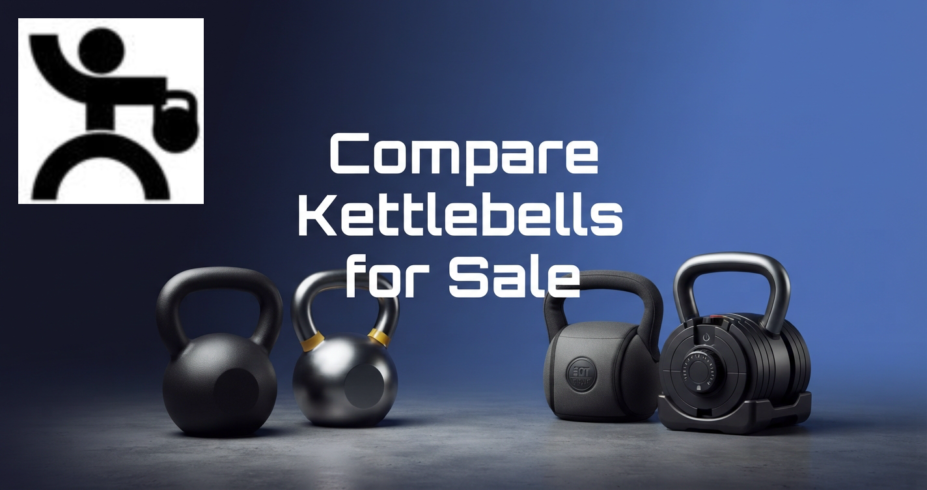
How to Compare Kettlebells for Sale
Latest Update: October 17, 2026
How to Compare Kettlebells for Sale starts with the type of training you do, then narrows the choice by handle fit, construction, usable weight options, and total cost. We use those details to help home gym owners avoid an expensive mistake based on a weight label or finish name alone.
Key Takeaways
- Choose a type for your movements. Fixed cast iron, competition, coated, and adjustable kettlebells differ in size, feel, and how quickly you can change weight.
- Assess the handle in person when possible. Compare its diameter, shape, clearance, and finish with the grip you need for your training.
- Pick a load for the exercise. A controlled press and a swing place different demands on grip and technique.
- Buy only the weights you expect to use. A single bell can suit single bell movements, while double bell exercises call for a matching pair.
- Compare value beyond the purchase price. Include storage, delivery, additional weights, warranty, and return terms.
- For a wider view of the available kettlebell types and buying criteria, explore our guide. Readers comparing lower priced options can also use our guide to kettlebells under £100.
View Best Deals and Price on Amazon
Updated for 2027. Picture this, you are comparing bells online or standing in a shop, and several options carry the same weight label. The details below give you a practical way to compare their shape, fit, construction, and use.
Compare the Main Kettlebell Types
A fixed cast iron kettlebell has a simple, solid design, with no adjustment mechanism to manage between exercises.
Compare its handle and body proportions closely, because bells at the same weight can have different dimensions and feel different in the hand.
A competition kettlebell generally keeps the same outer dimensions across its weight range, with the weight adjusted through its body construction.
That consistency gives you a more uniform position for sport style lifts as you progress between loads.
For a competition style example, Eleiko Competition Kettlebells are noted for build quality and flat sides, features that suit snatches and Turkish get ups. Use shape and contact points as part of your comparison, not just the name of the style.
A fixed weight example is the Yes4All Kettlebell Vinyl Coated Cast Iron, a solid cast iron line that ranges from lighter beginner sizes up to 50 pounds. Its vinyl coating protects floors and dampens sound, which can matter in a home training space.
A powder coated finish can provide a textured grip, while vinyl or neoprene coatings can soften contact with floors. Neither coating by itself guarantees comfortable handling or a floor safe base, so assess the surface texture and base as well.
An adjustable kettlebell changes weight through a selector or locking system instead of requiring a separate bell for every load. The mechanism determines how quickly and securely you can change weights, so compare it with the pace of your training.
Inspect Handle Fit, Finish, and Stability
Compare handle diameter, shape, and clearance against the space your hand needs for a firm grip and a two handed swing. A wide handle can make a two handed grip easier, but may feel large when you hold the bell in one hand.
Run your hand around the handle and its transition into the body. Look for sharp seams, rough spots, or edges that can catch the hand during a clean or snatch.
Hold the bell by its handle and assess how the weight sits through a slow movement. Set it down on a level surface and check that the base rests flat without rocking.
Our comparison includes Choosing a Kettlebell: Complete 2026 Buyer’s Guide. For a powder coated cast iron example, Yes4All Powder Coated Kettlebell Weights have a wide, slightly textured handle, a flat bottom, and weight labels in pounds and kilograms, with sizes from 10 to 65 pounds.
Use coating as one part of the assessment, not a shortcut. Texture, base shape, contact points, and handle clearance all affect how a kettlebell feels and how it rests on the floor.
Match the Design to the Movements You Train
View Best Prices and Deals on Amazon
For swings, prioritize enough room for a secure two handed grip and a body shape that clears your hands comfortably throughout the movement.
Handle clearance matters, especially when you plan to use the same bell for both one handed and two handed work.
For cleans and snatches, look for a handle and body that move smoothly into the rack position. Rough edges can catch the hand, while the handle shape influences how the bell rotates during the lift.
For presses and Turkish get ups, compare how the bell rests against your forearm as your arm changes position. A shape that remains comfortable through the different positions is easier to work with throughout the exercise.
If your training includes rapid transitions or ballistic lifts, assess whether an adjustable mechanism locks firmly and keeps the bell balanced. Fixed weight bells avoid adjustment steps between movements.
The Bowflex SelectTech 840 Adjustable Kettlebell, Yes4All Adjustable, 10 to 40, and PowerBlock KettleBlock, 20 to 40 offer different formats to compare.
The Bowflex uses a dial with six settings, 8, 12, 20, 25, 35, and 40 pounds, powder coated steel plates, and a rubberized handle with textured grip, and is priced at $199.
Our comparison of competition and regular kettlebell designs helps clarify how outside dimensions can shape the feel of sport style lifts. The product details matter more than a style label alone.
Choose Weight for Your Training and Progression
Choose a kettlebell weight for the exercise, not just for your general strength. A controlled press and a swing can call for different loads because each movement places different demands on grip and technique.
Use your training experience and ability to repeat the movement with control to guide your starting weight.
Broad recommendations based on gender or beginner status cannot account for the movement you plan to train or the load you can manage with good control.
Plan progression around weight steps you can actually use. A large jump between options can make it harder to increase the load gradually, while a useful set of increments gives you more choices as your training changes.
Cureus, in its review on kettlebell training, describes commercial kettlebells as available in capacities from 3 pounds to 100 pounds, or more. Compare the useful options for your exercises and progression plan rather than treating the full range as a recommendation.
Commercial options range from 3 pounds to 100 pounds, or more.
Source, Cureus, Enhancing Athletic Performance, A Comprehensive Review on Kettlebell Training
Decide Between One Bell, a Pair, or Adjustable Weights
View Best Prices and Deals on Amazon
Start with one bell when most of your planned movements use a single kettlebell. Name the exercises and loads you expect to use before committing to a full set, so your purchase reflects your actual training.
Choose a matching pair when your program includes double bell exercises. Equal weight and similar handle geometry help each side work consistently.
An adjustable kettlebell combines several loads in one compact unit, which can reduce storage demands. Separate fixed bells avoid changing plates or selectors between exercises.
Compare adjustment steps and the total usable range with the loads you need. A wide range has less value when its increments do not suit the way you plan to progress.
The Yes4All Adjustable model has a 10 to 40 pound range and modular plates, and costs $89. It suits a buyer looking to combine several loads in one adjustable bell.
Compare Value, Construction, and Ownership Costs
Compare the purchase price with the weights you will use, the adjustment options, and the construction. The lowest upfront cost is not automatically the best value if the handle does not suit your grip or the available weight steps do not fit your training.
Include storage space, delivery costs, and the practical cost of adding bells when comparing fixed and adjustable designs. A compact adjustable model may suit a small home gym, while several fixed bells require space for each weight.
Compare warranty and return terms as part of the purchase decision. Those terms affect the overall value and your options if the bell does not suit your training.
The PowerBlock KettleBlock has a 20 to 40 pound range and costs $299, so compare its range with the weights you expect to use.
For adjustable designs, weigh the range and storage benefits against the added mechanism. For fixed bells, consider whether several weights will fit both your space and your budget.
When you compare adjustable kettlebell construction, mechanism, handle fit, and warranty together, the final choice becomes clearer. Our adjustable kettlebell reliability guide covers those purchase considerations in more detail.
Frequently Asked Questions
How do I convert kettlebell weights from pounds to kilograms.
Multiply the pound figure by 0.453592 to convert it to kilograms. For a quick estimate, divide pounds by 2.2, then round to a practical number for your training log.
How should I remove rust from an uncoated cast iron kettlebell.
Brush loose rust with a stiff nylon brush, then scrub remaining spots with a small amount of coarse salt and water. Dry the bell completely and apply a thin coat of protective oil before storing it.
Can I use kettlebells outdoors.
Yes, you can train outdoors on a firm, level surface that will not damage the bell or the ground. Wipe moisture and dirt from the kettlebell after use, then store it in a dry indoor place.
How do I clean chalk from a powder coated kettlebell handle.
Use a dry nylon brush to lift loose chalk from the handle texture. Wipe the remaining residue with a slightly damp cloth, then dry the handle before storing the kettlebell.
Can I use a competition kettlebell and a regular kettlebell in one program.
Yes, you can use different types in the same program when each bell suits the movement and load. Keep your notes clear about the model and weight so your next session uses the intended setup.
How do I measure kettlebell handle clearance at home.
Measure the open space between the handle and the bell body at the narrowest point, then compare it with the room your hand needs around the handle. A piece of string can help you map the handle path before you make a purchase.
Conclusion
How to Compare Kettlebells for Sale comes down to matching the bell to your movements, grip, weight progression, space, and budget.
Compare the actual handle dimensions, finish, base, construction, and adjustment system, then choose the format that fits the work you plan to do.
Stop guessing and start measuring. A careful comparison of fit, function, and ownership costs helps you choose a kettlebell that suits your training without paying for features you will not use.