
Kettlebell Ballistic Row Benefits
Last updated: November 12, 2026
Quick Answer
The Kettlebell Ballistic Row Benefits back strength, grip power and core stability by combining a hip hinge with an explosive hand switch mid rep. It trains the posterior chain, largest muscle group in the back, and forces anti rotation control that a standard row simply does not demand. Most lifters use it two to three times weekly as an accessory to deadlifts, pulling work and general strength training.
Most people searching for kettlebell ballistic row benefits already own a bell and want proof this move is worth adding, not just another kettlebell exercise with marginal carry-over.
Key Takeaways
- The kettlebell ballistic row trains the lats, upper back, biceps, rear delts, forearms and core in a single movement.
- A brief float phase, where the kettlebell leaves one hand and lands in the other, is what separates this from a traditional row.
- Training this movement two to three times per week, for three to five sets of six to ten reps, is enough to see improved rowing strength without overtraining the back.
- Beginners should master the hip hinge and a standard one arm row before attempting the ballistic version.
- Anti rotation core work happens automatically because the torso must stay square while the load shifts hands.
- The move has strong carry-over to deadlifts, pulling strength and posture, not just arm size.
- People with active shoulder pain should avoid or modify this exercise until cleared.
- A single kettlebell between 12 and 24 kilograms covers most intermediate lifters; rows while fatigued with too heavy a bell increase the chance of a missed catch.
Shop kettlebells on Amazon US
Shop kettlebells on Amazon UK
What Is a Kettlebell Ballistic Row
A kettlebell ballistic row is a hinge-based pulling movement where the lifter rows a single kettlebell up, releases it briefly, and catches it with the opposite hand before it drops.
It is not a slow, controlled row; the ballistic element is the explosive, fast-twitch nature of the release and catch, which is why it sits in the same training family as the kettlebell swing and other ballistic kettlebell training drills.
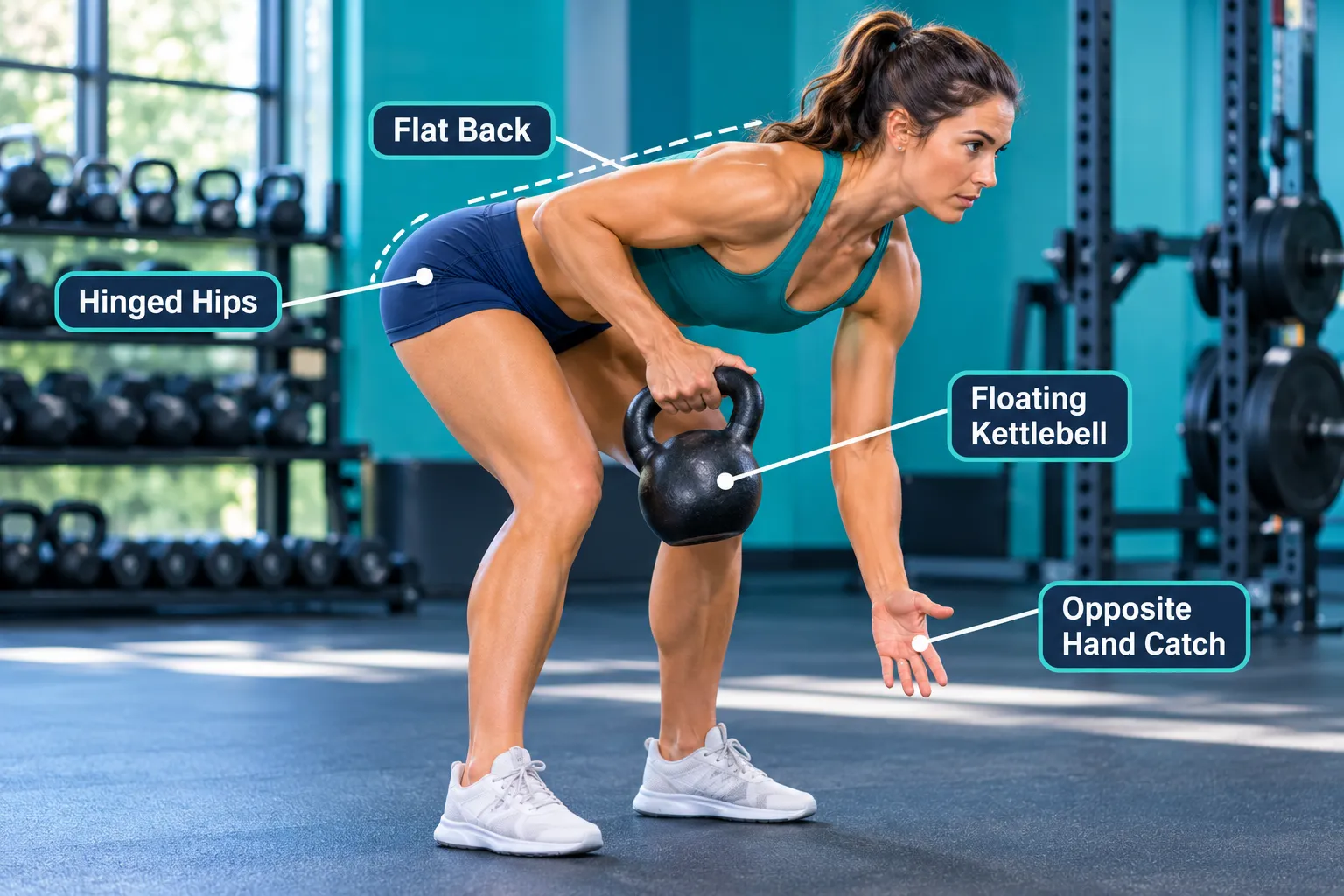
Unlike a standard bent-over row, the ballistic version never lets the lifter settle. The bell is in motion almost the entire set, which is one reason coaches rate it as rowing essential for anyone chasing both strength and conditioning in the same rep.
If you’ve ever noticed good carry-over from other movements improved rowing strength in your main lifts, this is the exercise most often credited for that effect.
How Do You Do a Kettlebell Ballistic Row Correctly
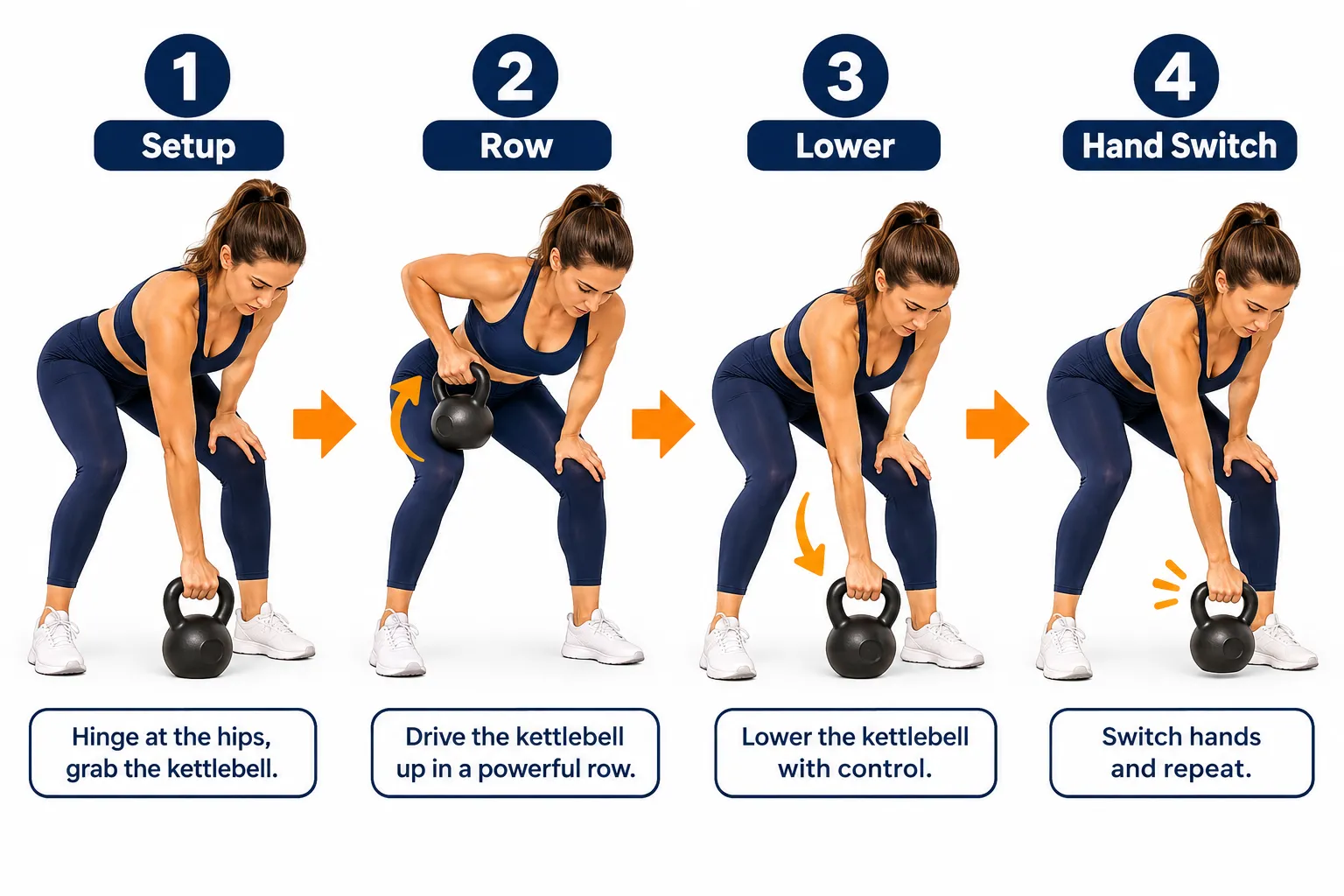
Set up in a strong hip hinge, flat back, knees soft, and hold the kettlebell in one hand beneath your shoulder. Row the bell explosively toward your hip, release it at the top of the pull, and catch it with the other hand before it falls, then lower under control and repeat on the opposite side.
Step by step:
- Hinge at the hips with a flat back, bell hanging below the shoulder.
- Row with strength, pulling the elbow back and up along the body.
- At the top, release the bell slightly forward and across.
- Catch with the free hand, absorbing the weight with a soft grip.
- Lower under control and immediately begin the next row.
A common mistake is rushing the catch before the pulling arm has fully finished the row. Slow the tempo down for the first few sessions, then add speed once the pattern feels automatic. As a North Coast Miller style coach would say, “don” rush the float phase, let the eyes track the bell every rep.
What Muscles Does a Kettlebell Ballistic Row Work
The kettlebell ballistic row works the lats, rhomboids, rear delts, biceps, forearms and core, with secondary demand on the glutes and hamstrings from holding the hinge. The lats are the largest muscle group in the back and do most of the pulling work, while the core resists rotation as the load shifts hands.
Breaking it down:
- Back: lats, rhomboids, lower traps, pulling the shoulder blade down and back.
- Arms: biceps and forearms, especially grip, from the catch phase.
- Core: obliques and deep trunk muscles, working isometrically against rotation.
- Posterior chain, shoulder stability: both get trained from the hinge hold and the single-arm catch.
This is a different demand profile than a single arm kettlebell row muscles worked list, because the ballistic catch adds a reactive grip component that a static row never produces.
Kettlebell Ballistic Row vs Traditional Row: What’s the Difference
The traditional row is a controlled, continuous pull with the weight staying in one hand the entire set, while the ballistic row adds an explosive release and catch that demands speed, timing and reactive grip strength. Both work the back, but the ballistic version adds a power and coordination layer the traditional row does not.
A side by side look:
Kettlebell row variations like the double kettlebell ballistic row push this further, training both sides at once for even greater posterior chain, shoulder demand.
What Size Kettlebell Should You Use for Ballistic Rows
Most intermediate lifters do well starting between 12 and 20 kilograms, while beginners should start lighter, around 8 to 12 kilograms, until the catch feels reliable. Heavier bells increase injury risk if the hand-switch timing is off.
A simple rule: if you cannot catch the bell cleanly for eight straight rows without fumbling, drop the weight. Strength should build gradually; chasing load before technique is a classic mistake that leads to dropped bells and jarred wrists.
Is Kettlebell Ballistic Row Safe for Beginners
The kettlebell ballistic row is not ideal for true beginners because it requires a solid hip hinge and reliable grip timing before adding the explosive catch. Beginners who have not yet mastered a standard kettlebell deadlift or a basic one arm row should build that base first.
Shop kettlebells on Amazon US
Shop kettlebells on Amazon UK
A good progression:
- Kettlebell deadlift, learning the hinge.
- Kettlebell swing, learning hip drive.
- Standard one arm kettlebell row, learning the pull.
- Kettlebell ballistic row, once the first three feel automatic.
According to the American Council on Exercise, mastering foundational hinge patterns before adding explosive or ballistic loading reduces injury risk significantly, a principle that applies directly here.
Can Kettlebell Ballistic Rows Hurt Your Lower Back
Poor hip hinge form, not the exercise itself, is what causes lower back strain during ballistic rows. Rounding the spine while rowing or catching the bell puts uneven load through the lumbar region, especially under fatigue.
To protect the back:
- Keep the spine neutral throughout, never rounding to chase an extra rep.
- Brace the core before each rep, not just at the start of the set.
- Stop the set once form breaks down, even if the target rep count was not hit.
- Avoid doing rows at the very end of a long session when grip and focus are fading.
This is not a medical claim, just a mechanical observation shared across most strength training programs: load management matters more than the exercise label.
Common Mistakes People Make With Kettlebell Ballistic Rows
The most frequent mistakes are rushing the catch, rounding the back, and using a kettlebell that is too heavy for current skill level. Each of these turns a useful strength tool into a risky one.
Watch for these reactions during training:
- Grabbing at the bell instead of catching it softly, a sign the weight is too heavy.
- Standing up partway through the row, losing hip hinge tension.
- Letting the shoulders round forward during the pull.
- Rushing reps for speed before the pattern is grooved.
Coaches on strength forums, including threads on forum articles, newsletter sites, and old reactions snowman-style debate boards, consistently flag these same errors, which tells you the mistakes are universal, not anecdotal.
How Many Reps and Sets for Kettlebell Ballistic Rows
Three to five sets of six to ten reps per side works well for most lifters chasing strength and coordination together. Higher rep ranges, 12 to 15, shift the emphasis toward conditioning and grip endurance.
A sample weekly structure:
- Session one: 4 sets of 8 reps per side, moderate bell weight.
- Session two: 3 sets of 10 reps per side, lighter bell, faster tempo.
- Rest at least one day between sessions to let the back and grip recover.
Bolton-based strength coach circles often recommend pairing this with a pressing movement to balance the training week, since rowing and pressing use opposing muscle groups.
Kettlebell Ballistic Row If You Have Shoulder Issues
Lifters with active shoulder pain or a recent shoulder injury should avoid the ballistic catch until a qualified professional clears the movement, since the sudden load transfer stresses the rotator cuff and shoulder capsule. This is not a medical claim, only a practical caution.
If shoulder issues are mild, a regular kettlebell row or chest exercises with kettlebell programming may be safer substitutes while the shoulder settles, before reintroducing the ballistic catch gradually.
Kettlebell Ballistic Row vs Dumbbell Row: Which Is Better
The kettlebell ballistic row offers more power, grip and coordination training, while the dumbbell row offers more control and is easier to load heavy for pure strength. Neither is strictly better; they serve different goals.
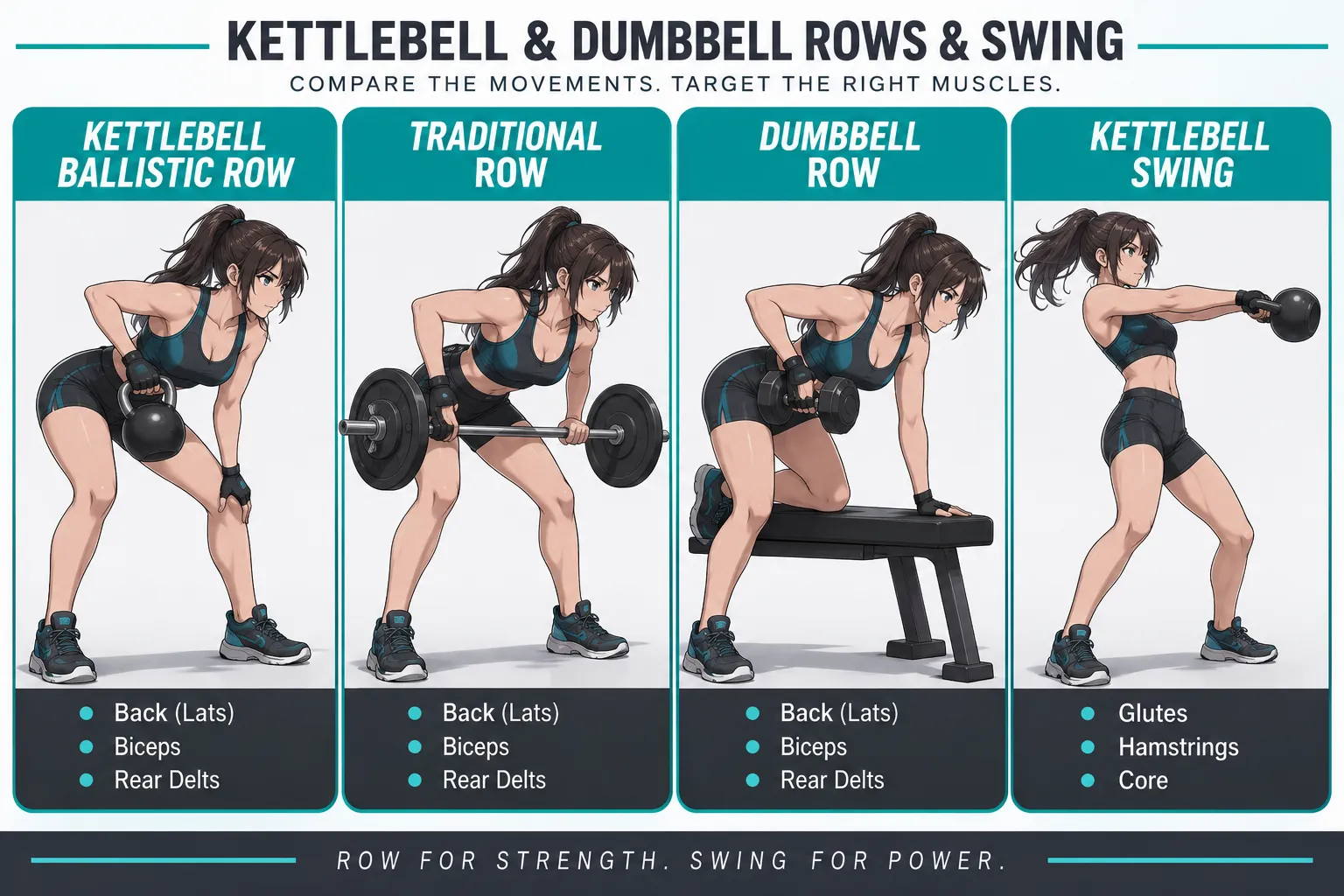
Choose the kettlebell ballistic row if you want explosive pulling strength, grip demand, and core anti rotation work. Choose the dumbbell row if you want to progressively overload with heavier weight in a simpler, more stable pattern. Many lifters rotate both into the same training block for balanced development.
Does Kettlebell Ballistic Row Build Muscle or Is It More Cardio
The kettlebell ballistic row builds muscle in the back, arms and core while also raising heart rate enough to double as a conditioning tool, especially in higher rep sets. It is genuinely both, which is part of why it has become a favorite accessory movement among kettlebell-focused coaches.
Research summarized by the American College of Sports Medicine confirms that kettlebell training in general produces both strength and cardiovascular adaptations when performed at sufficient intensity, a pattern that holds true for ballistic row protocols specifically.
How Often Per Week Should You Do Kettlebell Ballistic Rows
Two to three sessions per week is the typical sweet spot, giving the back, grip and shoulders enough recovery between sessions while still building strength steadily. More than that risks accumulated fatigue in the forearms and lower back.
Pair ballistic row days with other kettlebell work like kettlebell swing benefits sessions or a kettlebell full body workout on separate days to avoid overlapping fatigue in the same muscle groups.
Exercises That Work Similar to Kettlebell Ballistic Rows
Kettlebell swings, renegade rows, bent presses, and single arm rows all share overlapping demand with the ballistic row, training the back, grip and core through hinge or pulling patterns. Rowing itself, in any form, reinforces similar posterior chain, shoulder patterns.
A short list of close alternatives:
- Kettlebell swing muscles worked overlap heavily with the ballistic row’s hip and grip demand.
- Kettlebell deadlift muscles worked share the same hinge base.
- Kettlebell upright row trains the upper traps and shoulders with a different bar path.
- Kettlebell row single arm is the non-ballistic base version.
- Double kettlebell ballistic row benefits include symmetrical loading and less rotational demand.
For readers building a broader plan, our guides on benefits of kettlebell training exercises and upper body kettlebell workout options cover how to slot this movement into a full week.
Why This Movement Deserves a Spot in Your Training
I added the ballistic row into my own routine after a strength coach pointed out that most lifters plateau on pulling strength because they never train grip under reactive load.
Within a few weeks of doing rows this way, my deadlift lockout felt noticeably more stable, and that single change was enough to keep the movement in my plan permanently.
If you’re shopping for a quality bell to try this with, the Yes4All Kettlebell Vinyl Coated Cast Iron is a solid, budget-friendly option many reviewers recommend for ballistic work because of its secure handle grip.
US readers can check current pricing here: Shop kettlebells on Amazon US
UK readers can check current pricing here: Shop kettlebells on Amazon UK
FAQ
What are the advantages of kettlebell swings?
Kettlebell swings build hip power, cardiovascular conditioning and posterior chain strength in one movement. They train explosive hip drive, burn calories efficiently, and improve grip and core stability. Swings pair well with ballistic rows since both rely on hip hinge mechanics and fast-twitch output from the glutes and hamstrings.
Is 20 minutes of kettlebells enough?
Yes, 20 minutes of focused kettlebell training, including swings, rows and squats, is enough to build strength and raise heart rate meaningfully, especially at higher intensity or in circuit format. Consistency across the week matters more than session length, so 20 minutes done three to four times weekly delivers solid results.
What muscle groups do kettlebell rows work?
Kettlebell rows primarily work the lats, rhomboids, rear delts, biceps and forearms, with the core bracing isometrically throughout. The hips and hamstrings also engage to maintain the hinge position. Ballistic variations add extra grip and reactive strength demand during the catch phase.
What is the hardest kettlebell exercise?
Many coaches consider the kettlebell snatch or the bent press among the hardest kettlebell exercises due to their technical complexity and coordination demands. The kettlebell ballistic row ranks close behind because of the reactive catch, making it one of the more advanced rowing movements in common programming.
Conclusion
Kettlebell Ballistic Row Benefits, earns its place in a serious strength program by training the back, grip, core and posterior chain in a single explosive movement.
It is not a beginner exercise, but once the hip hinge and standard row are solid, it becomes one of the most efficient tools for building pulling strength, and grip resilience, and better movement under load, together.
Start light, nail the catch, and add the ballistic row into your week two to three times for noticeable gains in a few training cycles.
If you’re ready to try it, pick a reliable kettlebell and begin with slow, controlled reps before chasing speed.