Which Kettlebell For Beginners
Last updated: November 11, 2026
Quick Answer
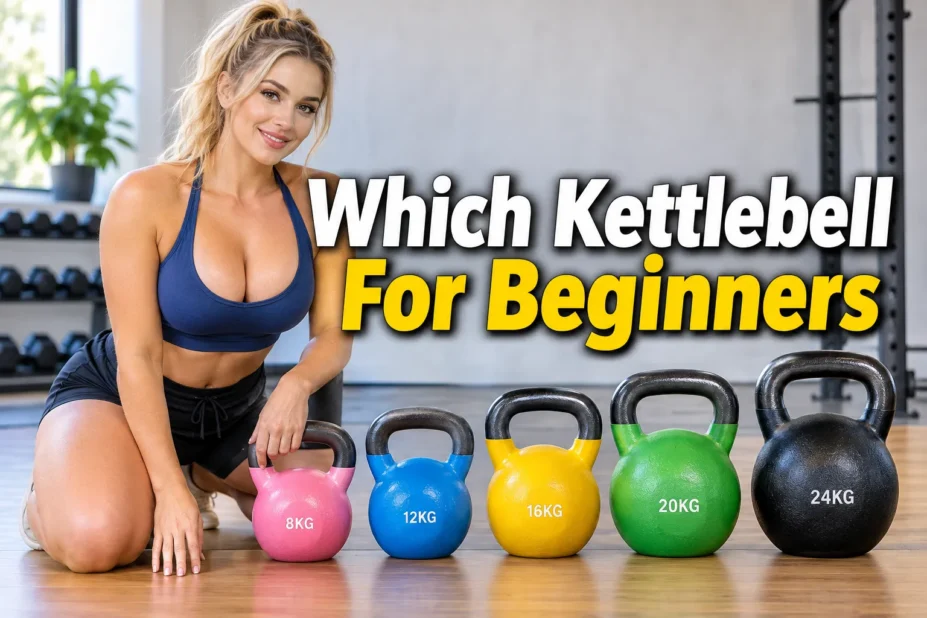
Which Kettlebell For Beginners, most beginners should start with an 18 to 26 lbs (8 to 12 kg) kettlebell for women and a 26 to 35 lbs (12 to 16 kg) kettlebell for men, depending on activity level. If you can only buy one kettlebell, pick a mid range weight that lets you do swings, goblet squats, and presses without straining your lower back. Cast iron, hardstyle kettlebells remain the safest, most versatile choice for new lifters.
Key Takeaways
- A good starting kettlebell weight for most women who work out weekly falls between 18 and 26 lbs, according to guidance summarized by Women’s Health.
- Men who are currently very active often start with 26 to 35 lbs, while less active men may begin lighter at 18 to 22 lbs.
- One versatile kettlebell beats two mismatched ones when you’re just starting kettlebell training, though a two bell set adds flexibility later.
- Cast iron kettlebells outperform vinyl coated kettlebells for beginners on durability and handle feel, per testing from Verywell Fit.
- Technical lifts like the snatch and long cycle demand a lighter kettlebell than swings or deadlifts.
- Kettlebell training is approachable for people who have never lifted before, but form comes first, according to Cleveland Clinic.
- Older adults and anyone with existing injuries should start lighter and check with a doctor before loading heavy.
- A beginner kettlebell typically costs between 25 USD and 60 USD, with adjustable sets costing more.
- Expect to budget roughly 25 to 55 EUR for a quality beginner kettlebell in Europe.
Shop on Amazon US or Shop on Amazon UK.
What Weight Kettlebell Should a Beginner Start With?
The right starting kettlebell weight depends on your sex, current activity level, and the exercises you plan to do. There is no single “correct” weight, but there are sensible ranges that work for most new lifters.
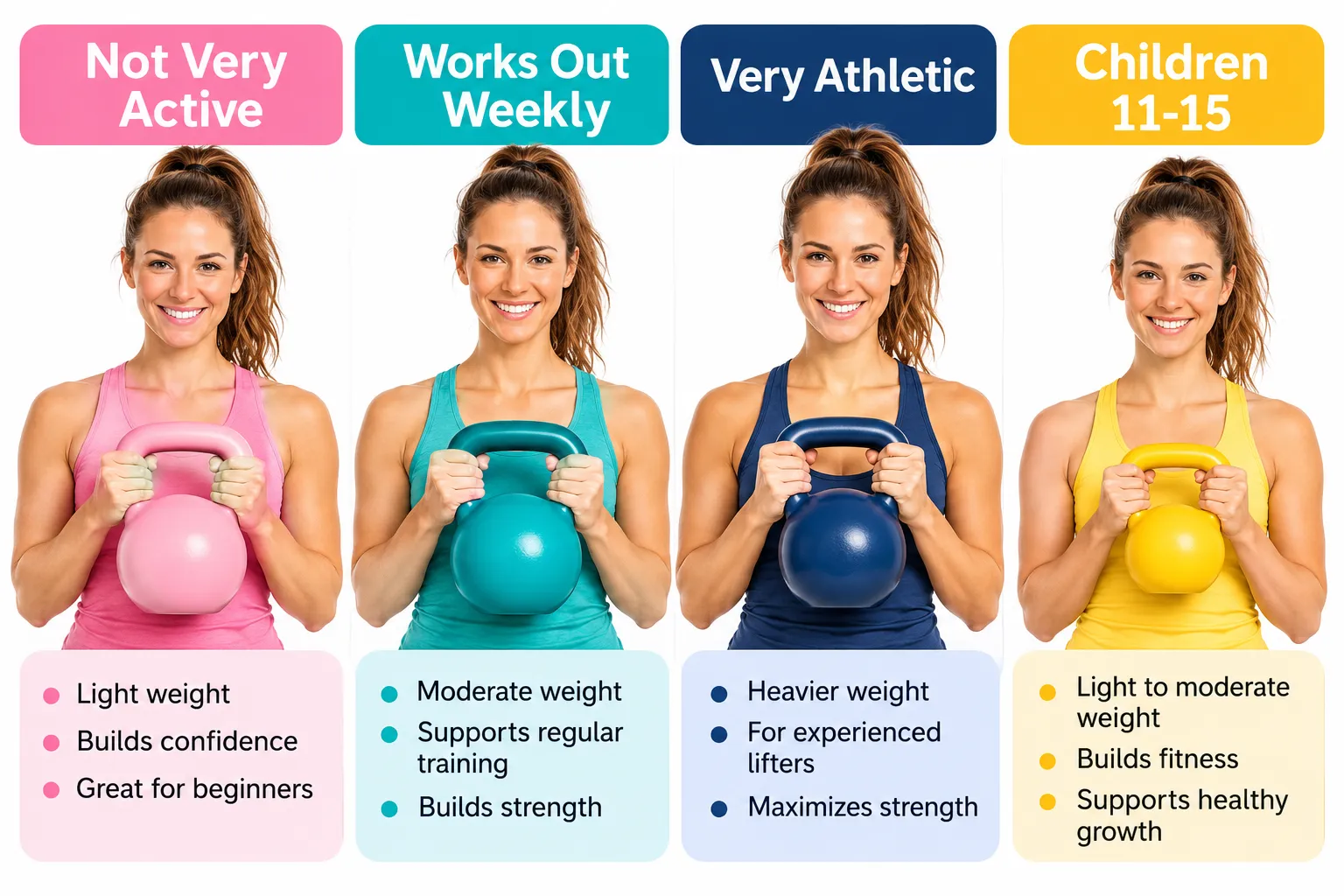
Based on current consensus guidance, here’s a breakdown by activity level:
- Currently not very active women: 10 to 16 lbs (5 to 7 kg)
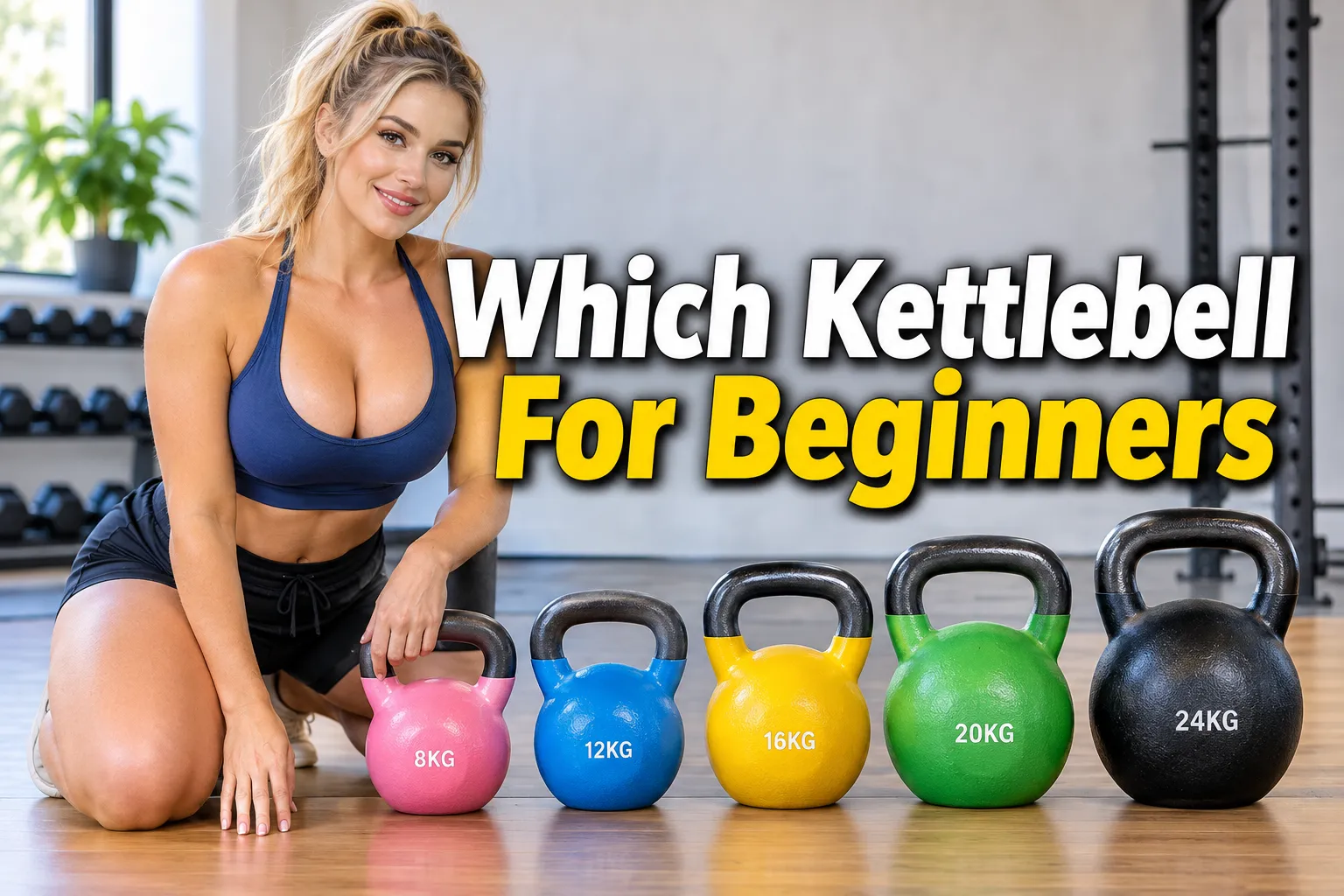
- Works out weekly women: 18 to 26 lbs (8 to 12 kg)
- Very athletic women: 22 to 35 lbs (10 to 16 kg)
- Currently not very active men: 18 to 22 lbs (8 to 10 kg)
- Works out weekly men: 26 to 35 lbs (12 to 16 kg)
- Very athletic men: 35 to 44 lbs (16 to 20 kg)
- Children 11-15: 5 to 10 lbs (2 to 5 kg), under supervision
Pull quote: “The biggest mistake beginners make is grabbing a kettlebell that’s too heavy because it looks impressive on the shelf.”
A good starting kettlebell weight for compound exercises like squats and deadlifts can be heavier than what you’d use for presses, because your legs and hips handle more load than your shoulders.
For push and pull exercises like presses, rows, and curls, go lighter, often 8 to 18 lbs lighter than your squat weight.
For technical ballistic exercises like the jerk, snatch, and long cycle, choose the lightest option in your range since these moves demand more skill and shoulder stability before you add weight.
How Do I Know if a Kettlebell Is Right for Me?
You’ll know a kettlebell is right for you if you can complete 10 to 15 controlled reps of a swing or goblet squat with good form and without pain. If the last few reps turn into a struggle with your lower back or shoulders, the bell is too heavy.
A quick self-test: pick up the kettlebell and do five swings. If your lower back rounds or you feel strain in your neck, size down.
If the bell feels too light to challenge you by rep eight, size up. This matters more than any chart because body proportions, grip strength, and prior training all shift the right number.
What’s the Difference Between a Kettlebell and a Dumbbell?
A kettlebell has its weight offset below the handle, creating momentum during swinging movements, while a dumbbell distributes weight evenly on both sides of a straight handle.
This offset makes kettlebells better suited for ballistic, swinging exercises, while dumbbells suit controlled, symmetrical lifts.
According to a comparison from Health.com, kettlebells engage the posterior chain (hamstrings, glutes, lower back) more during dynamic movements like swings, while dumbbells are often easier for isolated lifts like bicep curls.
Shop on Amazon US or Shop on Amazon UK.
Choose a kettlebell if your main goal is full body conditioning, cardio, and functional strength. Choose a dumbbell if you want more control for strict, slow lifts.
How Much Does a Good Beginner Kettlebell Cost?
A quality beginner kettlebell typically costs between 25 USD and 60 USD, depending on weight, brand, and coating.
In euros, expect to pay roughly 25 to 55 EUR for the same range, and prices shift slightly with import duties across islands and remote regions.
Heavier kettlebells cost more because they use more raw material. A 10 lbs bell might run 20 to 25 USD, while a 35 lbs bell can cost 50 to 70 USD.
Adjustable kettlebells, which let you change plates to adjust weight, often cost 150 to 250 USD but replace several single weight bells, which can be a better value if you expect to grow your training over several months.
If you shop at prokettlebell.com, you’ll notice pricing in USD, EUR, XOF, and XCD depending on your region, with resources and an exercise finder tool to help narrow down a good starting kettlebell weight for your goals.
Some sites also use a prokettlebell com login for order tracking, and you may see a Google Verifying request able continue after a few seconds, don refresh the page while it loads.
What Exercises Can Beginners Do With Kettlebells?
Beginners should start with four foundational kettlebell exercises: the goblet squat, the two-hand swing, the deadlift, and the halo. These moves build the hip hinge pattern and grip strength needed before moving to more advanced kettlebell workouts.
A simple weekly beginner plan:
- Goblet squats: 3 sets of 10
- Kettlebell deadlifts: 3 sets of 10
- Two-hand swings: 3 sets of 15
- Halos: 2 sets of 8 per side
For more structured plans, see this 20-minute kettlebell workout for beginners or a kettlebell set for beginners guide that pairs exercises with weight recommendations.
According to BLK BOX Fitness, these four moves cover roughly 80 percent of what a beginner needs before progressing to pressing or ballistic work.
Can Kettlebells Hurt Your Back If You’re New to Lifting?
Yes, kettlebells can strain your lower back if you use poor form, especially during swings and deadlifts, but this risk drops sharply when you choose a lighter kettlebell and master the hip hinge first. Nothing can derail your fitness goals quicker than an injury, so form always comes before weight.
The most common error is bending at the waist and rounding the spine instead of hinging at the hips. This happens most often when the kettlebell is too heavy for the lifter’s current strength.
Practicing the hip hinge with no weight, or very light weight, for several sessions before progressing to heavier kettlebell training reduces this risk significantly.
If you already have back issues, check our kettlebell hip hinge breakdown before adding load.
What Are Common Mistakes Beginners Make With Kettlebells?
The most common beginner mistakes are choosing a kettlebell that’s too heavy, skipping the hip hinge pattern, and gripping the handle too tightly during swings. Each of these mistakes increases injury risk and slows progress.
Other frequent errors include:
- Using momentum from the arms instead of the hips to power the swing
- Rushing into the 16kg (35 lbs) kettlebell myth, where new lifters assume this “standard” weight is right for everyone
- Skipping a warm-up before ballistic exercises
- Training heavy every session instead of cycling lighter and heavier days
The 16kg kettlebell myth deserves attention on its own. Many gyms and online guides treat 16kg (35 lbs) as a universal “starter” weight because it’s common in kettlebell sport.
In reality, this is often too heavy for inactive beginners and too light for very athletic men, which is why starting lighter often works better for most new lifters, even if it feels like you’re not pushing hard enough in week one.
Is Kettlebell Training Good for Someone Who’s Never Worked Out Before?
Yes, kettlebell training is a good entry point for complete beginners because it builds strength, coordination, and cardio capacity in a single tool, but starting weight and technique matter more here than for experienced lifters.
According to Cleveland Clinic, kettlebell work can suit most healthy adults when introduced gradually.
For someone who has never worked out, a lighter kettlebell (10 to 16 lbs for women, 18 to 22 lbs for men) paired with basic movements for the first four to eight weeks builds a foundation.
This is the time and place to lift heavy later, not at the start. Our benefits of kettlebell training page covers why this tool works well for first-time exercisers specifically.
Do I Need Multiple Kettlebells or Just One to Start?
One kettlebell is enough to start if you pick a versatile mid-range weight, but two kettlebells (a lighter and a heavier one) give you more flexibility across different exercises.
What’s a good starting kettlebell weight if I can only get one to use for all kettlebell exercises? Choose a weight that challenges you on squats and deadlifts but still lets you complete presses and rows with control.
If you’re overwhelmed choosing a starting kettlebell weight, don’t be. A single 18 lbs or 26 lbs kettlebell (depending on your sex and activity level) covers most beginner workouts for the first two to three months.
Once pressing and ballistic moves feel easy, add a second, heavier bell. Many shoppers browsing a kettlebell set for beginners prefer buying two weights upfront to avoid a second purchase later.
What Weight Kettlebell for a Woman Beginner?
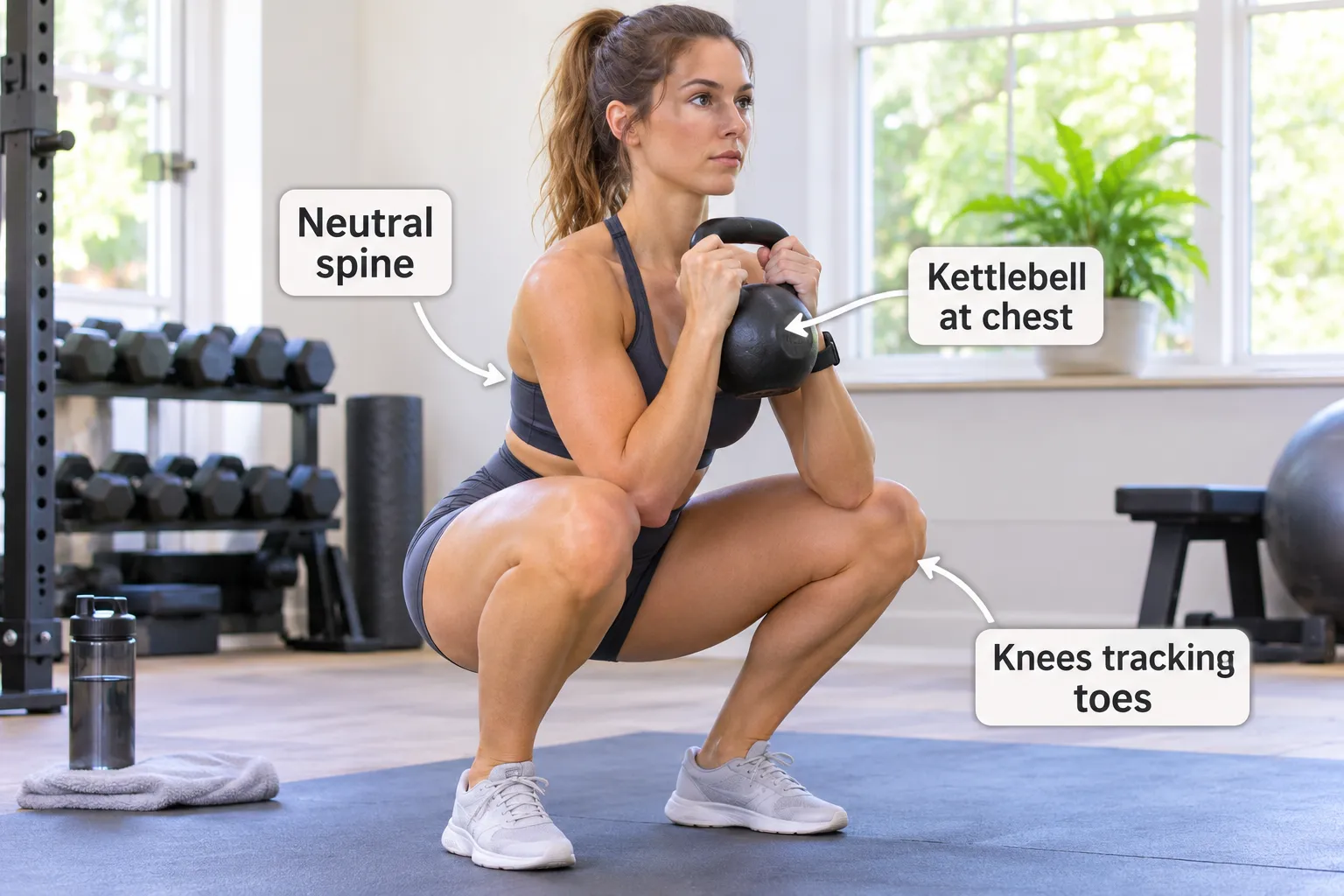
Women starting kettlebell training should generally choose between 10 and 26 lbs depending on activity level, with 18 lbs being a common sweet spot for women who work out weekly but haven’t used kettlebells before. This range supports swings, squats, and presses without overloading the shoulders.
For swings specifically, many women beginners do well starting around 18 to 22 lbs, since swings use the hips and glutes rather than the arms.
If you’re asking what weight kettlebell a woman should use for swings, this range is a reasonable entry point before progressing heavier over several weeks.
See our dedicated guide on kettlebell workouts for women for a full progression plan, and our adjustable kettlebell benefits for women page if you want one tool that grows with you.
What’s Better for Beginners: Cast Iron or Vinyl Kettlebells?
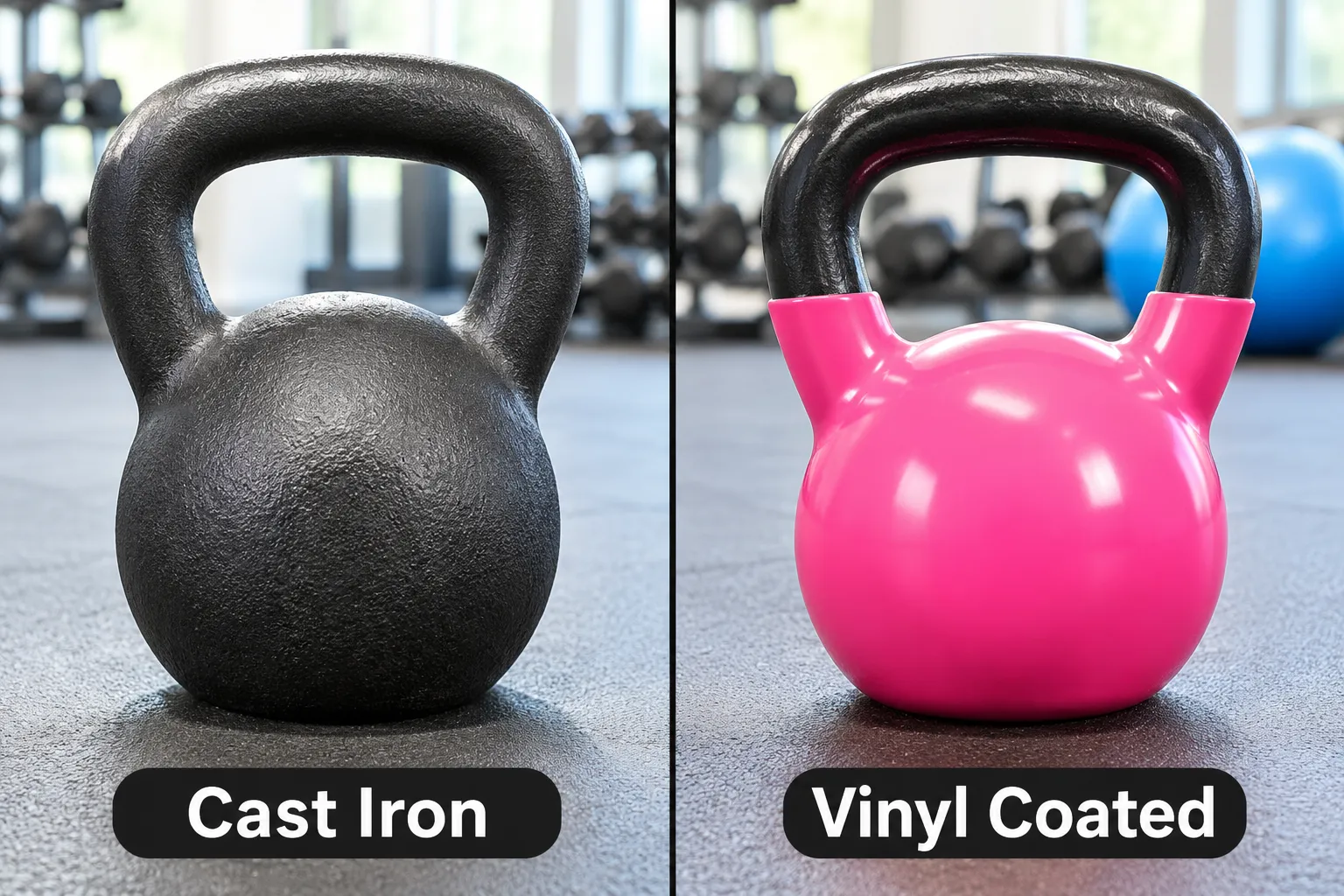
Cast iron kettlebells are generally better for beginners because they’re more durable, have a more consistent handle shape, and hold up better over years of training, while vinyl coated kettlebells are quieter and gentler on floors but wear faster.
According to testing from Verywell Fit, cast iron hardstyle kettlebells remain the top recommendation across most review roundups in 2026.
Vinyl kettlebells, like the ones reviewed in our GoFit 20-pound kettlebell review, can be a good lighter option for home use since the coating protects floors and furniture.
But the vinyl shell adds bulk to the handle, which can affect grip during technical ballistic moves. Choosing a kettlebell that’s cast iron and made USA often also means a flatter base and smoother handle, both of which matter for stability during cleans and presses.
Can Older Adults or People With Injuries Use Kettlebells?
Older adults and people with existing injuries can generally use kettlebells, but should start significantly lighter than standard beginner ranges and ideally get movement cleared by a doctor or physical therapist first.
According to Cleveland Clinic, the offset weight and swinging nature of kettlebell exercises require decent joint mobility and core control before progressing.
A reasonable starting point for this group is 5 to 10 lbs, with a focus on controlled movements like the deadlift and halo rather than ballistic swings.
Avoid any exercise that causes sharp pain, and build consistency over intensity for the first several weeks.
What Makes a Kettlebell Good Quality?
A good quality kettlebell has a smooth, seamless handle, an even weight distribution with no rattling, and a flat, stable base. Cheap kettlebells often have rough seams that tear up hands during high rep sets like swings or snatches.
Look for these size and quality markers when comparing options:
| Feature | Good Quality Sign | Warning Sign |
|---|---|---|
| Handle | Smooth, consistent diameter | Rough seams, uneven texture |
| Base | Flat, no wobble | Tips over easily |
| Weight marking | Clear, accurate to within a few ounces | Unlabeled or mismatched to actual weight |
| Coating | Even, no peeling | Chips or bubbles on vinyl |
| Sound | Solid, no rattle | Hollow rattle when tilted |
According to Lifehacker’s guide to choosing a kettlebell, handle thickness matters more than most beginners expect, since a handle that’s too thick can wreck grip endurance during longer sets.
If you’re shopping, check a best kettlebell brands comparison before settling on size, and browse accessories like gloves or chalk to protect your hands during heavier kettlebell training.
How Often Should a Beginner Use Kettlebells Per Week?
Beginners should train with kettlebells two to three times per week, with at least one rest day between sessions to let muscles recover. This frequency builds strength and technique without overtraining joints that aren’t yet conditioned to the offset load.
A typical first 4 to 8 week block looks like two full body sessions weekly, each lasting 20 to 30 minutes, focused on the goblet squat, swing, deadlift, and halo.
After this base phase, many beginners add a third session or introduce presses and rows. Our kettlebell workout routines page outlines a longer-term progression if you want structure beyond the first two months.
Choosing a Kettlebell: Final Buying Checklist
Picking the right kettlebell comes down to matching weight to your activity level, picking cast iron over vinyl for durability, and buying from a retailer with clear size and shop accessories listings. Here’s a simple checklist:
- Match starting weight to your sex and activity level (see ranges above)
- Choose cast iron for durability unless floor protection is a priority
- Confirm the weight marking is accurate, not just estimated
- Check return policy, since heavy items are costly to ship back
- Consider buying a lighter and a heavier bell together if budget allows
- Read a few verified reviews, like those from Verywell Fit or Wirecutter, before committing
If you’re ready to buy, check current kettlebell pricing and availability here:
Shop on Amazon US or Shop on Amazon UK
FAQ
What weight kettlebell should a beginner use?
Most beginners should use 18 to 26 lbs if they’re women who work out weekly, or 26 to 35 lbs if they’re men with similar activity levels. Less active beginners should start 8 to 10 lbs lighter in either case, prioritizing form over load.
Is a 20 lb kettlebell good for beginners?
Yes, a 20 lb kettlebell is a solid starting weight for many women and lighter-framed men beginning kettlebell training. It’s heavy enough to challenge hip hinge movements like swings, but light enough to maintain control during presses and rows.
Should you buy 1 or 2 kettlebells?
One kettlebell is enough if you pick a versatile mid-range weight, but two kettlebells, a lighter and heavier pair, offer more flexibility for different exercises. Many beginners start with one and add a second bell after a few months of consistent training.
What is the best kettlebell workout for beginners?
A simple four-move routine covering the goblet squat, deadlift, two-hand swing, and halo works best for beginners. This combination builds the hip hinge pattern, grip strength, and shoulder stability needed before progressing to pressing or ballistic kettlebell exercises.
Conclusion
Choosing Which Kettlebell For Beginners comes down to honest self-assessment: your sex, current activity level, and the exercises you plan to prioritize all shape the right starting weight.
Most women do well starting between 18 and 26 lbs, while most men land between 26 and 35 lbs, with lighter weights for compound lifts’ opposite movements like presses and technical ballistic exercises.
A single, well-made cast iron kettlebell covers nearly everything you need for your first few months of kettlebell training, and you can always add a second bell once the basics feel easy.
My own advice after years around this equipment: don’t overthink the exact kilogram number. Pick something in the right range, nail your form on the hip hinge first, and progress from there.
The kettlebell you’ll actually use consistently is always better than the “perfect” one sitting unused in a closet.
If you’re ready to buy, check current kettlebell pricing and availability here:
Shop on Amazon US or Shop on Amazon UK.