Soft Kettlebells and Cast Iron Kettlebells
Latest Update: November 21, 2026
Soft Kettlebells and Cast Iron Kettlebells, A Home Workout Comparison comes down to more than a cushioned shell versus a rigid metal body. We compare construction, grip, exercise fit, floor contact, and storage so you can choose a bell that suits your training and your home.
Picture this, you are setting up a workout in a small room and want one kettlebell for swings, squats, and presses. Stop guessing and start measuring, the bell’s shape and handle can matter just as much as its exterior.
Key Takeaways
- Soft kettlebells have a pliable shell and weighted filling, which cushions contact but can make the bell bulkier.
- Cast iron kettlebells have a rigid metal body. A vinyl or powder coating changes the finish, not the body’s firmness.
- For swings and grip changes, compare handle space, body clearance, balance, and how the bell moves around your hand.
- Choose a load you can control for each exercise. Presses usually call for a lighter load than swings or squats.
- Soft construction can reduce the force and sound of contact, but it does not make a bell silent or suitable for dropping.
- Our soft kettlebell comparison guide covers another home workout option for readers comparing equipment styles.
Shop Now at Amazon—>
How soft and cast iron kettlebells are built
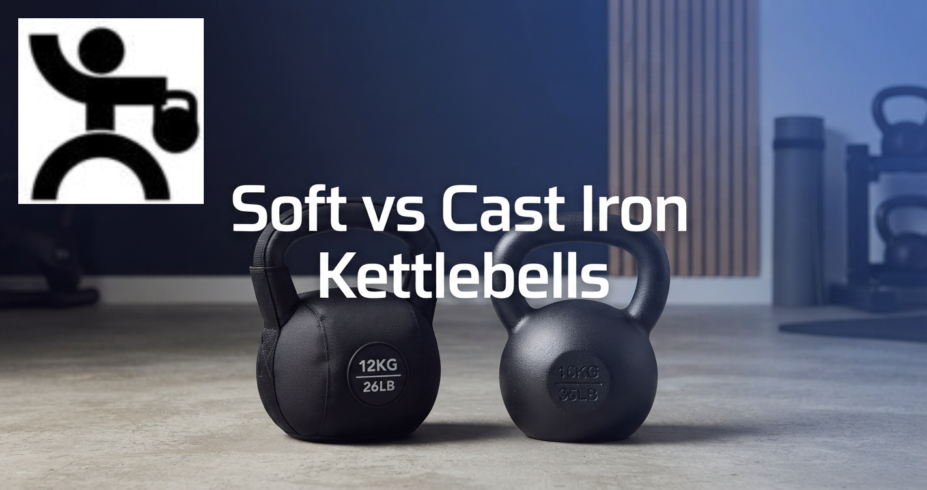
A soft kettlebell has a flexible shell around weighted filling, such as sand or pellets. The pliable exterior gives on contact, while the filling and wider body can make the bell take up more room than a rigid bell of similar weight.
A cast iron kettlebell has a hard, rigid metal body. The handle, body width, and position of the weight affect its balance and how it moves around the hand. Single piece cast iron with no welds or seams is the gold standard for a traditional fixed weight bell.
Do not confuse a padded soft body with a vinyl coating or a powder coated finish. Vinyl and powder coat cover a rigid metal bell, so they change the surface feel and finish without giving the bell the flexible body of a soft kettlebell.
We assess the whole shape, not just the material. Compare body width, balance, and handle geometry, then browse our Best Kettlebells guide for a broader look at construction styles.
Compare grip, clearance, and movement fit
For a two handed swing, the handle needs enough room for both hands to hold securely. A crowded handle can make grip changes awkward, while a soft bell’s wider body may touch the forearm or get in the way during a clean, press, or rack position.
For a direct product comparison, the Yottoy Soft Kettlebell is a useful example when comparing body size and hand clearance with a rigid bell.
The Yes4All Kettlebell Vinyl Coated Cast Iron has solid cast iron construction, a vinyl coated finish, a smooth handle, and a flat bottom, with weight options from 5 to 80 lbs. Its rigid body makes handle comfort and any roughness important details to assess during movement.
A compact cast iron body often moves predictably close to the hand, but a rough handle can affect grip comfort. Try the same swing, goblet squat, and press setup with each style, and compare balance, clearance, and transitions rather than choosing by exterior feel alone.
For another view of fixed weight cast iron options, see our 50 lb cast iron kettlebell comparison.
Choose weight for the exercise, not just the bell type
Choose a weight you can control throughout the movement, then judge it in the exercise itself. Swings and squats usually allow more load than presses because they involve larger muscle groups and different movement demands.
Use a lighter load for presses and for practising a new movement. One kettlebell weight rarely suits every exercise, so decide which movements matter most before buying a single bell or a set.
The Bionic Body Soft Kettlebell gives home gym owners a soft body style to consider when choosing a starting load. At $30, it is an option to consider.
Shop Now at Amazon—>
A single bell can cover swings, squats, presses, and carries. A small set with useful weight steps makes it easier to change loads between exercises and progress over time, but account for storage space before bringing home several bells.
Compare the filling and shell as well as the stated weight, since a soft bell can occupy more space than a rigid bell of a similar load. Our soft kettlebell set guide looks at options for building a collection around home training.
Kettlebells come in an array of construction materials, from 2 kg to 92 kg.
Shop Now at Amazon—>
Protect floors and plan for noise and storage
A cushioned exterior can soften contact, but it does not make a kettlebell silent or suitable for dropping. Set it down with control and train on a stable surface that gives the bell a secure place to rest.
A vinyl coated cast iron bell can help reduce scuffs and sound compared with bare metal, but the body remains rigid. Place it down carefully, and leave enough clearance for the bell to move without hitting furniture or walls.
The PAETA Soft Kettlebell has a sand filled interior, a PVC shell, a firm anti slip grip handle, and a cushioned base. It comes in 10 lb, 15 lb, 20 lb, and 45 lb weights, as well as multi bell sets, making it a practical option to consider when comparing body size and storage needs.
Measure the space for the body, handle, and full movement path, then choose stable storage that leaves room for the weight steps you plan to use.
Soft bells can be bulkier, while cast iron needs enough open space to move without striking nearby objects. For more on PAETA home setup considerations, see our PAETA soft kettlebell guide.
Inspect the shell, finish, and handle over time
On a soft bell, examine the seams and closures for fraying or opening. Press around the body and check that the filling sits evenly instead of gathering into lumps that can change the balance.
On cast iron, look for chips or defects in the finish, then run your hand over the handle to feel for rough spots or sharp edges. A consistent grip surface matters when the bell rotates or changes position during a set.
Keep both types clean and dry after training. Moisture and damaged coatings can contribute to deterioration, while a split soft shell can expose its filling.
A padded exterior does not prove a bell can take repeated impacts, and a coated metal body is not designed for uncontrolled drops. Treat the surface and construction as part of your inspection, not as permission to skip careful handling.
Make a side by side home workout comparison
Use the same exercises with comparable loads, then compare grip comfort, balance, body clearance, and how easily each bell moves between positions. Test a swing, a goblet squat, and a press setup, and notice where the bell’s shape changes your movement.
- Choose soft when a cushioned exterior and quieter placement matter most, provided the wider body fits your movements and storage area.
- Choose cast iron when a compact rigid body and direct handle feel suit your training, and plan controlled placement on a suitable surface.
- Compare value by the useful weight options and progression steps, as well as the space each choice occupies and the exercises you intend to practise.
Soft Kettlebells and Cast Iron Kettlebells, A Home Workout Comparison is most useful when you test the exact movements you plan to train. Choose by handling, balance, clearance, and storage, not by the exterior alone.
Frequently Asked Questions
Can I use a soft kettlebell outdoors?
Yes, you can use one outdoors on a clean, dry surface with enough room to move. Keep it away from standing water and rough ground, which can abrade or soil the shell.
How should I clean a sand filled soft kettlebell?
Wipe the shell and handle with a damp cloth and a small amount of mild soap, then remove soap residue with a clean cloth. Let the bell dry fully before storing it, and avoid soaking the shell.
Can kettlebells be stored in a garage?
Yes, a garage can work if the storage spot stays dry and the bell sits on a stable surface. Keep the handle clear of other equipment so it remains easy to grasp when you take the bell out.
How can I tell when it is time to move up to a heavier kettlebell?
Keep a simple training log of the exercises, sets, and repetitions you complete with each load. When you want a new challenge, choose the smallest useful weight increase for the movement you are progressing, rather than changing every exercise at once.
Conclusion
Soft kettlebells offer a pliable shell around weighted filling, while cast iron kettlebells provide a compact rigid body with a direct handle feel. The right choice depends on your movements, grip, available clearance, floor setup, and storage space.
Use Soft Kettlebells and Cast Iron Kettlebells, A Home Workout Comparison as a practical test, not a guess based on appearance. Compare the same exercises with each type, choose a manageable weight, and make room for controlled training.