How Much Protein Do You Really Need to Build Muscle
Latest Update: October 10, 2026
How Much Protein Do You Really Need to Build Muscle? A useful starting point is to base your daily protein intake on your body weight, then adjust the plan to your meals, training, and goals.
Key Takeaways
- Start with 1.6 grams of protein per kilogram of body weight each day as a practical muscle focused target.
- Use 2.2 grams per kilogram as an upper planning estimate, not a required goal for everyone.
- Spread protein across meals that fit your routine instead of saving most of it for dinner.
- Animal foods are not essential. A varied selection of plant foods can supply essential amino acids across the day.
- Protein is one part of a muscle building plan that also includes resistance training, recovery, and enough overall food.
- Protein supplements can be convenient, but you do not need one simply because you want to build muscle.
100K Bottles Sold per Month – View Now on Amazon
Set a realistic daily protein target
For a muscle focused daily target, start with 1.6 grams of protein per kilogram of body weight. To convert pounds to kilograms, multiply your weight in pounds by 0.45, then multiply that result by 1.6; this target is about 0.73 grams per pound.
The Journal of the International Society of Sports Nutrition review describes 0.4 g/kg per meal across a minimum of four meals as one way to reach 1.6 g/kg/day.
Treat this as a planning model, not a hard cutoff: a meal below that amount does not mean it cannot support muscle, and not everyone needs the same meal pattern.
For example, someone who weighs 150 pounds can multiply 150 by 0.45, then multiply the result by 1.6 to estimate a daily target of 108 grams.
Treat the result as a practical estimate, and focus on a pattern you can follow consistently.
The Recommended Dietary Allowance is a broad baseline for protein intake, not automatically a muscle building target.
If you are comparing recommendations, first check whether they refer to general intake, a specific body weight, or a goal such as supporting resistance training.
Protein foods can cover the target, while a supplement may be a convenient option when the day’s meals leave a gap.
These product images offer a visual reference for that option, but the useful comparison is how a supplement fits your routine and overall food intake.
Adjust the estimate for your body weight and goal
Think of 2.2 grams per kilogram per day as an upper planning estimate, not a number every person who trains must reach.
The Journal of the International Society of Sports Nutrition explains that using this upper daily intake across four meals would mean a maximum of 0.55 g/kg per meal.
That example shows how a higher daily amount can be divided across the day rather than loaded into one oversized meal. You can use a lower, manageable target when it better suits your food preferences and schedule.
If using your current body weight creates an impractically high estimate at a substantially higher body weight, use a realistic goal weight as a rough planning basis. For a more individualized target, ask a registered dietitian for guidance.
During intentional weight loss, choose a sustainable protein target and keep the whole eating plan realistic. A calorie deficit can make muscle gain more challenging, so raising protein without limit is not a substitute for a workable overall plan.
Age, current body weight, training habits, and weight loss goals can all affect how you apply a body weight based estimate.
100K Bottles Sold per Month – View Now on Amazon
A general dietary guideline and a muscle-building target answer different questions. Treat the range in this card as context, not a personalized prescription; use the body-weight estimate above as a starting point for training goals.
Spread protein across meals in a way you can maintain
Divide your daily amount among several meals instead of leaving most of it for one large evening meal. This makes the target easier to monitor and gives you more chances to include a protein source in your usual meals.
The USDA Agricultural Research Service describes 25 to 30 grams at a meal as a practical amount for optimally stimulating muscle protein synthesis. It is not a universal threshold: needs vary, and a meal below that amount is not wasted or ineffective.
Choose a meal pattern that fits your day. Consistently reaching a reasonable daily total matters more than trying to eat protein immediately after a workout, so include protein before or after training when it suits your schedule.
Our Build Muscle Exercises at Home guide covers bodyweight exercises, progressive overload, workout routines, and nutrition strategies. It suits this section because it connects a practical training routine with the broader habits that support a muscle building plan.
Choose protein foods from animal or plant sources
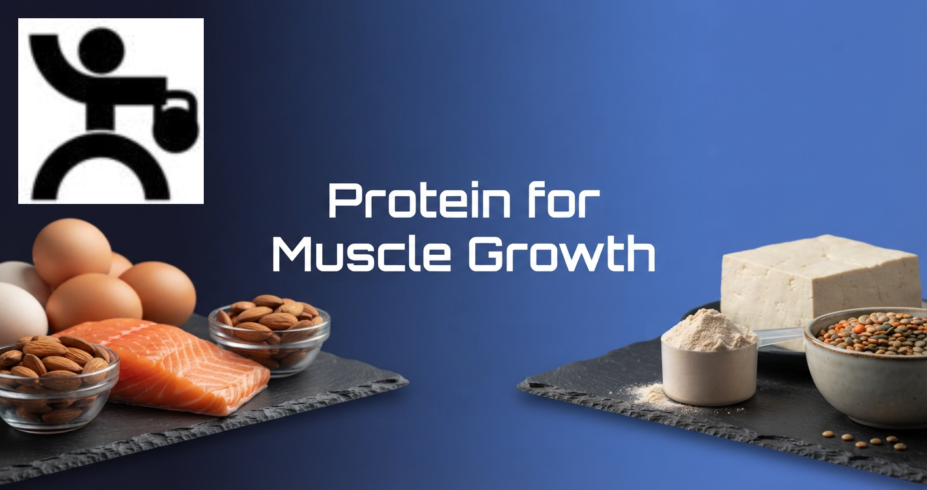
Build meals with foods you enjoy, such as eggs, dairy, fish, poultry, beans, lentils, tofu, tempeh, nuts, and seeds. Compare foods by their protein contribution and how naturally they fit into meals you already eat. For example, try eggs or yogurt at breakfast, beans or tofu with lunch, and fish or lentils at dinner; adjust portions to your target.
Animal foods and soy provide all essential amino acids in one food. You can also get essential amino acids from a varied mix of plant foods across the day, so you do not need to combine particular foods at every meal.
Use different sources for variety and for the other nutrients they bring to meals. For a vegetarian or vegan pattern, rotate options such as beans, lentils, tofu, tempeh, nuts, and seeds rather than relying on one food alone.
Our Food For Strong Muscles and Bones nutrition guide offers meal ideas and examples of animal and plant based foods. It can help you turn a daily protein target into meals built from familiar ingredients.
Pair protein with training, recovery, and enough energy
Progressive resistance training gives your muscles a reason to adapt. Increase the challenge gradually with added resistance, more repetitions, or a harder exercise variation, while keeping your technique controlled.
Protein is only one part of a muscle building plan. Routinely eating too little overall can make it harder to support training and recovery, so do not focus on protein while overlooking the rest of your meals.
If protein is consistently short, muscles may have less material available for repair and growth, making gains harder to support even when you lift regularly.
A calorie surplus means eating more energy than you use, while a calorie deficit means eating less. A surplus can be one approach to gaining muscle, while a deficit can make muscle gain more challenging, so set expectations that fit your current goal.
Allow recovery between demanding sessions and build a routine you can repeat. Extra protein on its own does not replace progressive training, recovery, or adequate overall food.
100K Bottles Sold per Month – View Now on Amazon
Use supplements selectively and make changes thoughtfully
A shake or protein bar can be convenient when meals do not provide enough protein for your day. It is an option, not a required step or a routine replacement for balanced meals.
Compare a supplement with ordinary food by convenience and how it fits the day’s eating pattern. Whey protein is one familiar option, while foods such as yogurt, eggs, tofu, beans, and lentils can also contribute protein to meals.
If choosing a powder, check its ingredient list and whether it has independent quality testing; that is a quality screen, not a reason you need a supplement.
For a convenient option, view this protein supplement. Choose supplements selectively and avoid assuming that a larger serving or a higher daily number automatically means more muscle.
Before making a substantial change, consider how protein fits alongside training, recovery, and the rest of your diet.
Frequently Asked Questions
Can a vegan get enough protein to build muscle without combining foods at every meal?
Yes, a vegan can choose a variety of protein containing plant foods across the day without pairing specific foods at each meal. Beans, lentils, soy foods, nuts, and seeds offer different ways to build that variety.
How can I estimate protein in a mixed meal or homemade recipe?
Add the protein amounts for each ingredient, then divide the total by the number of portions the recipe makes. For packaged ingredients, use the serving information on the package and keep your portion sizes consistent when you compare meals.
Does one low protein day undo progress?
One day is only one part of your overall eating pattern. Return to your usual routine at the next meal rather than trying to compensate with an unusually large serving.
How long should I follow a protein target before adjusting it?
Keep a simple record of meals and training for a few weeks so you can judge whether the target is practical to follow. Adjust it when your body weight, training routine, or goal changes, rather than reacting to a single unusual day.
What should I do if my protein target feels difficult to reach with food?
First, review what you already eat and look for meals where a protein food would fit naturally. If meal planning remains difficult, a registered dietitian can help you find options that match your preferences and routine.
What are 5 signs you need more protein?
A food log can reveal practical clues, but no single sign proves you need more protein.
- Your logged intake regularly falls short of your body-weight-based target.
- Several of your usual meals contain little or no protein food.
- You rely on one large meal to make up most of the day’s protein.
- Your strength or muscle progress stalls despite consistent training, enough overall food, and recovery; many factors can affect progress.
- During weight loss, your strength or muscle seems to decline while your meals rarely include protein foods.
Is 100g of protein enough to build muscle?
There is no universal amount, since whether 100 grams fits depends on your body weight and goal.
Use your body weight to judge it rather than treating 100 grams as a universal target. In the example above, a person weighing 150 pounds has a starting estimate of 108 grams a day, so 100 grams is close but below that estimate. Compare your own intake with your estimate and consider whether you can follow the plan consistently.
Is 100g of protein a day too much?
Whether 100 grams fits depends on your body weight and goal; there is no universal cutoff.
For most people, 100 grams is not automatically too much; compare it with your body-weight-based target. Consistently going beyond your needs is unlikely to add muscle by itself and can crowd out other foods that support a balanced diet. If you have kidney disease, get individualized guidance from a healthcare professional before increasing protein.
Conclusion
How Much Protein Do You Really Need to Build Muscle? Start with a body weight based estimate, spread protein across meals, and adjust the plan to your goals and habits.
A reliable daily routine works alongside progressive resistance training, enough overall food, and recovery, while supplements remain a convenience rather than a requirement.