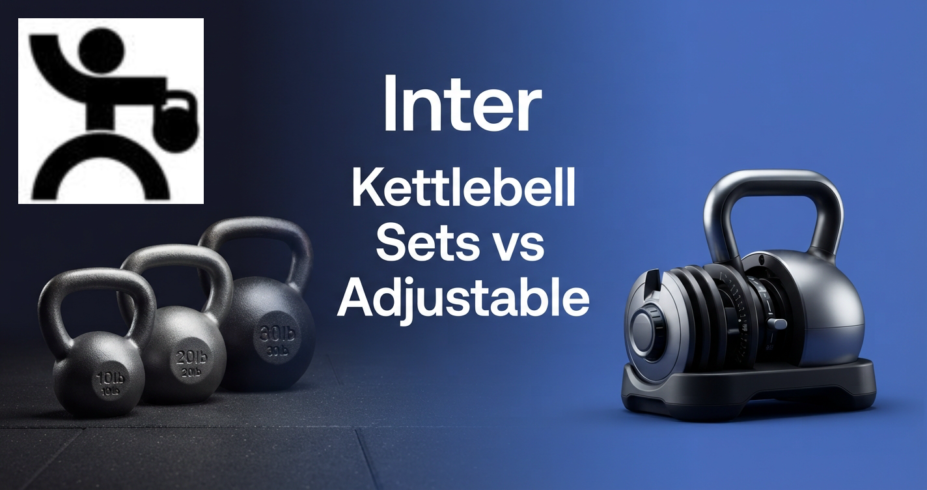
Multi Weight Set vs Single Adjustable Kettlebell
Latest Update: October 11, 2026
In this 2026 Multi Weight Set vs Single Adjustable Kettlebell comparison, we look at useful weight steps, workout flow, training feel, storage, and room to expand. The right setup is the one that gives you practical next loads for your actual movements, without paying for weights you will not use.
Picture this: you are choosing equipment for a home gym, and both a fixed weight set and one adjustable bell seem to cover your plan. Stop guessing and start measuring the loads, exercise changes, and storage space your training requires.
Key Takeaways
- Choose fixed bells for quick changes. Separate weights let you move between loads without adjusting a mechanism.
- Choose an adjustable bell for compact storage. Its range and weight increments need to suit your presses, get ups, squats, and swings. See our guide to choosing an adjustable kettlebell for a home gym.
- Compare the actual steps. A set with three bells and an adjustable model with several settings can offer very different progression options.
- Account for workout flow. Frequent load changes can interrupt circuits when each adjustment takes time.
- One bell has a clear limit. Double bell exercises require two kettlebells, so add a second bell or a matched pair when those movements enter your plan.
- Choose for your current program, then expand. Our adjustable kettlebell workout guide can help you consider which movements you want to include.
Click Here—>View Best Deals on Amazon for Multi Weight Set
Click Here—>View Best Deals on Amazon for Single Adjustable Kettlebell
How fixed weight sets and adjustable kettlebells work
A fixed weight set contains separate bells at set loads. To change the load, you put one bell down and pick up another, which makes each available weight easy to identify at a glance.
An adjustable kettlebell changes its load within one handle and body, usually through a dial, pin adjustment, or screw mechanism. It keeps several loads in one unit, but concentrates the changing parts and locking system in that unit.
The BalanceFrom 45lb Kettlebell Set contains three vinyl kettlebells filled with cement, weighing 10, 15, and 20 pounds for a combined 45 pounds. That gives you three immediately visible options, with each bell ready to use when you need a different load.
The REP Fitness 24KG Adjustable Kettlebell has a cast iron shell and matte powder coat, and offers adjustable loads through a dial and internal locking system. It suits a lifter comparing one broad range of settings with the separate bells in a fixed weight set.
Compare the useful loads and increments, not simply the number of bells. The BalanceFrom set offers 10, 15, and 20 pound options, while the REP model offers adjustable settings in kilograms, so compare the settings shown for that model with the loads your exercises and next steps require.
Match the weight range and increments to your lifts
A kettlebell load that works for a press or get up may not suit a squat or swing. Choose a range that covers controlled, technique focused movements as well as the heavier loads you use for stronger patterns, because one person may need different weights for each.
The Polyfit 5 to 12 lb Adjustable Kettlebell and Polyfit 30 to 50 lb Adjustable Kettlebell illustrate why an adjustable label does not tell you whether the range fits your plan. One serves lighter training loads, while the other covers a substantially heavier range.
The 5 to 12 pound model has settings of 5, 8, and 12 pounds, a cast iron core wrapped in a PE outer layer, and removable plates secured by a screw lock.
It is priced at $39.99, and its three settings suit readers whose planned exercises call for light loads and small changes between available options.
The 30 to 50 pound model offers settings of 30, 35, 40, 45, and 50 pounds. At $139.99, it fits a different progression range, so do not choose it for lighter movements simply because its upper settings suit stronger lifts.
Judge each gap by whether you can make that increase while keeping your technique and planned repetitions consistent. A jump that is too large can stall a progression, while a very small change may not be meaningful for every movement.
Use the next available setting as a test, not an automatic target. For presses and get ups, favour the smallest useful jump: keep the same controlled range of motion and planned repetitions, and move up only when those stay consistent.
For swings and squats, a larger step may be workable if you can keep crisp technique and finish the planned work; if not, stay at the current load or choose an option with a closer step.
Record how the movement feels at each load so the next increase is based on performance, not guesswork.
Avoid choosing one heavy load for every exercise. A weight that challenges a squat or swing can be too demanding for controlled presses, while a load comfortable for presses can be too light for stronger movements.
A progression plan can change which loads you need as its phases change. Use the program structure—not the heaviest lift alone—to check that each movement has a manageable next setting.
Consider workout flow and how weights change
Click Here—>View Best Deals on Amazon for Multi Weight Set
Click Here—>View Best Deals on Amazon for Single Adjustable Kettlebell
Separate fixed bells let you move directly to a new load, which can keep circuit training moving when stations use different weights.
An adjustable design requires a change between loads, so include that time in the session rather than expecting every mechanism to switch at the same speed.
The Titan Fitness Adjustable Kettlebell has a 10 to 40 pound range and a twist and lock mechanism, making its adjustment method relevant when your plan changes loads often.
A screw lock or dial selector has to be used between exercises that require different settings. If a session includes short rest periods or rapid supersets, plan the order so you do not have to rush an adjustment while trying to keep the workout moving.
For shared equipment, agree on who changes the load and when. A clear handoff matters in a group session, because one person’s selected setting may not be the next person’s working weight.
Compare grip, balance, and competition style
The difference between competition kettlebells and standard kettlebells starts with their shape and size.
A conventional cast iron kettlebell usually grows in body size as its weight increases, while a competition kettlebell keeps a consistent outer size across weight classes and changes its internal weight.
Competition kettlebells are commonly made of steel, with a consistent body size and handle position across loads.
That uniform geometry can make the bell feel more consistent when you move between weights, while standard bells can change how they sit in your hand as their size increases.
Adjustable kettlebells raise a separate question from competition style. Their shells, handles, internal plates, and weight distribution vary, so an adjustable range by itself does not tell you how a bell will feel during swings or overhead movements.
When comparing an adjustable bell in person, check the handle where your hand actually sits, then rehearse the rack and overhead position at a load you can control.
Notice whether the shell or plates shift, whether your wrist moves comfortably through the path, and whether the bell stays secure during the movements you plan to train.
A listed range is useful only if the handle and balance work for those positions.
We compare a bell’s handle grip and balance as well as its stated load. Our guide to whether competition kettlebells are better and our explanation of competition versus standard kettlebells cover those shape differences in more detail.
Competition style describes the bell’s geometry. Adjustable describes how its load changes. These terms describe different features.
Weigh storage, durability, and upkeep
One adjustable bell generally occupies less storage space than several separate bells. A fixed weight set needs room for each bell and a stable place to set them down between movements.
Place kettlebells down with control and use a suitable training surface to protect floors. This matters especially when you are moving between exercises or setting down a bell to change loads.
Before training with an adjustable model, inspect its locking parts and adjustment components. If anything has loosened, stop and secure it before continuing rather than trying to move through a set with an unsettled load.
Keep bells clean and dry, and follow care guidance for their materials. Use a suitable cleaner for the coating or outer shell, since harsh products can damage finishes and coverings.
For more help with a compact setup, see our adjustable kettlebell guide for home gyms. A neat storage plan should leave space for the bell, its base or parts, and a clear area to set it down.
A repetition target is a starting point for programming, not a substitute for choosing a manageable load.
Use it alongside the movement’s demands and your ability to keep technique consistent; your setup should let you progress without forcing a load jump that changes the exercise.
Choose a starting setup and expand when needed
Click Here—>View Best Deals on Amazon for Multi Weight Set
Click Here—>View Best Deals on Amazon for Single Adjustable Kettlebell
Favor a fixed weight set when you need several useful loads and fast changes more than compact storage. Favor one adjustable kettlebell when space is limited and its range and increments cover the movements in your current program.
One bell supports many single bell and alternating movements, but double bell exercises require two bells. Add a second bell or matched pair when those exercises become a regular part of your plan.
Start with the setup that covers the lifts and loads you use now, then expand when a genuine gap appears.
That might be a missing progression step or the need for paired kettlebells, rather than a vague desire to own every available weight.
Compare the initial cost with the cost of adding more useful weights over time. Neither format is automatically the better value, because the answer depends on which loads you will use and how your training develops.
Compare the amount you would actually pay for the usable setup, not just the headline cost of one bell. For a set, count its checkout total and identify which included loads you will use regularly.
For an adjustable bell, include the unit and, if your plan later needs a second bell or a wider range, the cost of a compatible addition where available, or another unit.
Compare the setup you need now with the likely cost of filling a real gap later; unused weights are not extra value.
For readers ready to explore a kettlebell option, use the US kettlebell option or the UK kettlebell option. Choose based on the weight range and training setup that fit your program.
Frequently Asked Questions
What is the most versatile kettlebell weight?
There is no single most versatile kettlebell weight for every person or program. Choose the load that fits your main movement and lets you complete your planned repetitions at a controlled pace.
Can you use an adjustable kettlebell for swings and snatches?
Yes, an adjustable kettlebell can be used for swings and snatches when its construction and secured load suit those movements. For snatches, practise the handle path and turnover with controlled repetitions before moving into continuous sets.
Can you mix kettlebells from different sets for double bell exercises?
Yes, but compare handle shape, bell height, and total load so the two sides feel predictable in the movement. A pair with substantially different dimensions can make setup and handling less consistent.
What should you do if an adjustable kettlebell will not lock securely?
Set it down and remove the load according to its adjustment method, then reseat the parts and engage the lock again. If the mechanism still fails to hold the plates firmly, do not use the bell until it is secure.
How can you track small increases in kettlebell weight over time?
Record the exercise, load, sets, repetitions, and how consistently you completed the planned movement. This makes it easier to identify whether a small load increase or an additional repetition is the more useful next step.
Is an adjustable kettlebell worth it?
An adjustable kettlebell can be worth it if storage space is limited and its weight range and increments suit the movements you train. It is less suitable if you often need rapid load changes, since adjusting it can interrupt workout flow.
Conclusion
The Multi Weight Set vs Single Adjustable Kettlebell decision comes down to usable progression, workout flow, training feel, and storage.
Fixed bells offer immediate load changes, while an adjustable model concentrates several settings in one unit.
Compare the weight range with your actual lifts, account for adjustment time, and choose a setup that serves the program you follow now.
That is the practical answer to which one fits progressive training.